About This Location
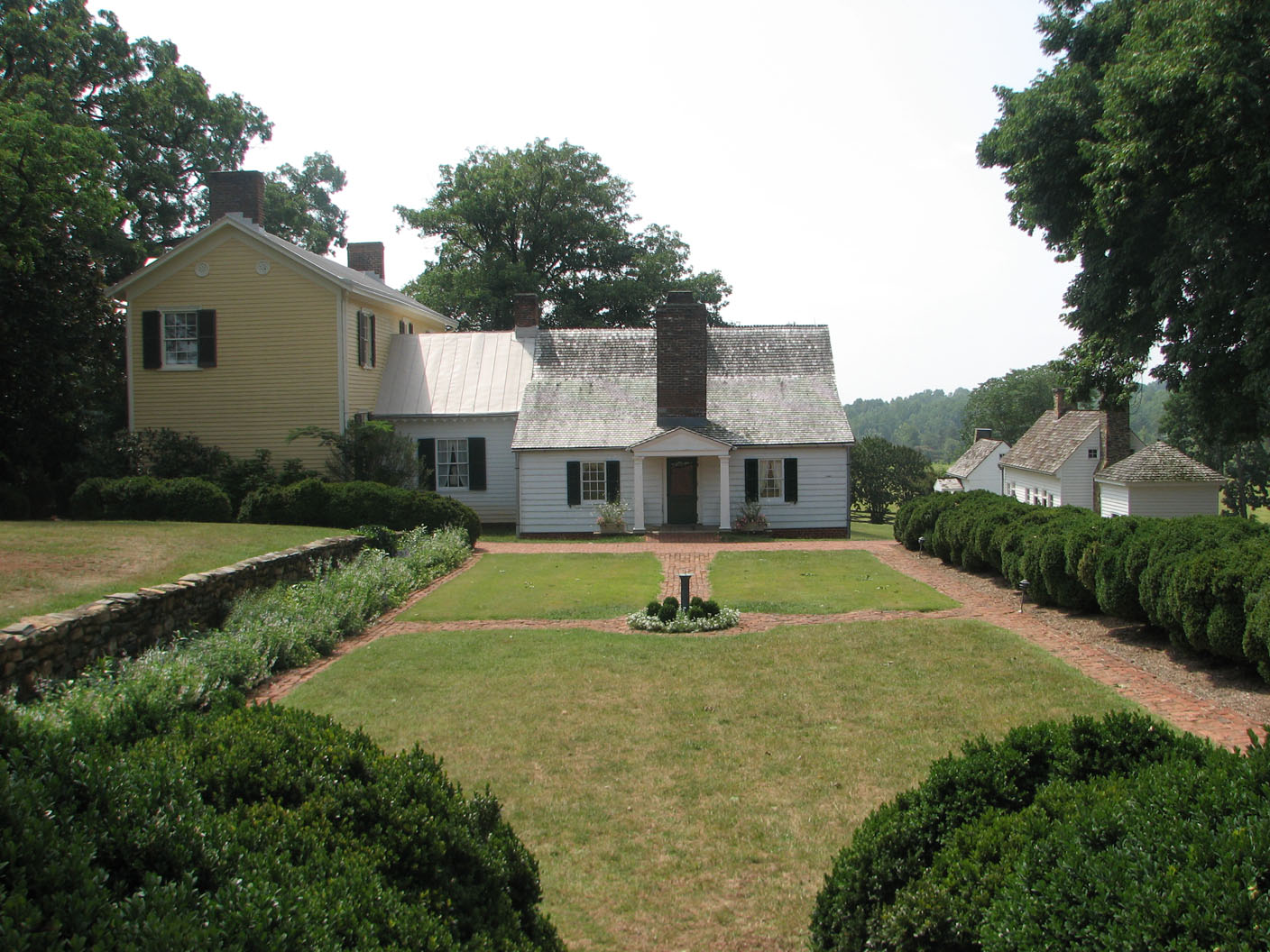
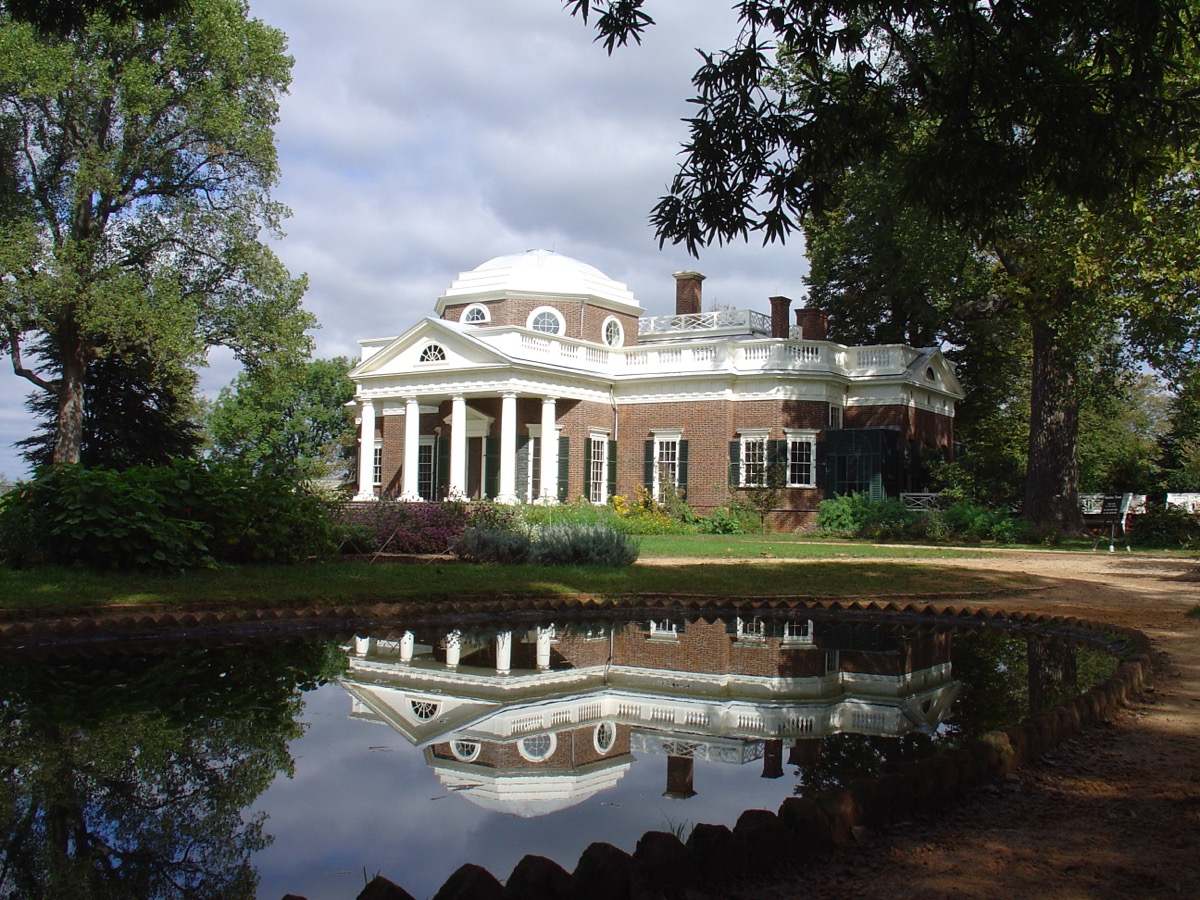
The iconic plantation home of Thomas Jefferson, designed by Jefferson himself and built between 1768-1809. A UNESCO World Heritage Site, it housed as many as 400 enslaved people over the years.
The Ghost Story
Thomas Jefferson spent 56 years designing, building, and refining Monticello atop his "little mountain" outside Charlottesville. The plantation encompassed 5,000 acres where over 400 enslaved people lived and labored during Jefferson's lifetime. He died here on July 4, 1826—the 50th anniversary of the Declaration of Independence—at age 83, just five hours before his friend and fellow signer John Adams passed away in Massachusetts.
Jefferson's ghost is believed to have never left his beloved estate. Visitors and staff report seeing a shadowy figure resembling the third president walking through the halls or appearing in the gardens. Most distinctively, people hear phantom whistling throughout the grounds—a habit Jefferson was known for as he toured his property on daily horseback rides. His presence is felt most strongly in his study and library, where one visitor reported sudden chest pressure and "a sense of great despair" that lifted only upon leaving his personal quarters.
The architectural design of Monticello itself tells a darker story. Jefferson employed subterranean passageways, hidden staircases, and dumbwaiters concealed behind fireplaces to render the labor of enslaved people invisible to dinner guests. The wine cellar delivered bottles through a hidden shaft. The "dependencies"—kitchens, storerooms, and quarters for the enslaved—were buried beneath the terrace walkways, out of sight. As architectural historian Mabel O. Wilson notes: "Jefferson never reconciled those two sides of himself—his democratic ideals of freedom and equality and his position as a slave owner, and his architecture tells us this."
More powerful than Jefferson's restless spirit are the presences tied to the 400 souls who suffered here. Sally Hemings, who bore six of Jefferson's children, lived in a small room adjacent to his bedroom—a space archaeologists discovered in 2017 measuring just 14 feet 8 inches by 13 feet, with no windows, described as "dark, damp and uncomfortable." In 1941, this room was converted into a men's bathroom—what historians called "the final insult to Hemings' legacy." A woman in a white dress has been seen in the areas where enslaved people worked and lived, sometimes identified as Sally herself. Visitors report sensing "a heaviness or discomfort" in these quarters, as if the weight of bondage still hangs in the air.
Along Mulberry Row—the 1,300-foot hub of plantation activity—over 87 enslaved individuals lived and worked in more than 20 workshops and dwellings. In the nailery, boys as young as 10 pounded out 1,000 nails each in 10-to-14-hour shifts, their efficiency measured daily and whippings administered for "wasting" iron. The blacksmith's shop, smokehouse, and slave cabins all stood here. The energy of this relentless labor persists. One visitor who toured in 2013 reported that while exiting Jefferson's bedroom, "something lifted a piece of my hair and gave it a tug." Another felt a force trying to enter or pass through their body in the study; when they moved to the back of the room, it followed.
Multiple visitors have encountered apparitions of children in period dress. In the late 1980s, a couple saw a young girl with blond hair in a white dress with blue apron descending the stairway. She stopped, looked at them, then turned and went back up. There were no costumed guides. Another visitor's father watched two little girls, ages 4 and 6, playing on the floor of the sitting room in white period dresses—an area that was roped off from the public.
The parlor room to the right of Jefferson's bedroom triggers the most intense physical reactions. One frequent visitor who has toured Monticello seven times reported that the last two visits produced the same response: "I felt like I was going to faint and start to become nauseous, lose my hearing and vision" while in that specific room, feeling fine before entering and after leaving.
Today, Monticello operates as a UNESCO World Heritage Site, with the burial ground for enslaved people—containing over 40 graves—dedicated in 2001. The Getting Word oral history project has documented descendants of the enslaved community for over 25 years, fundamentally altering interpretation at the site. The spirits here demand their stories be told alongside Jefferson's. As one ghost tour guide observes, the ghostly presences "might be considered a reminder of the traumatic history of slavery that took place there."
Researched from 12 verified sources including historical records, local archives, and paranormal research organizations. Learn about our research process.