About This Location
The oldest state-supported military college in the United States, founded in 1839. Stonewall Jackson taught here before the Civil War, and the institute provided officers to the Confederacy.
The Ghost Story
The Virginia Military Institute, America's oldest state-supported military college, opened its doors in November 1839 in Lexington, nestled in the rolling hills of the Shenandoah Valley. By the start of the Civil War, VMI had earned a reputation rivaling West Point. Its most famous professor, Thomas "Stonewall" Jackson, taught Natural Philosophy (physics) and Artillery from 1851 until called to Confederate service in 1861. Though cadets nicknamed him "Tom Fool" for his rigid teaching style, Jackson would become one of the most legendary military commanders in American history. His personal effects and the skeleton of his beloved horse Little Sorrel remain on display in the chapel museum, and a portion of campus now bears his name as Jackson Memorial Hall.
The institute's darkest hour came on May 15, 1864, at the Battle of New Market—the only time in American history that a school's student body was deployed as an organized combat unit. When Union General Franz Sigel's forces threatened the Shenandoah Valley, Confederate General John C. Breckinridge made the agonizing decision to commit the VMI Corps of Cadets to battle, reportedly saying "May God forgive me for the order." The 257 cadets, averaging 18 years old with some as young as 15, marched 85 miles in four days. In the chaos of battle, many lost their shoes in the rain-soaked, freshly plowed "Field of Lost Shoes." Of the cadets who charged, 60 became casualties—ten were killed or mortally wounded, including 17-year-old Thomas Garland Jefferson, great-grand-nephew of President Thomas Jefferson, who died three days later in the arms of his roommate, Moses Ezekiel.
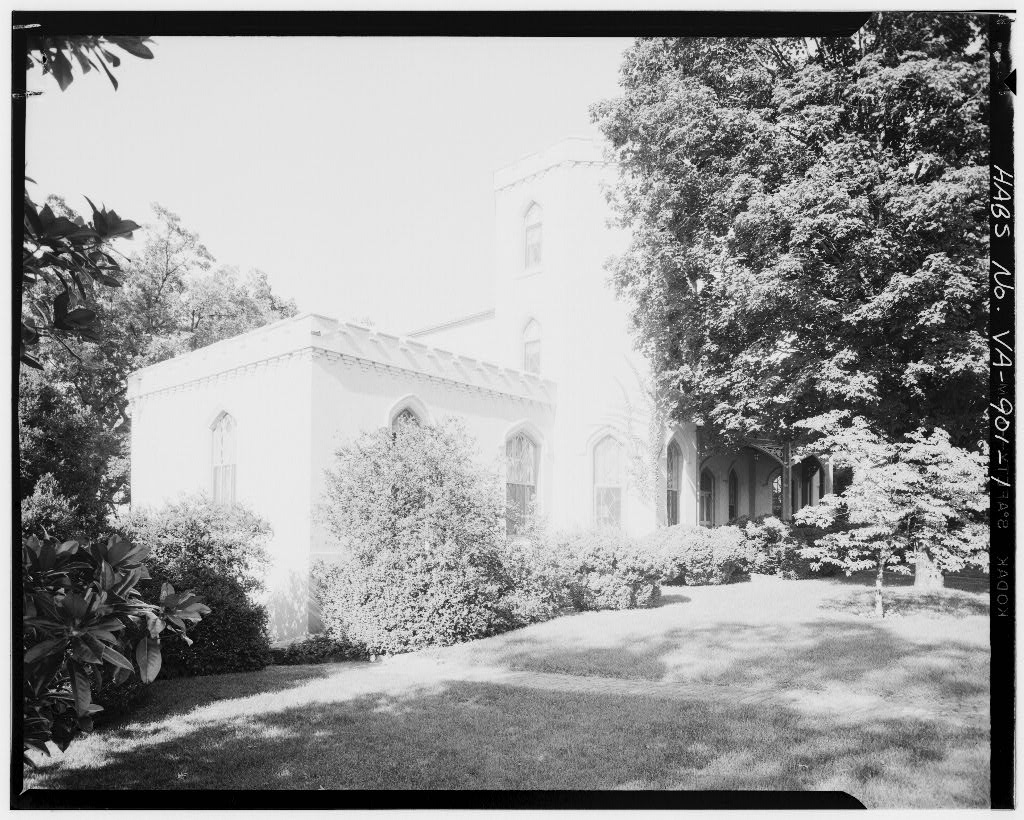
Exactly one month after New Market, on June 12, 1864, Union General David Hunter occupied Lexington with 18,000 troops and ordered VMI burned in retaliation. The distinctive Gothic Revival Barracks, designed by Alexander Jackson Davis in 1851, was extensively damaged along with the library, laboratory, and scientific equipment. Hunter's troops also seized the statue of George Washington, taking it to Wheeling as a trophy. The Corps of Cadets were furloughed, resuming classes in Richmond until the war ended. VMI reopened in Lexington in October 1865, rebuilding the barracks that now harbor generations of ghostly legends.
The most feared spirit at VMI is the Yellow Peril, whose legend dates to the late 1800s. This ghastly apparition takes the form of a cadet in a dark grey blouse wearing a garrison cap with the brim pulled low over its eyes, its face bearing a sickly yellow pallor with a gash strewn across it. The specter haunts a corner of the third stoop (floor) of Old Barracks with a dark history. It appears around 3:30 a.m.—the exact hour of the drum-out ceremony that expels cadets for honor violations. Cadets who encounter the Yellow Peril in the halls are warned never to look back; those who do report the figure rushing toward them with a loud screeching sound, later appearing standing over them as they sleep. In VMI's early years, cadets kept revolvers under their pillows as protection against this apparition. A 1923 letter from a cadet and the book "Echoes of VMI" both document this terrifying legend.
The turret rooms above Washington Arch carry their own dark history. These high, secluded chambers once held cadets found guilty by the Honor Court, awaiting expulsion. Legend holds that disgraced cadets were left with a rope, a knife, and the words "Death before dishonor" etched into the stone walls. Cadets living below report cups flying off surfaces, window shades moving on their own, windows slamming shut, and the sensation of a hand touching their shoulder just before sleep.
Sentry cadets walking their rounds have reported seeing the shadow of a hanged man on the exterior walls of barracks buildings. Alumnus Robert Rainer described watching the shadow for several seconds before it simply vanished. He later discovered dozens of classmates had witnessed the identical phenomenon. Though VMI officially found no evidence that anyone was ever hanged on campus, the unwavering testimony of generations of sentries suggests otherwise.
A helpful ghost also roams the halls—the spectral sentinel who knocks three times on cadet doors moments before they would otherwise be late for guard duty. Trey Copenhaver '12 experienced this in 2011, sleeping in Room 104 of Old Barracks when three soft knocks at 4:55 a.m. woke him just five minutes before breakfast call, his assigned rat having failed to wake him. Tim Frederickson credited this ghostly knocker with saving him from punishment when his alarm failed. Many cadets believe this helpful spirit is a former sentinel who continues his eternal rounds.
A mysterious blue ball of light has drifted through VMI's halls since the early 1900s. Multiple witnesses report seeing this ethereal glow floating through corridors before entering Stonewall Jackson's former classroom, where it vanishes—as if the general has returned to continue teaching the physics lessons he struggled to convey in life.
The underground tunnels beneath Old Barracks harbor their own spirits. This network, rebuilt after Hunter's Raid in 1865, includes steam tunnels and former trunk rooms. A "ghost cadet" was allegedly captured on VMI security cameras near the tunnel entrance in an area called the "Bear Den." Cadets report seeing this spirit not just in the tunnels but in the corners of their rooms, watching them as they study late into the night.
Perhaps the most poignant haunting centers on "Virginia Mourning Her Dead," the magnificent bronze statue sculpted by alumnus Moses Ezekiel and dedicated in 1903. Ezekiel, who had fought at New Market and watched his roommate Thomas Jefferson die in his arms, created this memorial to honor his fallen classmates. Beneath the statue lie six of the ten cadets killed at New Market. At the dedication ceremony, Ezekiel wrote that seeing young cadets on parade reminded him so powerfully of his classmates that "something arose like a stone in my throat, and fell to my heart, slashing tears to my eyes." Generations of alumni have reported moans and cries emanating from the statue's vicinity, and many swear they have seen real tears streaming from Virginia's bronze eyes when they investigate the mysterious sounds.
Guard duty brings other encounters. Doug Wainwright '83 recalls a bitter cold November night in 1979 when he observed a mounted rider wearing a cowboy hat with a sword at his hip, sitting motionless on a horse with an unusually white mane and tail near the parade deck. The figure remained throughout his entire shift, and his replacement confirmed seeing "that guy" too. Fellow cadets suggested the apparition was "General Jackson coming back to protect the school." George Mayforth '82 reported a more terrifying encounter near the Stonewall Jackson statue—sensing surveillance, he watched the statue's gaze seemingly shift toward him, followed by darkness and cold. Later in his room, a decomposing figure materialized on his bed, causing paralysis before vanishing.
Even New Market Battlefield remains active. Cadets camping overnight near the orchard have been pelted by apples thrown from the empty field near the cannons—gates locked, no one visible, multiple projectiles coming from the direction where Union and Confederate forces once clashed.
Since 1866, VMI has held an annual ceremony on May 15th, the anniversary of the battle. The Corps of Cadets assembles on the parade ground as the names of the ten fallen New Market cadets are called. To each name, a cadet responds: "Died on the Field of Honor, Sir." Seniors leave their shoes on the parade deck in tribute to the Field of Lost Shoes. The ceremony, battle sounds reported echoing from Memorial Hall, and the weeping statue suggest that the spirits of VMI's past remain present, eternally drilling in the Shenandoah Valley where they gave everything for their cause.
Researched from 14 verified sources including historical records, local archives, and paranormal research organizations. Learn about our research process.