About This Location
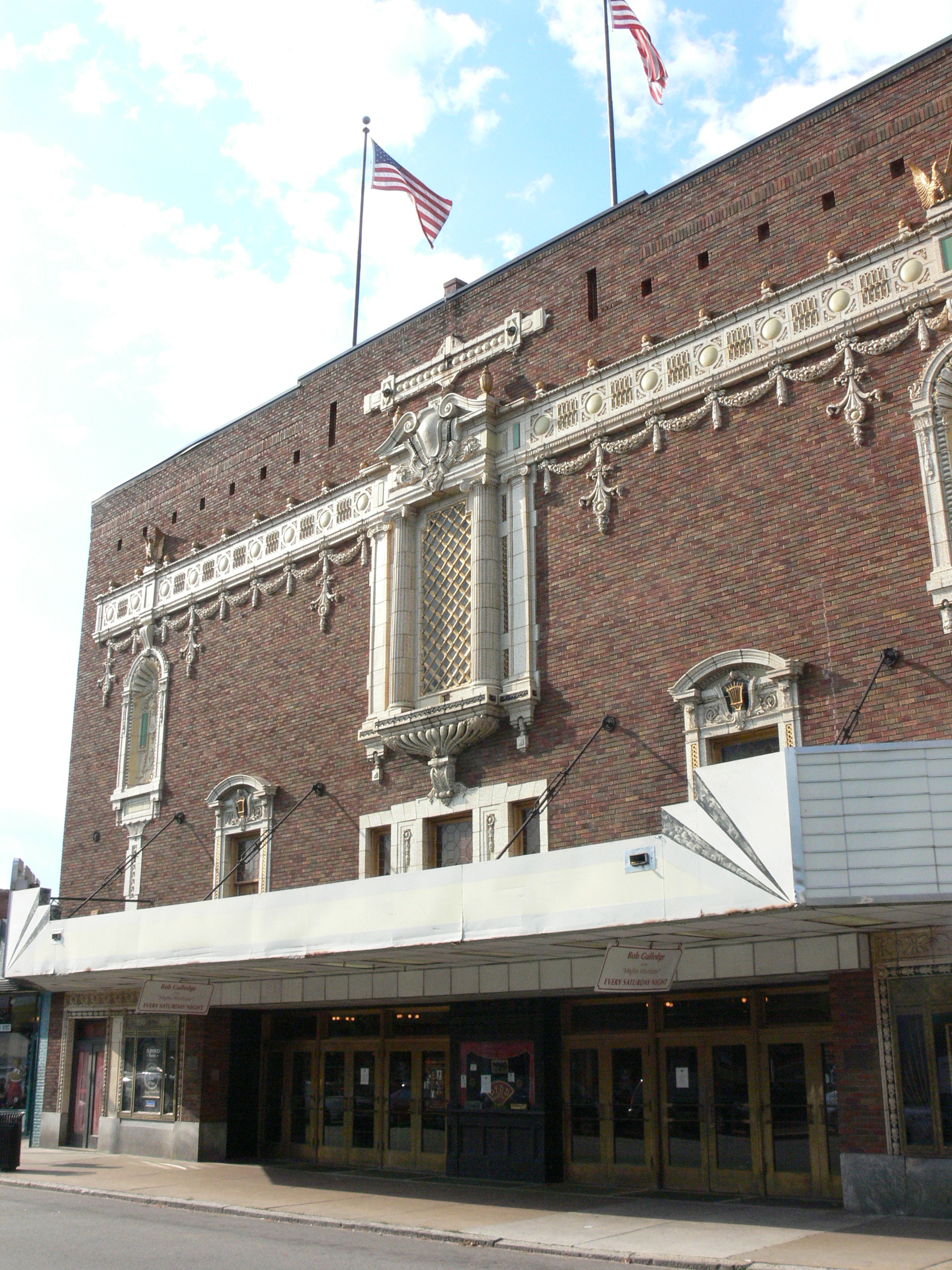
A stunning 1928 movie palace in the Carytown district, featuring a Wurlitzer organ and ornate decorations. One of the few remaining grand theaters from the golden age of cinema.
The Ghost Story
Richmond's Byrd Theatre stands as one of Virginia's most magnificent movie palaces and one of its most haunted. Named after William Byrd II, the founder of Richmond, the theater opened on Christmas Eve, 1928, showing its first film, "Waterfront," to audiences who paid just 25 cents for a matinee. Built at a cost of $900,000 (equivalent to over $12 million today) by Walter Coulter and Charles Somma, and designed by Richmond architect Fred Bishop in the French Empire style, the Byrd was the first theater in Virginia equipped with a sound system. Its opulent interior, decorated by the Arthur Brunet Studios of New York, features eleven Czechoslovak crystal chandeliers—including an 18-foot, two-and-a-half ton centerpiece with over 5,000 crystals illuminated by 500 red, blue, green, and amber lights—imported Italian and Turkish marble, hand-sewn velvet drapes, gilded archways, and oil on canvas murals depicting Greek mythology. The theater's Mighty Wurlitzer Hope-Jones Unit Orchestra Opus 1948, with its four manuals and 17 ranks of organ pipes plus a full complement of instruments for silent film accompaniment, remains one of fewer than 40 surviving Wurlitzer organs still in their original installation.
The theater's primary ghost is Robert Coulter (no relation to the builder), who served as the Byrd's general manager from its founding in 1928 until his retirement in 1971—a remarkable 43-year tenure. According to current staff, Coulter was a descendant of one of the original architects of the building. Described as "a very imposing, extremely tall gentleman," Coulter was legendarily devoted to the theater and famous for his energy conservation habits, constantly switching off lights to maintain profitability. He continued visiting the Byrd daily even after retirement until his death in 1978 at age 76.
Coulter's ghost is most frequently spotted in the balcony, sitting in the upper seats watching films as he did in life. Former manager Todd Schall-Vess confirmed he is "seen in a number of places but mostly spotted in the balcony." Patrons have reported seeing grotesque faces in the balcony shadows that disappear when the lights come on. According to paranormal investigators, if the film is to Coulter's liking, his ghost will give it a standing ovation—only to vanish moments later. During one investigation, Dennis Estlock of the Commonwealth Researchers of the Paranormal reported: "We saw a shadow figure sitting in a seat up in the balcony, and [the staff] said that was where [Coulter] was commonly seen sitting." In another remarkable incident related by house organist Bob Gulledge, during a late 1990s CBS filming at the Byrd, while the crew was discussing how Coulter used to switch off lights whenever he could, the entire building suddenly went dark—as if Coulter was demonstrating his habits from beyond the grave. When investigators reported contacting Coulter's spirit, he allegedly communicated that his last movie at the theater was "Gone with the Wind"—and he hated it.
The second known ghost is a mysterious little girl whose giggles echo through the women's restroom. Manager Schall-Vess stated: "One is a little girl who is seen frequently in the women's bathroom." In 2012, paranormal investigator Steve Dills of Transcend Paranormal examined the theater using EVP (Electronic Voice Phenomenon) technology and captured audio of a little girl talking in the women's bathroom, as well as an older gentleman saying the name of one of the team members. Dills reported: "We found some stuff here but didn't get as much as I expected. One EVP we captured was a little girl talking in the women's bathroom." Known as the "Laughing Girl," her identity remains a mystery. One theory suggests she was a child whose only positive childhood memories were of watching movies at the Byrd, creating an emotional attachment that kept her spirit bound to the theater.
Current operations manager Samuel Hatcher, who has worked at the Byrd for over three and a half years, has experienced multiple unexplained occurrences. "One time, I was backstage, and the door swung open and slammed shut, and I thought it was my coworker," he recounted. "I walked back up to the front, and my coworker was standing in the front of the theatre. So, I had been alone back there." Video footage has captured the back doors to the alley blowing open with no breeze—unusual given the theater's lack of air circulation outside the central AC. On another occasion, Hatcher observed film in the projection booth fluttering as if someone were walking by, though he was completely alone. "Stuff like that, you cannot really explain," he said. When closing the theater alone at night, Hatcher describes "feeling like there is someone watching" and notes "you definitely get an aura of energy in this building."
The Byrd Theatre was designated a Virginia Historic Landmark in 1978 and listed on the National Register of Historic Places in 1979. Unlike many grand movie palaces from the 1920s and 1930s, it has survived over 90 years largely unaltered, still operating continuously as a movie theater. The Mighty Wurlitzer continues to be played before every Saturday evening showing by house organist Bob Gulledge, who has held the position since 1996 after studying under legendary organist Eddie Weaver.
The haunted reputation is something the theater "absolutely" embraces, according to Hatcher: "We kind of lean into it in a sense. We love when people dress up and we love when our patrons have that experience." Paranormal investigators can rent the Byrd and conduct overnight investigations with supervising staff present. For nearly a century, the ghosts of the Byrd Theatre have shared the darkness with moviegoers—Robert Coulter still watching from his favorite balcony seat, and somewhere in the women's restroom, a little girl's laughter echoing through the ornate halls of Richmond's beloved movie palace.
Researched from 13 verified sources including historical records, local archives, and paranormal research organizations. Learn about our research process.