About This Location
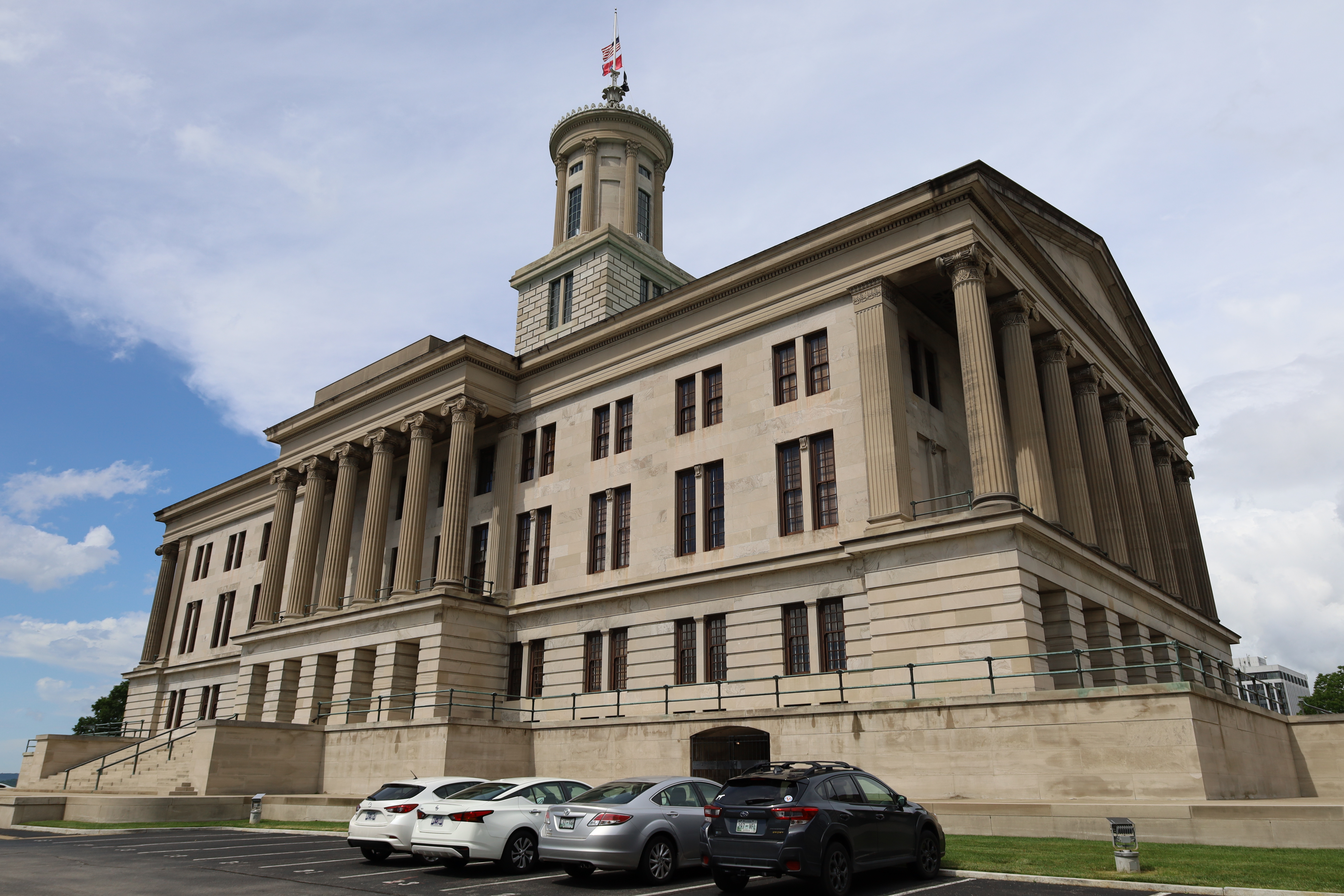
Completed in 1859 after 14 years of construction, the Tennessee State Capitol is one of the oldest working state capitols in the nation. Architect William Strickland is entombed within its walls, as is President James K. Polk.
The Ghost Story
The Tennessee State Capitol is one of the few government buildings in America where the architects are literally buried in the walls -- and according to countless witnesses, they have never stopped fighting about it. Construction began on the Fourth of July, 1845, with architect William Strickland designing the Greek Revival structure on a hill overlooking the Cumberland River. The project consumed fourteen years and became a battleground between Strickland and Samuel D. Morgan, the Capitol Commission chairman, who clashed relentlessly over design decisions and construction costs. Their arguments were legendary -- the two men could be heard yelling at each other across the building site for years.
Strickland died in April 1854 before the building was completed, and true to his dying wish, he was entombed in a vault within the limestone of the northeastern corner of the Capitol. Morgan outlived his rival by decades, but upon his death in 1880, he too was interred in the building -- in the southeastern corner, as far from Strickland as the walls would allow. Their feud, it seems, did not end with death. Staff members and police officers have reported hearing the two men's voices arguing inside the empty building, their quarrels usually beginning around 9 p.m. The sound is so convincing that local police have been called to investigate, only to find the Capitol completely deserted. According to multiple witnesses, the arguing is so loud it can be heard from outside the building when conditions are right.
The Capitol harbors other spirits beyond the feuding architects. President James K. Polk and his wife Sarah are buried in the East Garden, their tomb having been relocated three times since Polk's death from cholera in 1849. A man in a dark suit has been seen kneeling before the Polk tomb, gazing at the gravestone before slowly dissipating until he vanishes completely as observers approach. Some witnesses believe the figure is Polk himself, contemplating his own grave -- perhaps restless from having been moved so many times.
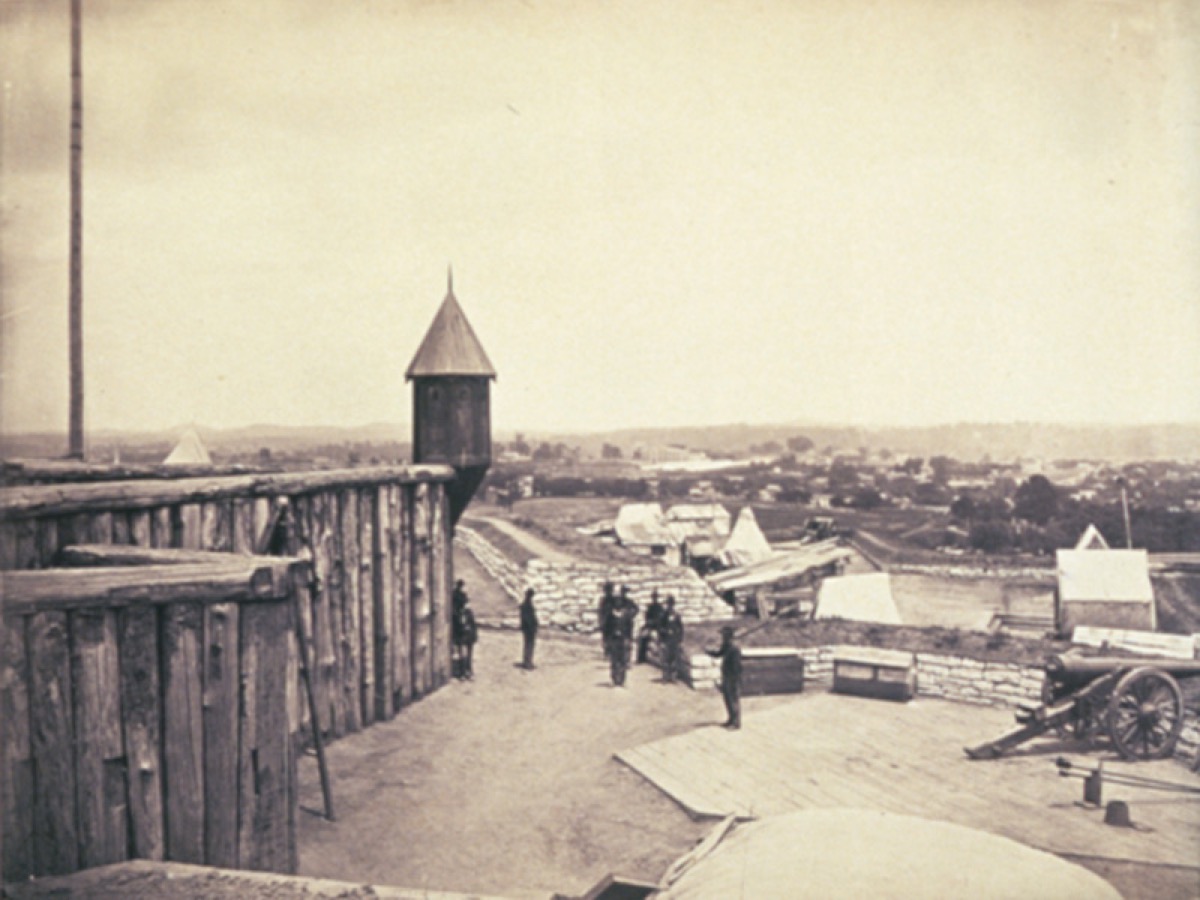
During the Civil War, Union forces occupied Nashville and used the Capitol as a fortress. In 1862, a Confederate guard was shot at the top of the cupola staircase, and his body went tumbling down the spiral steps. His presence has never left. Construction workers doing restoration work reported a dark, misty figure standing near the top of the staircase. Workers felt threatened by the entity and reported being pushed and violently told 'Don't touch the furniture!' Furniture that crews moved during renovations was found inexplicably returned to its original positions.
Capitol employees have also reported seeing a woman dressed in fancy antebellum-era evening wear leisurely strolling the property and walking about the tower. Some have speculated she may be Rachel Jackson, wife of Andrew Jackson, though she died in 1828, well before construction began. The library, too, has its own activity -- strange voices and odd sounds emanate from among the shelves, and staff working late report an overwhelming sense of being watched throughout the building.
The Tennessee State Capitol remains an active seat of government, its halls walked daily by legislators, staff, and visitors -- along with at least four spirits who seem to have no intention of leaving the building they helped create, defended, or simply cannot abandon.
Researched from 8 verified sources including historical records, local archives, and paranormal research organizations. Learn about our research process.