About This Location
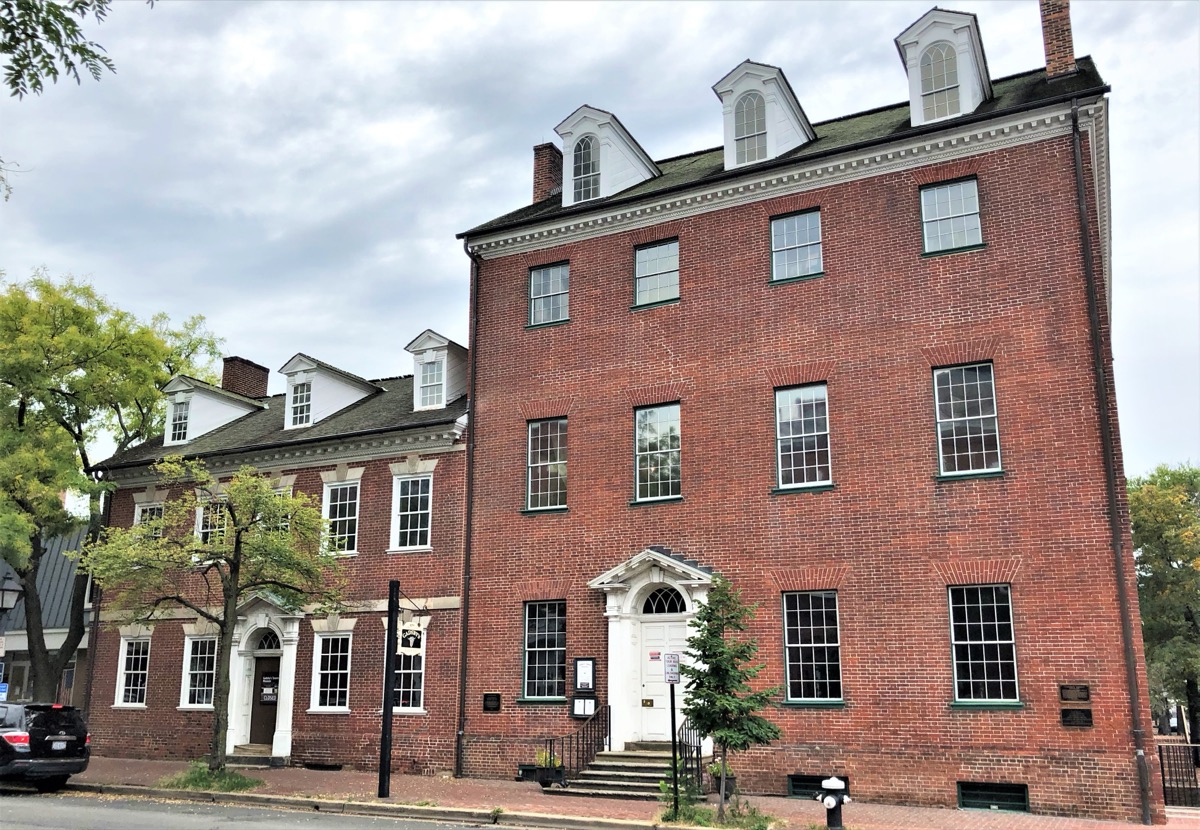
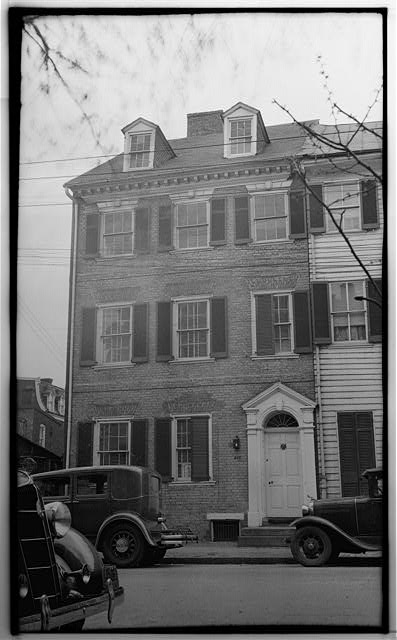
An 18th-century townhouse that was once home to Colonel Michael Swope, a Revolutionary War officer who survived capture and imprisonment by the British.
The Ghost Story
Colonel Michael Swope's Townhouse at 210 Prince Street stands as one of Alexandria's most enduring haunted landmarks, its three-and-a-half stories of Georgian architecture harboring the restless spirit of a Revolutionary War hero who refuses to forgive the British—even in death.
The story begins in York, Pennsylvania, where Michael Swope (1725-1792) organized and led the 1st (York) Regiment of the Pennsylvania Flying Camp in July 1776. The Flying Camp was a mobile strategic reserve of 10,000 militiamen created by Congress to respond to British threats along the Atlantic coast. On November 15, 1776, Swope received a message under flag of truce from British adjutant general Lieutenant Colonel James Paterson at Fort Washington in Manhattan: surrender or face annihilation. The following day, British and Hessian forces overwhelmed the garrison. Swope and nearly 3,000 men were captured.
Colonel Swope endured years of brutal British imprisonment, forced to watch fellow soldiers die of disease and starvation. When finally exchanged in January 1781—according to Benjamin Franklin, traded for Franklin's own loyalist son William, the last colonial Governor of New Jersey—the weakened colonel was made to walk hundreds of miles back to Pennsylvania. That humiliation cemented Swope's hatred of the British.
After the war, Swope moved his family to Alexandria in 1784, establishing a ship chandlery at a wharf and building his dream townhouse between 1784-1786 with his wife, Eva Kuhn Swope. The semi-detached colonial townhouse featured luxuries reflecting his passions: fine woodwork with crown molding throughout, a music room with a beloved piano, a library, and a peaceful garden. He died in 1809, and his body was transported by carriage to a ship on Union Street, then sailed to Philadelphia for burial in the family vault. The house remained in the Swope family until 1823.
The haunting began precisely in 1859, when a yellow fever epidemic swept through Philadelphia. Health officials ordered the Swope family vault disinterred to verify no victims had died of the fever. The desecration of his eternal rest awakened Colonel Swope's spirit—and his rage. The Alexandria Library archives contain eyewitness accounts starting from that very year.
The most famous encounter occurred when an English woman toured the townhouse intending to purchase it. As she ascended the stairs to the third floor, an icy cold hand pressed firmly on her shoulder, stopping her advancement. She felt overwhelmingly unwelcome. The woman, who claimed psychic abilities, told the realtor that Swope's spirit had communicated directly with her—he despised her British roots and would not permit her to buy his home.
Swope's ghost has been seen wandering the grounds in his full Revolutionary War uniform, most often appearing on the main staircase. On multiple occasions, the spectral colonel has answered the front door to greet arriving guests, standing in period attire before dissolving into nothing. Neighbors have reported hearing piano music emanating from the townhouse when it stood completely empty—Swope playing his beloved instrument even when no physical piano existed inside.
Those who enter report the scent of phantom tobacco smoke drifting through rooms, sudden bone-chilling cold spots (particularly on the stairwell), and the haunting lullaby of a ghostly piano that seems to come from everywhere and nowhere at once.
A second spirit also claims the townhouse: American spy John Dixon, allegedly executed by the British during the Revolution. Like Swope, Dixon harbors an eternal grudge against the British. Residents over two centuries have reported encounters with one or both male spirits acting as protective guardians of the property. Dixon's apparition has been spotted in the garden and attic, still wearing his uniform.
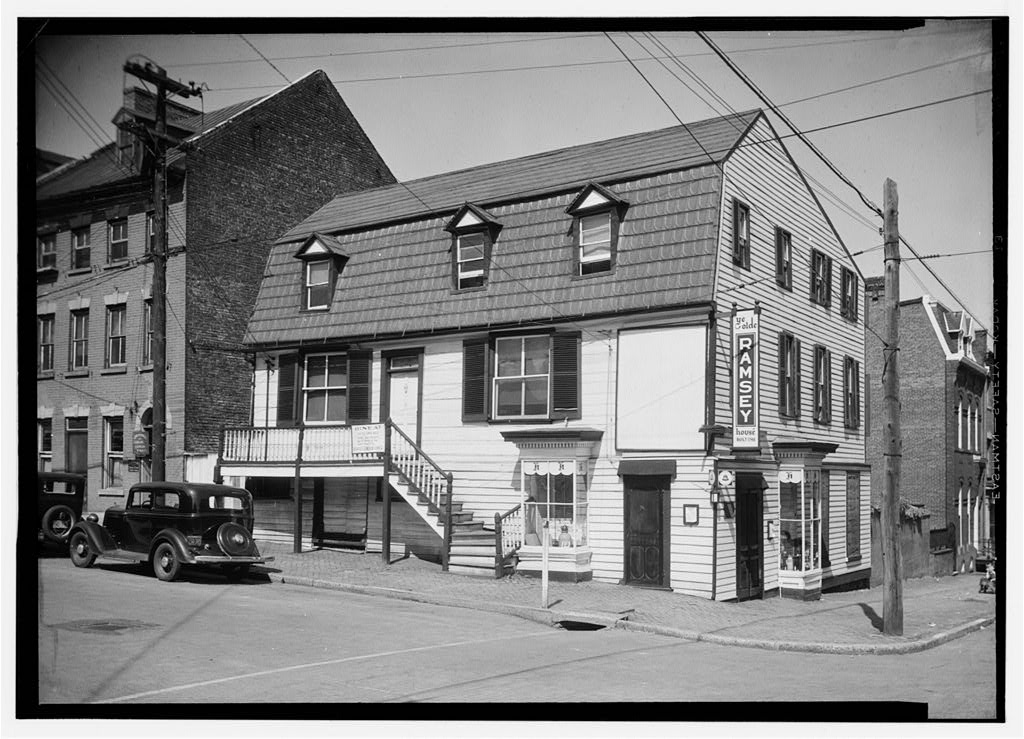
Michael Lee Pope, author of "Ghosts of Alexandria," described Swope as "a true Patriot! Here is a man who was a real hero of his day, someone who was admired and revered." That admiration has followed him beyond the grave. The Colonel Michael Swope House was documented by the Historic American Buildings Survey in 1933 and is listed on the National Register of Historic Places—a fitting honor for a warrior whose fighting spirit endures more than two centuries after his death, forever standing guard over his dream home against any who dare speak the King's English.
Researched from 11 verified sources including historical records, local archives, and paranormal research organizations. Learn about our research process.