About This Location
A collapsed railway tunnel built in the 1870s for the Chesapeake and Ohio Railway. A 1925 cave-in killed several workers and trapped an entire train, which remains buried underground to this day.
The Ghost Story
On December 11, 1873, Chesapeake and Ohio locomotive number 2 rumbled through Richmond's newest engineering marvel—a 4,000-foot tunnel burrowed beneath Church Hill, connecting the Shockoe Valley rail yards to the shipping docks at Rocketts Landing. At the time, it was one of the longest tunnels in the United States. But geologists had warned the railroad not to dig through Church Hill's blue marl clay, soil that swells and shrinks with moisture like a living thing. During construction, at least nine workers died in cave-ins. The tunnel was cursed from the start.
By 1901, the C&O Railroad had completed a viaduct along the James River, and the troublesome Church Hill Tunnel was abandoned. It sat dormant for nearly a quarter century until October 1925, when rising traffic convinced the railroad to reopen and reinforce the passage.
On October 2, 1925, shortly after 3 p.m., engineer Thomas Joseph Mason guided steam locomotive number 231 and ten flatcars into the western portal. Approximately 200 workers labored inside, loading dirt onto the cars by hand in the dim electric light. Mason had pulled the train 160 yards in—just 100 feet from the western entrance—when a brick fell from the ceiling and slammed onto one of the flatcars.
Then the world collapsed.
A 190-foot section of tunnel roof came crashing down in a cascade of brick and clay, severing electrical cables and plunging everything into total darkness. Three hundred workers scrambled for their lives toward the eastern portal, some crawling beneath the flatcars to escape the avalanche of debris. The reverse lever of locomotive 231 fell in such a way that it pinned Thomas Mason inside the cab. Dirt and rubble poured through the windows, crushing him where he sat.
Benjamin Franklin Mosby, the twenty-eight-year-old fireman, was not so fortunate to die quickly. When the boiler ruptured, scalding steam engulfed him. Somehow, he dragged himself out of the wreckage and staggered toward the tunnel's eastern entrance. Witnesses waiting outside watched in horror as a figure emerged from the darkness—a man with broken teeth, blood streaming down his face, and skin hanging in ribbons from his body, peeled away by the searing steam.
Some say that Mosby was in such agony that he couldn't bear for anyone to touch him. He died hours later at Grace Hospital. His gruesome emergence would give birth to one of Richmond's most enduring legends: the Richmond Vampire.
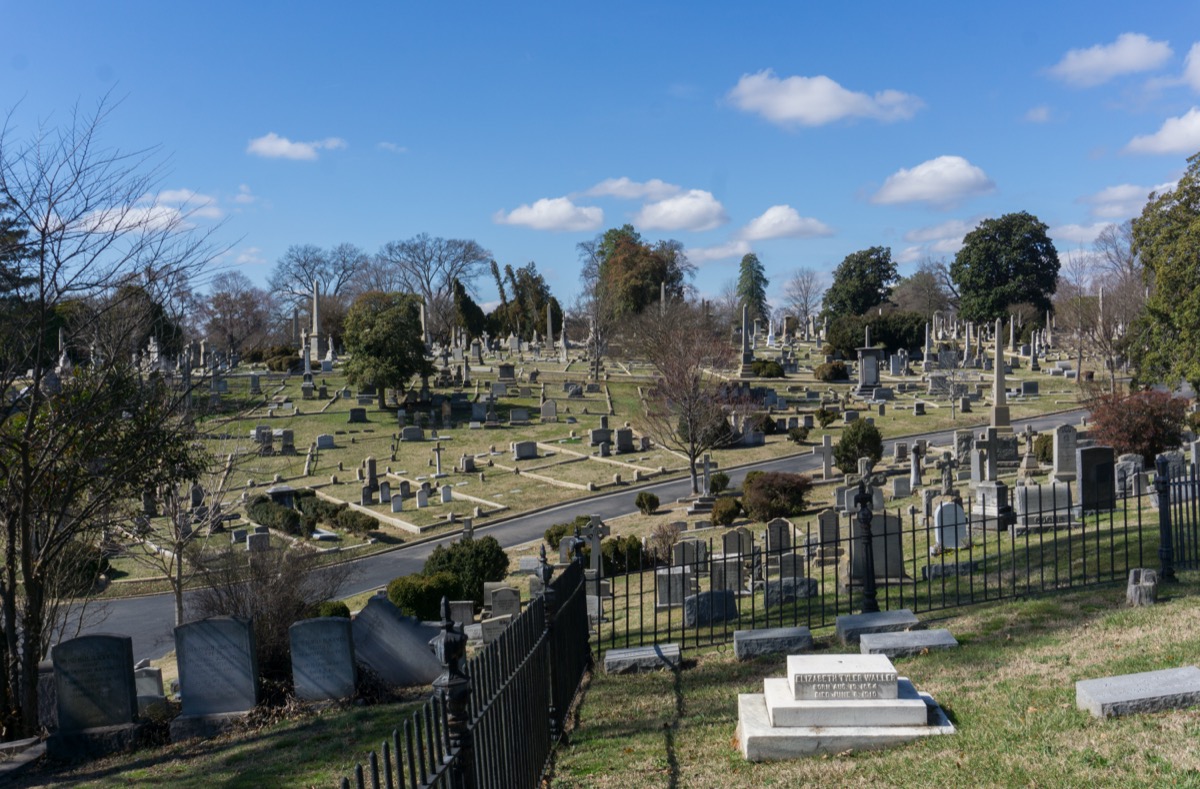
According to the urban legend that emerged decades later, the creature that staggered from the tunnel was no man at all, but a blood-covered monster with jagged fangs and decomposing flesh. Pursued by a mob, the creature allegedly fled toward Hollywood Cemetery and disappeared into a mausoleum bearing the name W.W. Pool—a respectable accountant who had died three years earlier and had no connection to the disaster. The first known text combining the tunnel collapse with the vampire legend didn't appear until 2001, receiving wider attention in the 2007 book Haunted Richmond: The Shadows of Shockoe.
But the true horror lies with Richard Lewis and H. Smith, two African American laborers who never escaped. For nine days, rescue teams dug frantically, but each advance triggered new cave-ins. By October 5th, poison gas had filled the collapsed sections. On October 10th, workers recovered Mason's body—his coffin was painted with the number 231 in tribute. But Lewis and Smith were never found.
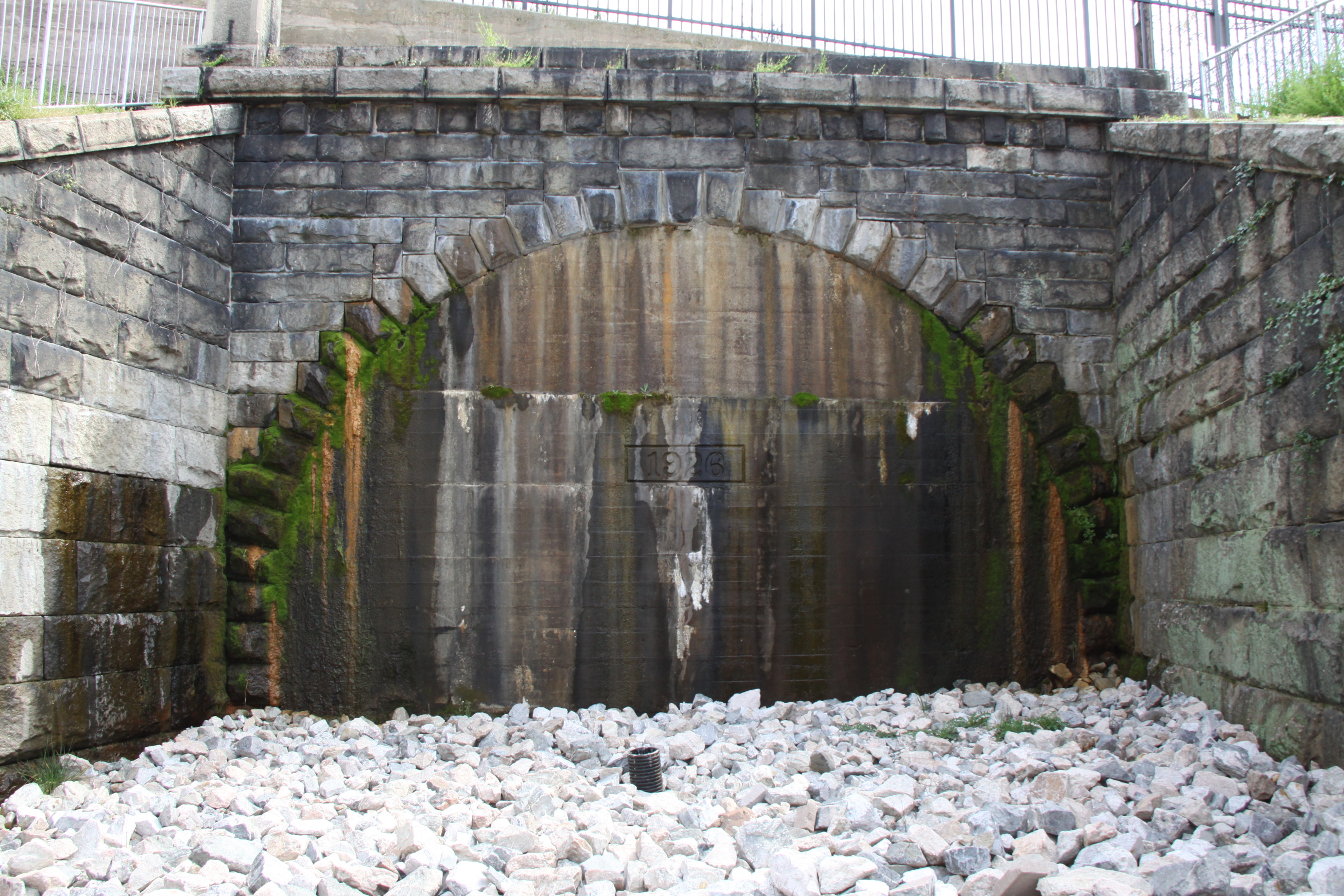
In 1926, the C&O Railroad filled the tunnel with sand and sealed both portals with concrete. The wall at the western entrance bears the date "1926." Entombed beneath Jefferson Park lies locomotive 231, ten flatcars, and two men whose desperate final moments remain frozen in time.
Today, the western portal is visible beside the Atrium Lofts at Cold Storage on North 18th Street, a popular stop on Richmond ghost tours. Residents of nearby apartments report hearing a muffled locomotive whistle at odd hours—strange, considering the last train to enter that tunnel never left. Others hear digging sounds, the screech of iron wheels, and agonized screams of "Get me out! Get me out!" Some visitors report knocking from inside the sealed entrance. In early October, around the anniversary of the collapse, paranormal activity reportedly intensifies, with witnesses claiming to see a shadowy figure trying to enter or exit the tunnel, perhaps still attempting a rescue that will never come.
In 2006, the Virginia Historical Society partnered with railroad enthusiast Pete Claussen to investigate exhuming the locomotive. Boreholes drilled into Jefferson Park revealed that most of the tunnel is flooded with murky water. When the estimated cost reached million, the project was abandoned. Locomotive 231, along with the remains of Richard Lewis and H. Smith, will likely stay entombed forever.
The tunnel is now owned by CSX Transportation, the C&O's successor. It remains sealed, a 4,000-foot tomb beneath one of Richmond's oldest neighborhoods. Whether you believe in the Richmond Vampire or not, there's no disputing that something terrible happened here—and some believe that the men who died in that darkness have never truly left.
Researched from 13 verified sources including historical records, local archives, and paranormal research organizations. Learn about our research process.