About This Location
Established in 1853, this Victorian garden cemetery spans 55 acres and contains over 35,000 graves, including many Confederate soldiers and victims of yellow fever epidemics.
The Ghost Story
Elmwood Cemetery stands as Norfolk's most haunting memorial to tragedy and sacrifice, established in 1853 as a Victorian garden cemetery on fifty acres of land once known as Farmingdale. Designed in the mid-nineteenth century grid style, its winding paths and ornate monuments embody the romantic Victorian concept of death as temporary sleep—a belief reflected in the bed-shaped grave markers with tall headstones resembling headboards and smaller footstones as footboards.
The cemetery's darkest chapter came during the Summer of the Pestilence in 1855, when the steamer Ben Franklin arrived from the Virgin Islands carrying yellow fever. The epidemic swept through Norfolk and Portsmouth like wildfire, claiming nearly 3,000 lives—roughly ten percent of the region's population. At the height of the crisis, more than eighty people died each day. Coffins were stacked in the cemetery with no one to dig the graves. When coffin supplies ran out entirely, victims were buried in unmarked mass graves, their identities lost to history. The constant rattle of hearses through deserted streets became the grim soundtrack of a city that resembled a ghost town. Visitors report an oppressive sense of sorrow near these unmarked burial sites, as if the collective grief of thousands still lingers in the soil.
Among the more than 400 Civil War veterans interred here lies the Father Ryan Lot, purchased by Father Abram Joseph Ryan—the Poet-Priest of the Confederacy—to provide burial space for sixty unknown Confederate soldiers who died far from home. The monument's inscription reads: "In this lot rest in sleep sixty Confederate dead. We know not who they were. But the whole world knows what they were." Visitors have reported the ghostly presence of soldiers in gray uniforms walking among the headstones at twilight, sometimes pausing to stand at attention before fading into the evening mist.
Colonel William Lamb, the Hero of Fort Fisher, rests here after commanding the Confederacy's largest coastal fortification with just 1,900 men against 10,000 Federal troops. His indomitable spirit is said to still patrol the grounds, and some visitors report seeing a figure in Confederate officer's attire near his grave, particularly on foggy mornings.
The Recording Angel sculpture, an eight-foot bronze masterpiece by Norfolk's own William Couper, watches over his mother Euphania's grave in the Couper Family Lot. This magnificent figure is said to record each deceased person's name in the book of everlasting life. Some believe the angel's presence attracts spirits seeking their final judgment, and visitors have photographed mysterious orbs of light surrounding the statue at dusk.
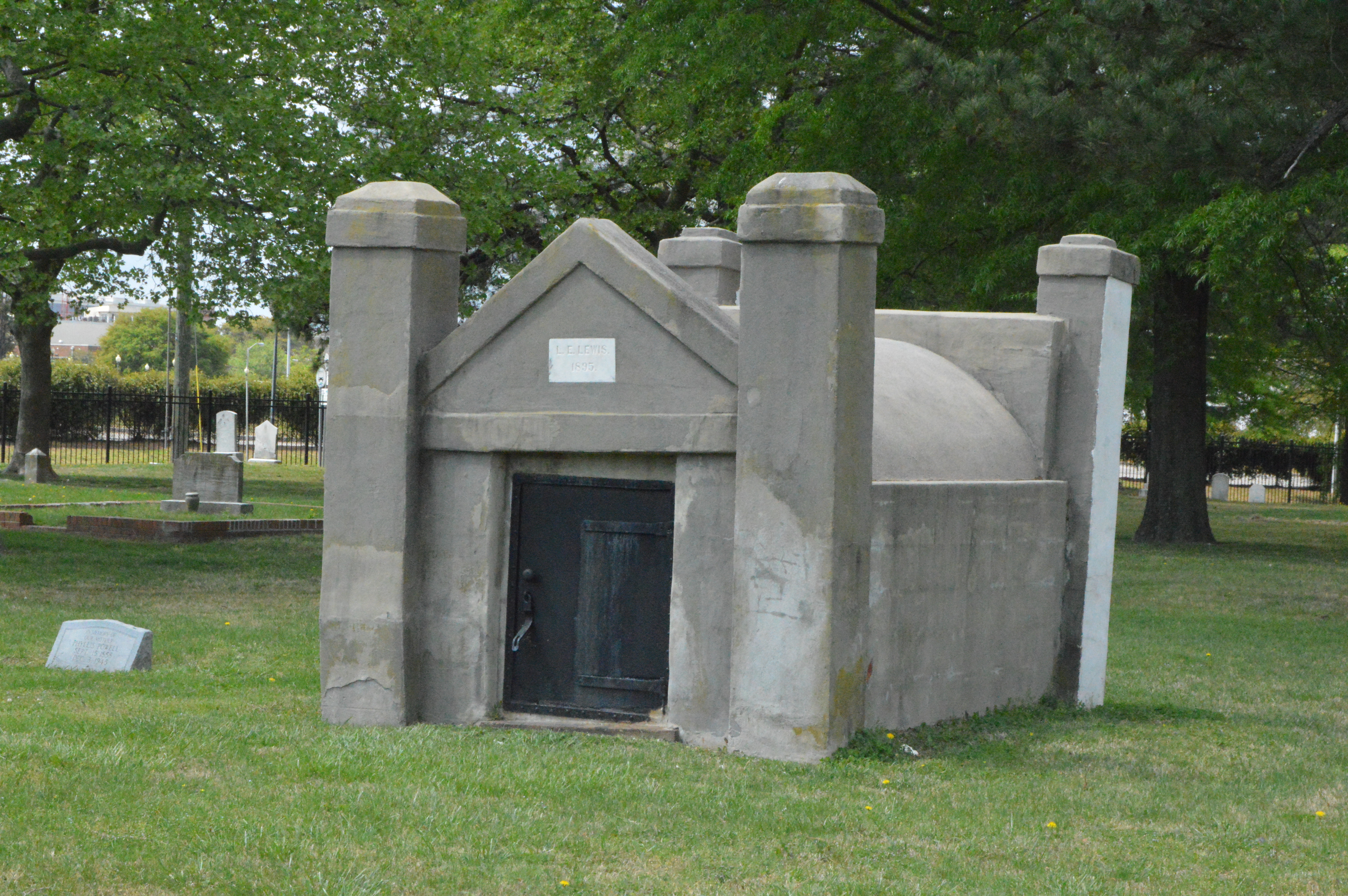
Shadowy figures are frequently spotted moving among the Victorian funerary art—weeping angels, draped urns, and elaborate mausoleums like the John Core monument, funded by his ,000 bequest along with ,000 for lawyers to defend his will. The Norfolk Society for Cemetery Conservation leads haunted tours each October, where guides share tales of unexplained cold spots, disembodied footsteps on the oyster shell paths, and the sound of weeping near the yellow fever mass graves.
A woman in mourning dress has been seen visiting a particular grave at twilight, sobbing for her lost love before dissolving into the shadows. Whether she mourns a Civil War soldier, a yellow fever victim, or some other tragedy lost to time, her eternal vigil continues. The Victorian romantic atmosphere, combined with the sheer weight of tragedy buried beneath the soil—epidemic victims, fallen soldiers, and generations of Norfolk's founders—makes Elmwood one of Virginia's most spiritually charged historic sites.
Researched from 8 verified sources including historical records, local archives, and paranormal research organizations. Learn about our research process.