About This Location
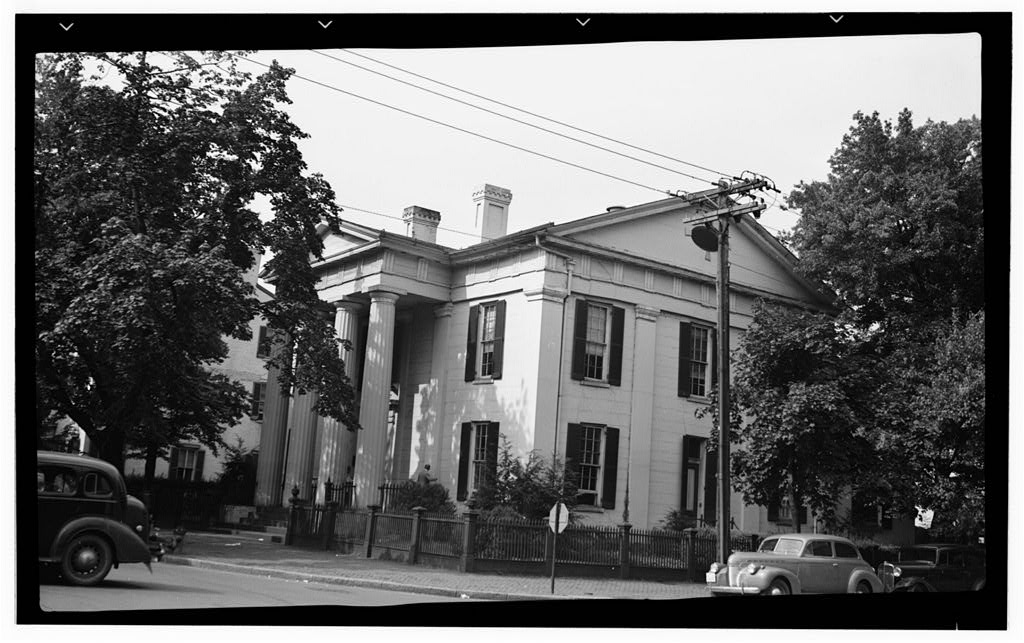
A Greek Revival building constructed in 1839 as a cultural center. During the Civil War, it served as a hospital for Union soldiers. Now Alexandria's history museum.
The Ghost Story
The Lyceum stands as one of Alexandria's most architecturally distinguished buildings—and one shaped by profound suffering. Built in 1839 on the initiative of Quaker schoolmaster Benjamin Hallowell, this Greek Revival masterpiece featuring a commanding two-story Doric portico was constructed from bricks recycled from the original St. Mary's Chapel. For two decades, the building served as the intellectual heart of Alexandria, its elegant lecture hall welcoming luminaries such as John Quincy Adams, Daniel Webster, and Caleb Cushing.
That scholarly purpose ended abruptly in May 1861, when Federal troops arrived to occupy Alexandria—the first Confederate city to fall to Union forces. Like over forty other Alexandria buildings, the Lyceum was seized and converted into a military hospital. Lyceum Hall Hospital held eighty beds and served as a ward of the nearby Downtown Baptist Church General Hospital, becoming part of a medical network that would eventually encompass thirty hospitals with 6,500 beds.
The conditions inside were harrowing. When nurse Clarissa Jones arrived in September 1862, she recorded finding "60 badly wounded men without a nurse, without comforts of any kind...The smell arising from the undressed wounds was perfectly dreadful." Working from a room so small she could touch opposite walls from her bed, Jones witnessed one to three military funerals daily. She performed "the last sad office of kindness for the dead," washing bodies and cutting locks of hair to send to grieving families. Among those she nursed was Sergeant Orville Wheelock of Michigan, an amputee whose wife arrived days after his death, unaware she was now a widow.
The trauma of the Lyceum's hospital years left permanent marks. Thousands of Union and Confederate soldiers died in Alexandria's hastily converted hospitals, their blood literally soaking into floorboards that still exist today. The screams of amputees operated on without adequate anesthesia, the moans of men dying from infection and disease, and the overwhelming stench of death created what many believe are permanent paranormal impressions on the city.
Staff and visitors to the current Alexandria History Museum report unsettling experiences. Cold spots materialize without explanation throughout the building, particularly in areas that once served as patient wards. The most frequently reported phenomenon is the sound of moaning and crying, especially pronounced in evening hours when the museum grows quiet—echoes, perhaps, of soldiers spending their final agonizing days within these walls.
The apparition of a Union soldier has been witnessed standing at the windows, staring outward as if still awaiting news of the war's outcome—or perhaps watching for family members who never arrived in time. His spectral presence serves as a reminder that for many young men, the Lyceum was the last building they ever knew.
The building's transformation after the war was dramatic. Sold in 1868 to John B. Daingerfield and converted into an elegant residence, then later becoming offices, the Lyceum had deteriorated so severely by the 1960s that demolition seemed certain. A preservation campaign led by Jean Keith resulted in a dramatic 4-3 City Council vote to save it in 1969. Renovated and restored, the Lyceum reopened in 1974 as Virginia's first Bicentennial Center before becoming the city's history museum in 1985.
Today, the building hosts "Poe in Alexandria" each Halloween—actor David Keltz performing Edgar Allan Poe's macabre tales in the restored lecture hall. The irony is fitting: Poe's stories of premature burial and trapped souls find their natural home in a building where so many young men experienced very real horrors, and where some appear to remain long after their suffering should have ended.
Researched from 12 verified sources including historical records, local archives, and paranormal research organizations. Learn about our research process.