About This Location
Site of four major Civil War battles that claimed over 100,000 casualties. The battlefield includes the infamous "Bloody Angle" and Sunken Road where thousands died.
The Ghost Story
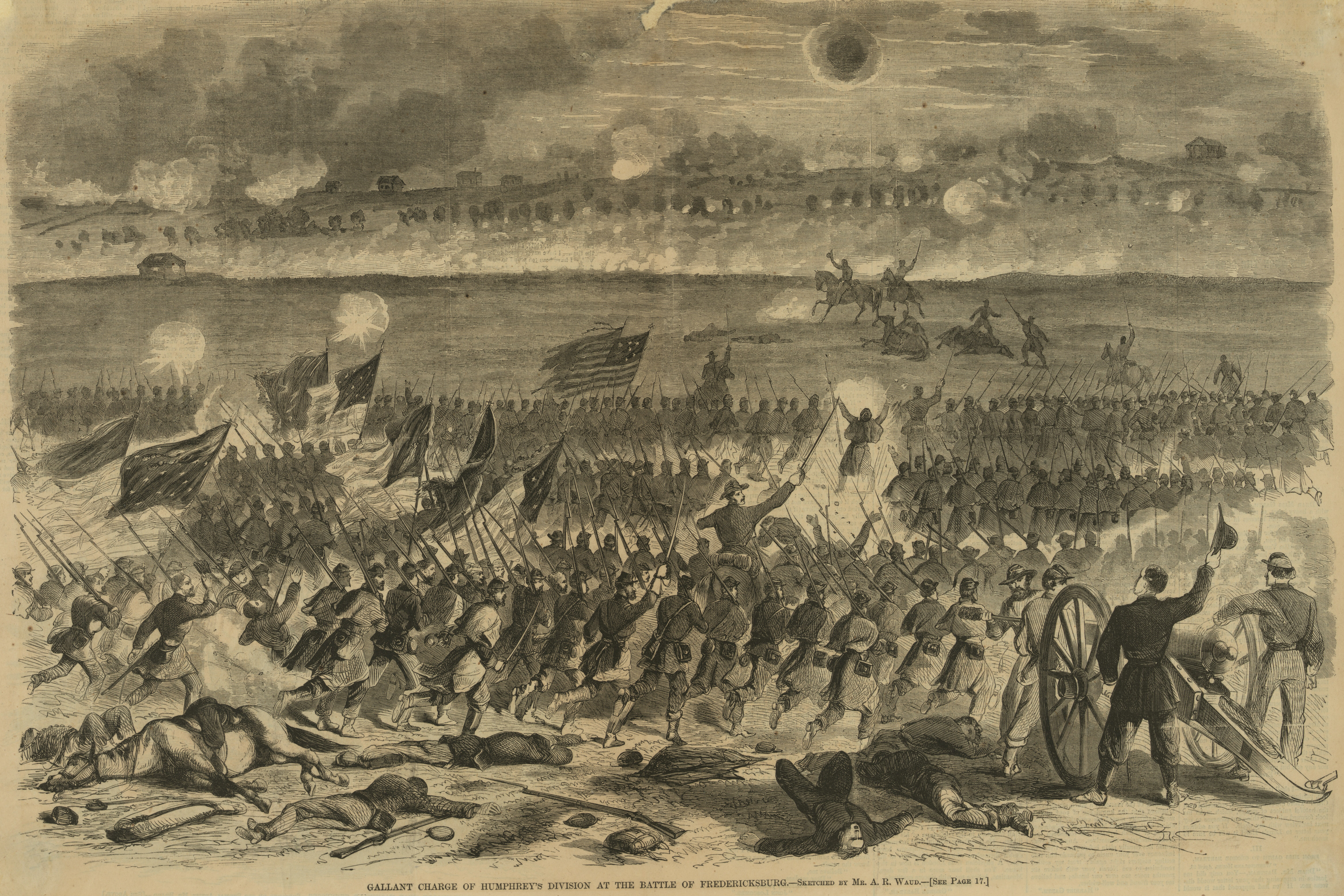
On December 13, 1862, the Battle of Fredericksburg became one of the Civil War's most lopsided massacres. Union General Ambrose Burnside ordered wave after wave of soldiers—fourteen assaults in total—up the exposed slopes of Marye's Heights against Confederate forces entrenched behind a stone wall along what became known forever after as the Sunken Road. A Confederate officer surveying the field before the assault reportedly declared, "A chicken could not live on that field when we open on it." He was right. Nearly 8,000 Union soldiers fell in front of that wall, none getting closer than fifty yards. The Irish Brigade, pride of the Army of the Potomac, charged with green sprigs in their caps; of 1,200 men, 545 were killed, wounded, or missing by nightfall. The 69th New York lost 16 of 18 officers. Captain William J. Nagle of the 88th New York wrote home: "We are slaughtered like sheep, and no result but defeat." Total casualties across both armies exceeded 17,000.
That night, as hundreds of wounded soldiers lay freezing and crying out for water on the blood-soaked slopes, something extraordinary appeared in the Virginia sky: the aurora borealis, rarely seen so far south. Soldiers on both sides looked up in wonder and terror. Union Colonel Joshua Lawrence Chamberlain of the 20th Maine, helping bury the dead, described "fiery lances of gold—all pointing and beckoning upward" and interpreted them as heaven's reception for the fallen. Confederate artilleryman Edward Porter Alexander noted the lights "much facilitated the work upon the entrenchments." A civilian woman watching from Fredericksburg told Elizabeth Lyle Saxon, "Oh, child, it is a terrible omen. Such lights never burn, save for kings' and heroes' deaths." Southern soldiers believed heaven was "hanging out banners and streamers in honor of our victory." Northern soldiers saw their "own loved North" lifting her "glorious lights" to welcome her martyrs home.
During those dark hours, Confederate Sergeant Richard Rowland Kirkland of South Carolina could no longer bear the cries of the wounded enemy soldiers. After his request to help them was initially denied, he pressed his commanding officer until permission was granted. Without any flag of truce, Kirkland climbed over the stone wall and spent hours giving water to dying Union soldiers while bullets occasionally whizzed past. His selfless act earned him the legendary title "The Angel of Marye's Heights." Kirkland himself would fall at Chickamauga less than a year later, but his statue now stands at the battlefield he made sacred.
The battlefield's haunting began almost immediately. In July 1865, Congress established Fredericksburg National Cemetery on Marye's Heights—the very ground where Union soldiers had charged to their deaths. Between 1866 and 1868, Army reburial details exhumed and reinterred over 15,000 Union soldiers from the surrounding counties. Only about 20% could be identified. The rest lie beneath headstones marked "Unknown."
Today, visitors to Fredericksburg and Spotsylvania National Military Park—the second-largest military park in the world, dubbed "the bloodiest landscape in North America" for its 85,000 wounded and 15,000 killed across four major battles—report a staggering range of paranormal phenomena. At the Sunken Road, which the National Park Service restored in 2004 to its 1862 appearance, visitors claim to hear distant echoes of war cries and see spectral soldiers marching in formation, locked in an eternal assault that never reaches the wall. Some describe cannon smoke drifting across fields where no reenactments occur, the smell of gunpowder with no source, and the anguished screams of the dying carrying across the night air.
Fredericksburg National Cemetery harbors its own restless spirits. Visitors report apparitions of soldiers roaming the grounds, unexplained cold spots, strange cries echoing among the headstones, and an overwhelming sense of being watched. Some claim to hear whispered voices of soldiers "recounting their final moments." The PANICd Paranormal Database documents multiple witness accounts of these phenomena.
Renowned paranormal investigator and author Mark Nesbitt, who worked as a National Park Service historian before founding the Ghosts of Gettysburg and Ghosts of Fredericksburg tours, has spent years investigating these battlefields. His book "Fredericksburg & Chancellorsville: The Ghost Hunter's Field Guide to Civil War Battlefields" documents his findings. Nesbitt has collected over 300 Electronic Voice Phenomena recordings from Virginia battlefields, including gruff responses from spirits identifying themselves as members of the 15th New Jersey, and affirmative answers from Ohio troops when addressed as "Buckeyes." Psychic medium Patty Wilson, working alongside researchers, reported encountering "a young Confederate who died under a tree" and described combat chaos matching historical records.
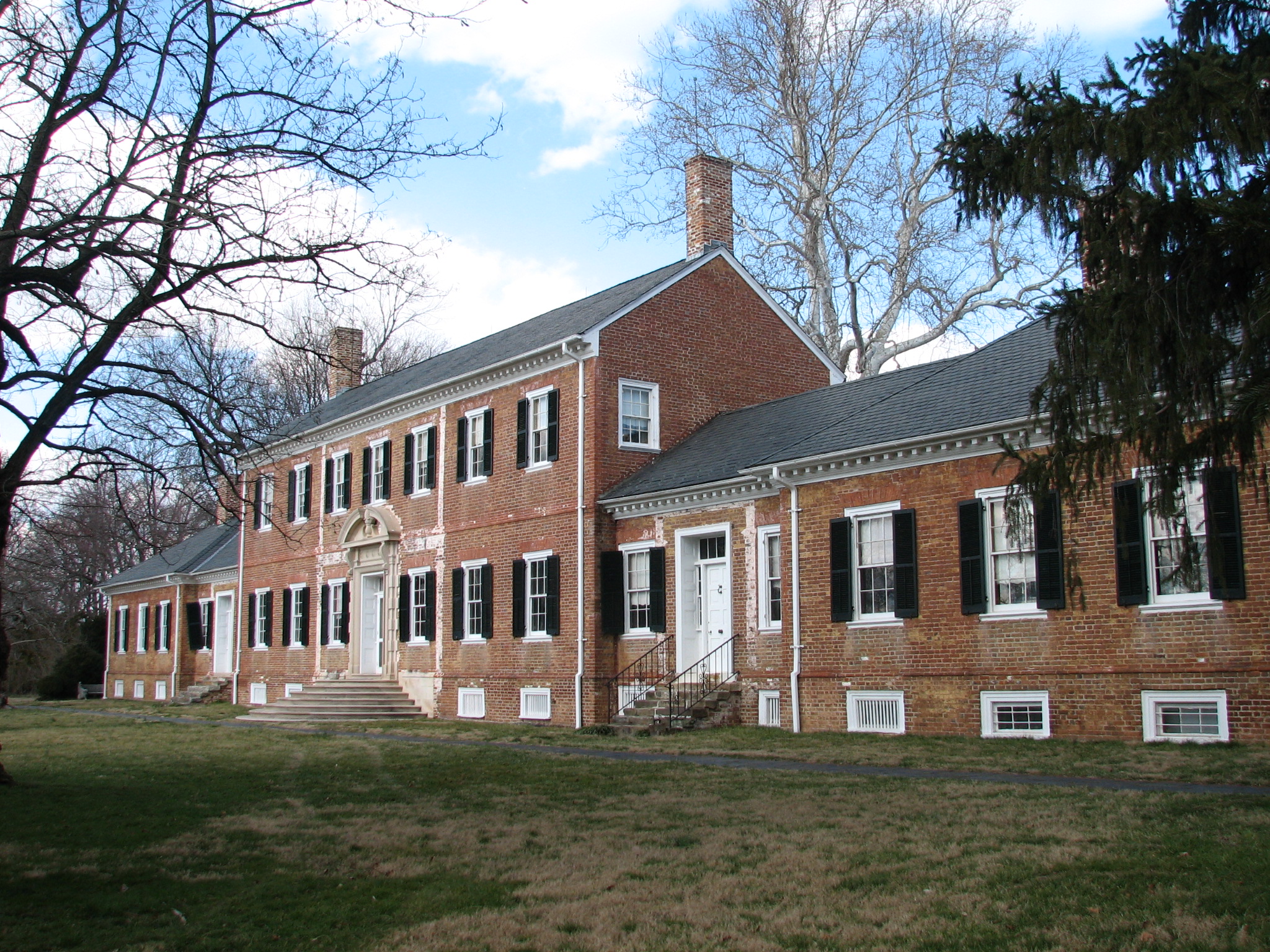
Chatham Manor, the Georgian mansion overlooking the Rappahannock River that served as a Union headquarters and hospital during the battle, harbors its own famous specter: the Lady in White. Legend holds that in the 1770s, a young English woman was sent to Chatham by her father to break up her romance with a man deemed beneath her station. Her lover followed her to America, and they planned to elope—until George Washington himself, a guest at the manor, intercepted her escape. She was shipped back to England and died heartbroken. Since her death on June 21, 1790, her glowing white apparition reportedly returns every seven years, walking the path to the river where she was to meet her lover. Visitors throughout the years have reported seeing her "white silhouette floating silently through the rooms." The manor also served as a Civil War hospital where an estimated 130 soldiers died; their bodies were later exhumed and moved to the national cemetery.
L.B. Taylor Jr., who wrote over 25 Virginia ghost story collections, featured Fredericksburg prominently in his research, helping establish the city's reputation as having "more history, more battles, and more ghosts than any other city in America." The Ghosts of Fredericksburg Tours, founded by Nesbitt in 2006, continue to document new encounters.
The battlefield remains open year-round. Many visitors report feeling suddenly cold and depressed upon entering—perhaps sensing, as ghost hunters suggest, "the suffering of a wounded soldier, or the anguish of a Civil War volunteer" who never made it home. The half-mile Sunken Road Walking Trail takes visitors past the stone wall and up Marye's Heights, concluding at the National Cemetery—a journey that traces the path of those doomed assaults, now walked by the living among the restless dead.
Researched from 14 verified sources including historical records, local archives, and paranormal research organizations. Learn about our research process.