
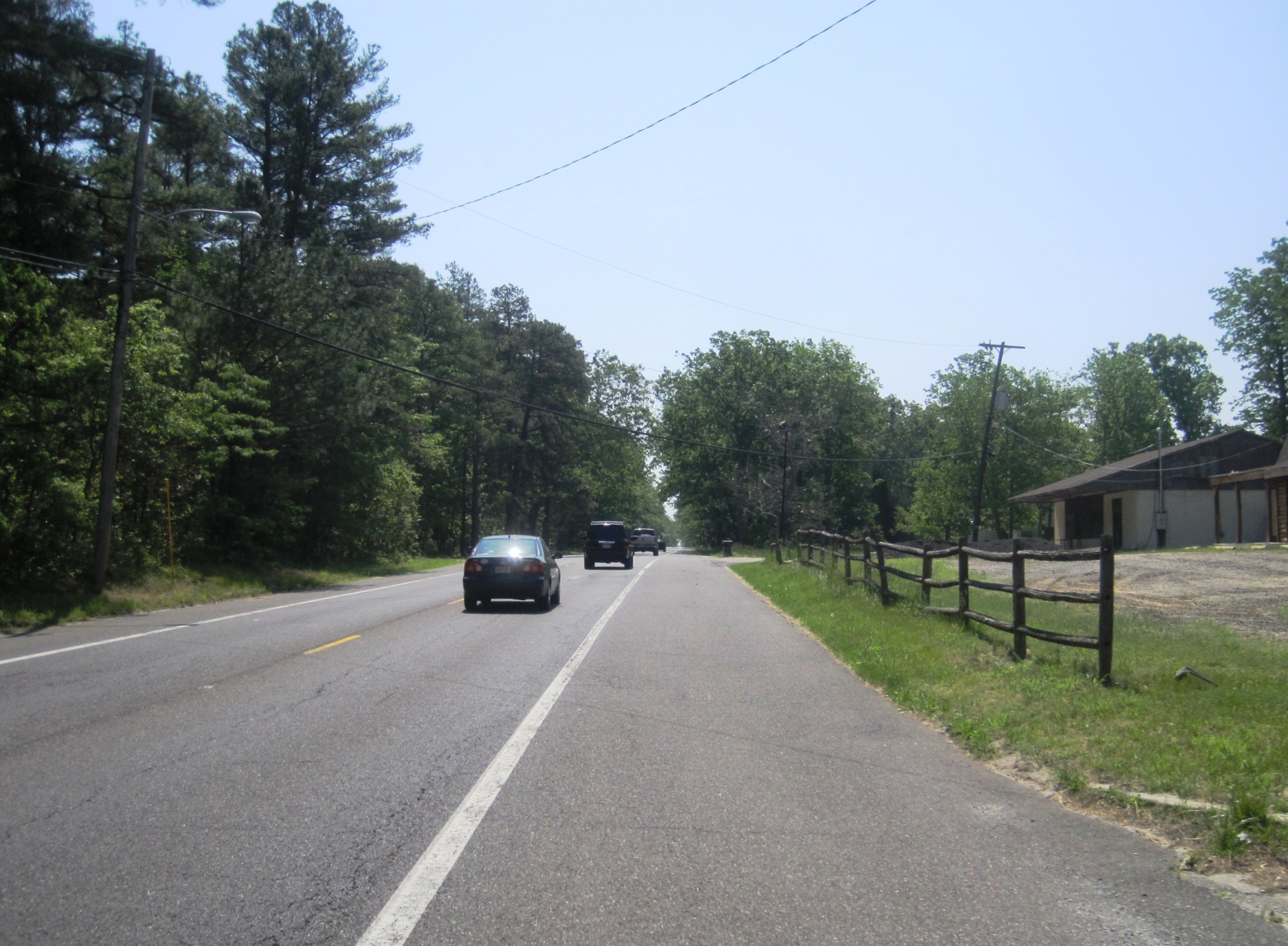
About This Location
New Jersey's most notorious ghost town is barely visible today, with only a few foundations remaining in the Pine Barrens. At its peak, it consisted of only several structures, yet it has spawned one of the strangest conspiracy theories in New Jersey history.
The Ghost Story
The origins of Ong's Hat trace back to the early 18th century, when the Ong family, descended from Quakers who arrived in Boston Harbor in 1631, established a presence in the New Jersey Pine Barrens. The settlement's peculiar name has spawned multiple legends. The most popular tale involves Jacob Ong, a dapper local known for his fine silk hat and his way with women at country dances. According to folklore, a jealous lover stomped on his prized hat during a dance, and in frustration Ong hurled it into the air, where it lodged in a pine tree and remained for years, becoming a landmark that gave the hamlet its name. Alternative versions claim Ong was a tavern keeper who either painted a silk hat on his sign or angrily threw his hat into a tree after an argument with a woman. A 1968 New York Times letter from an Ong descendant offers a more mundane explanation: the family built a rest hut along their grain transport route, and "Ong's Hut" gradually corrupted to "Ong's Hat."
By the 1860s, Ong's Hat was a lively social center known for alcohol, prizefighting, and rowdy country dances. One of New Jersey's first bootlegger arrests occurred here. The settlement featured four to five houses clustered around a tavern that served as the community hub. However, the hamlet's decline began with a series of mysterious disappearances. In the early 20th century, a Polish couple named the Chininiskis moved to Ong's Hat when only seven residents remained. Both vanished without a trace. Years later, hunters discovered a female skeleton in the nearby woods, believed to be Mrs. Chininiski. Burlington County Sheriff Ellis H. Parker tracked Mr. Chininiski to New York but could never prove anything, keeping the skull on his desk for years as a grim reminder of the unsolved case.
When folklorist Henry Charlton Beck visited in the late 1920s, he found only ruins: broken brick, scattered roofing, and long straggly Indian grass marking where homes once stood. The sole remaining resident was Eli Freed, a 79-year-old farmer from Chicago who had cleared twenty acres by hand and built a house with the help of a man called Amer. Freed struggled to make a living as deer and rabbits devoured his crops despite high fences. By 1936, Freed had departed, making Ong's Hat a true ghost town. Beck later admitted in his 1944 book "Jersey Genesis" that he had fallen for "elaborate traps" and the stories he repeated were "fairy tales."
In the 1980s, Ong's Hat gained new infamy as the setting for what many consider the internet's first conspiracy theory. Transmedia artist Joseph Matheny and collaborators crafted an elaborate alternate reality game centered on fictional renegade Princeton professors who established the "Institute of Chaos Studies" at the abandoned site. According to the narrative, they developed "cognitive chaos" theories and built a device called "the Egg" - a sensory deprivation chamber connected to a computer that could open portals to parallel dimensions. The scientists allegedly discovered a pristine alternate Earth devoid of human life and began secretly emigrating there until a government raid destroyed the compound. The story spread through early bulletin board systems, zines, and mail art networks before exploding on the early internet, with many believers camping outside Matheny's home demanding the truth about interdimensional travel.
Visitors to the site today report unsettling experiences that blend the location's dark history with its science fiction mythology. Strange lights have been seen deep in the Pine Barrens surrounding the former settlement. Disembodied voices drift through the trees, and many describe an overwhelming feeling of being watched by something just beyond the tree line. In the 1990s and 2000s, people who researched Ong's Hat online reported synchronicities, vivid dreams, unusual visual perceptions, and what researcher Michael Kinsella described as "shifts in reality monitoring." The Pine Barrens region itself amplifies the unease - this million-acre wilderness is home to legends like the Jersey Devil and has long been associated with UFO sightings, alleged alien abductions, and claims of portals to other worlds.
Today, Ong's Hat serves as the northern terminus of the 53-mile Batona Trail, which winds through the heart of the Pine Barrens. All that remains are a few dilapidated structures, scattered foundation stones, and the persistent sensation that something ancient and inexplicable lingers in this remote corner of New Jersey where an unsolved murder, abandoned dreams, and elaborate fictions have merged into something that feels disturbingly real.
Researched from 11 verified sources including historical records, local archives, and paranormal research organizations. Learn about our research process.