
About This Location
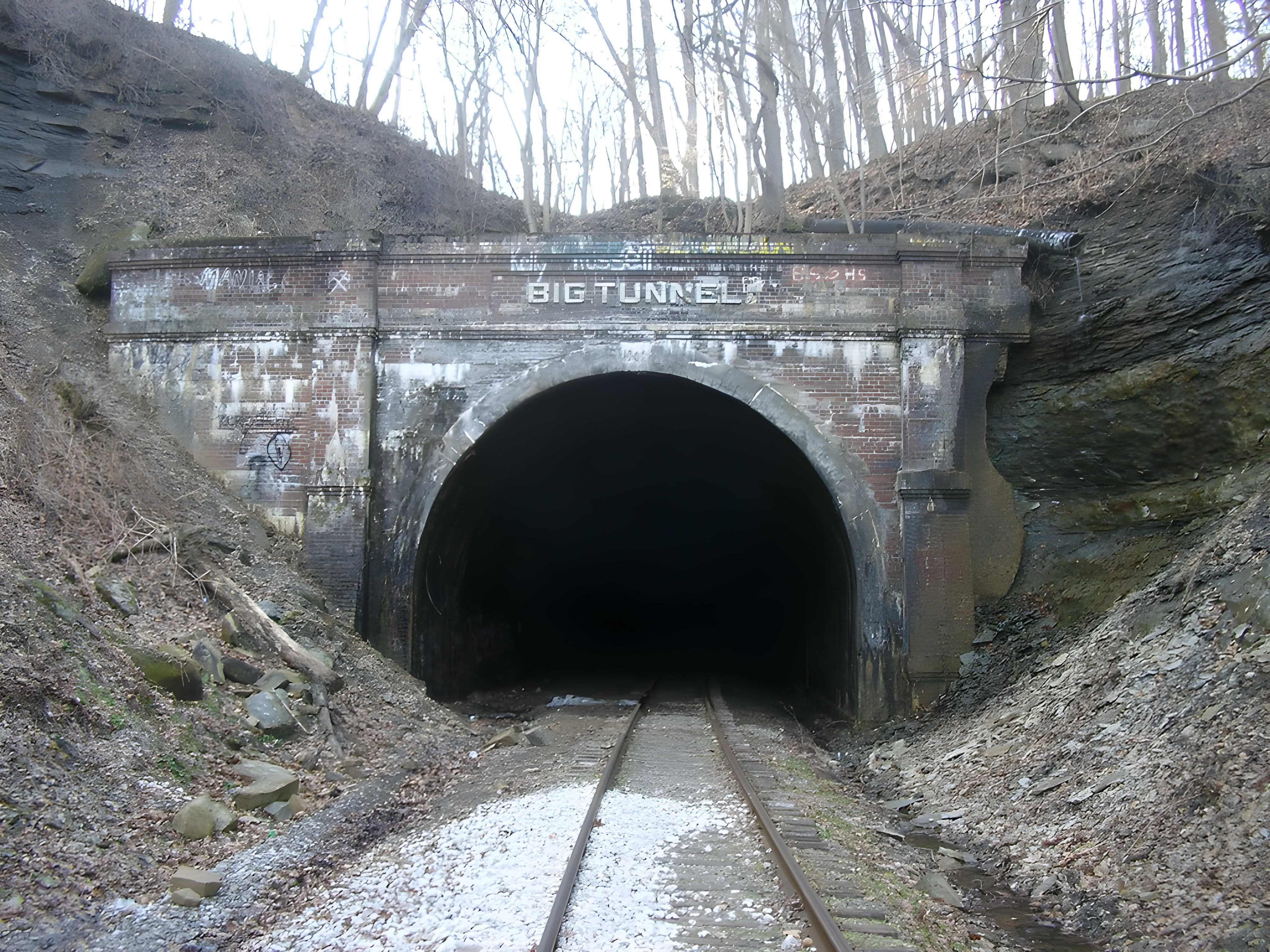
A 1,750-foot railroad tunnel built in 1857 through solid rock of Tunnel Hill, the longest tunnel in Indiana at the time. Located in Lawrence County near the village of Tunnelton.
The Ghost Story
The Tunnelton Tunnel, also known as the Big Tunnel, was constructed between 1855 and 1857 for the Ohio and Mississippi Railroad, connecting the towns of Tunnelton and Fort Ritner in Lawrence County, Indiana. At 1,750 feet in length, it was the longest railroad tunnel in Indiana at the time of its completion. The tunnel was built because the White River blocked the railroad's path, and boring through the limestone hill saved approximately eight miles of travel. The first train passage in 1856 ended badly when a special train stalled mid-tunnel, and passengers emerged covered in soot. Between 1898 and 1909, the tunnel was enlarged and reinforced with brick lining due to frequent rockfalls from the ceiling. Today it measures 1,730 feet and remains an active rail line operated by CSX Transportation.
The tunnel's most famous ghost belongs to Henry Dixon, a twenty-seven-year-old night watchman who was found dead approximately two hundred feet from the tunnel entrance in 1908. Dixon had suffered a fatal wound to the back of his head, and his still-burning lantern lay beside the tracks. The murder was suspected to be robbery-related, but the case was never solved. Local legend suggests his body may have been deliberately positioned to be obliterated by passing trains. Dixon's restless spirit is said to walk the tunnel carrying his lantern, still searching for his killer over a century later. A more dramatic variant of the legend describes a headless watchman who was decapitated by a train while signaling and now swings a lantern through the darkness searching for his severed head.
The tunnel has been the site of numerous documented tragedies beyond Dixon's murder. Night watchman Fields regularly cleared dislodged ceiling rocks after each train passed, a dangerous routine that speaks to the tunnel's structural instability. A 1907 derailment sent five railcars piling up inside the tunnel, and passengers nearly suffocated before being rescued. In 1909, a head-on freight collision at the Fort Ritner end of the tunnel killed five railroad workers. Julius Fullen was struck by a train in 1933 after falling asleep on the tracks near the tunnel, and Edward Call was accidentally shot and killed by National Guard troops during what was described as a "friendly scuffle" in 1917. The 1882 Tunnelton Massacre, in which townspeople killed would-be robbers, added another layer of violent history to the area.
Local legends also claim that tunnel construction disturbed a cemetery on the hill above. According to the stories, when workers dug into the limestone, caskets and corpses fell through the soil into the excavation below, disturbing the dead and potentially trapping their spirits within the passage. Some accounts reference Native American burial grounds or Civil War-era graves that were disrupted during construction. During Prohibition, the tunnel was rumored to be a disposal site for Mafia-related murders -- according to local lore, a mobster once dragged a man into the tunnel, shot him dead, and left his body to rot.
Visitors to the tunnel report a consistent array of paranormal phenomena. Mysterious lights resembling a swinging lantern appear deep within the tunnel, starting small and growing larger as they approach. The sound of a phantom train -- engine roaring, wheels grinding on rails -- echoes through the passage when no train is scheduled. Cold spots engulf visitors without warning, and shadowy figures have been seen at both entrances. Paranormal investigators have conducted EVP sessions inside the tunnel and reported capturing unexplained voices.
The Tunnelton Tunnel remains an active railroad right-of-way, and entering it is both trespassing and genuinely dangerous -- trains still pass through several times a week. Despite this, the tunnel continues to draw visitors who are drawn to its layered history of construction deaths, unsolved murder, and accumulated tragedy, making it one of Indiana's most legendarily haunted locations.
Researched from 7 verified sources including historical records, local archives, and paranormal research organizations. Learn about our research process.