About This Location
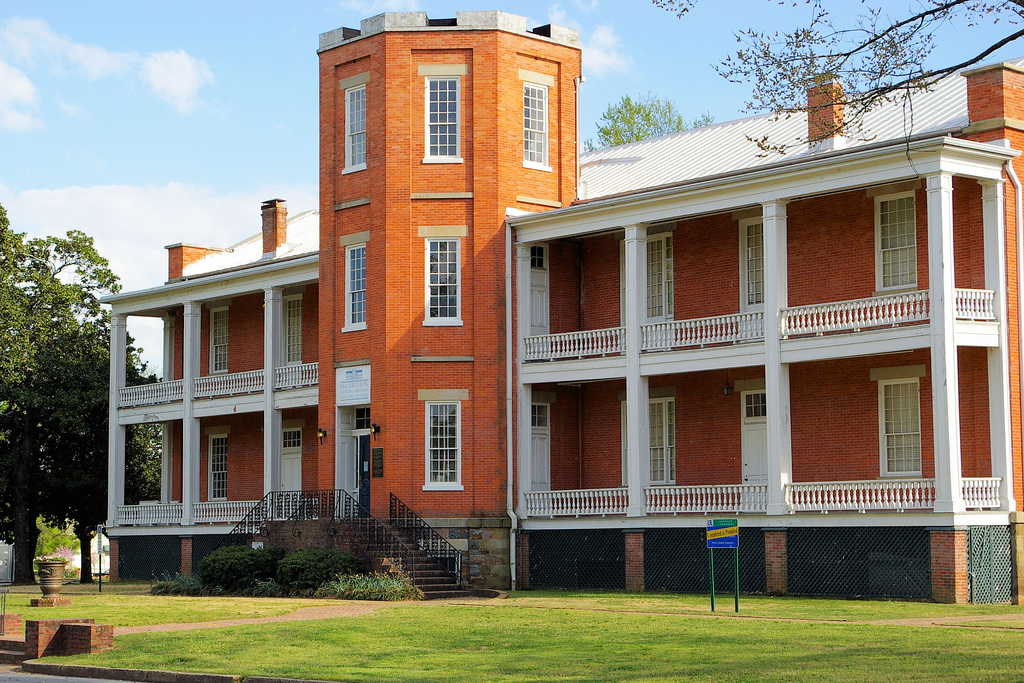
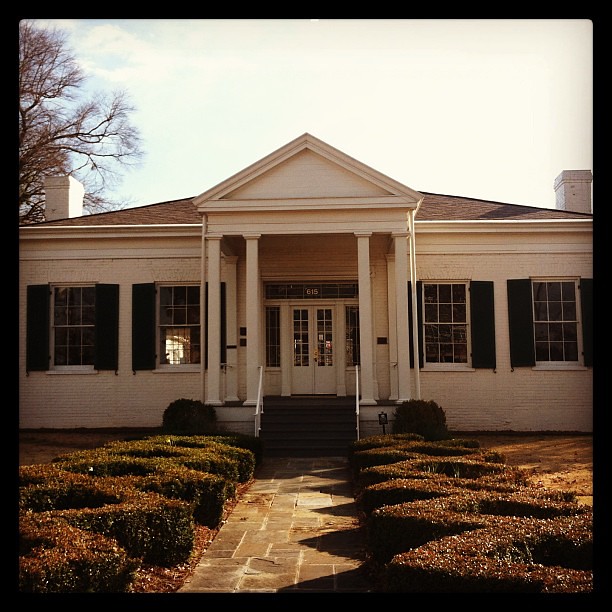
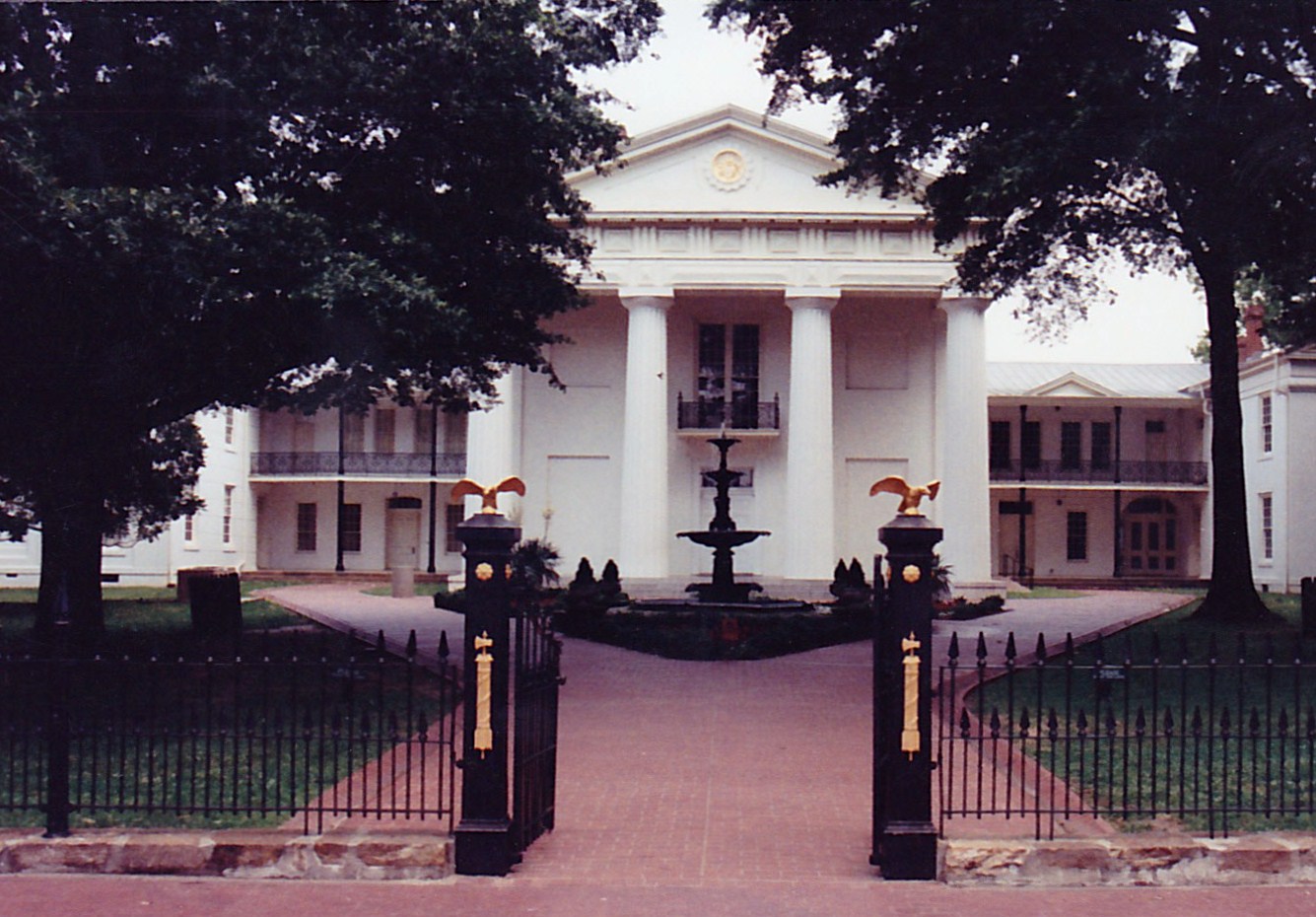
Built in 1833, this is Arkansas' oldest surviving state capitol building. Its House of Representatives chamber hosted lawmakers through the turbulent decades before and after the Civil War.
The Ghost Story
The Old State House at 300 West Markham Street in Little Rock is the oldest surviving state capitol building west of the Mississippi River, and the site of one of the most violent acts ever committed in an American legislature. Commissioned in 1833 by territorial governor John Pope, the Greek Revival building was designed by Gideon Shryock, architect of the Kentucky State Capitol, with associate George Weigart modifying the plans to accommodate budget constraints. Construction was underway by 1836 when Arkansas achieved statehood, and Governor Archibald Yell declared the building complete in 1842. Its stucco-covered brick walls would witness the entire arc of Arkansas history: the secession convention of May 1861 where all delegates except Isaac Murphy voted to leave the Union, the Union occupation after Federal forces captured Little Rock in September 1863, and the armed conflict of the Brooks-Baxter War of 1874.
The building's darkest moment came on December 4, 1837, during only Arkansas's second legislative session. A heated debate over taxation escalated into personal insults between Speaker of the House Colonel John Wilson -- who also served as president of the Real Estate Bank -- and Representative Major Joseph J. Anthony. From the Speaker's podium, Wilson demanded to know whether Anthony's remarks were intended as a personal insult. The confrontation rapidly turned physical. Both men drew Bowie knives -- standard accessories for frontier legislators -- and in the ensuing fight on the House floor, Wilson drove his blade into Anthony, killing him in front of the assembled chamber. Despite multiple witnesses to the murder, Wilson was tried and acquitted on grounds of "excusable homicide." The acquittal, however, did not save his reputation. His political career was destroyed, and he lived out his remaining years as a broken man, unable to escape the shadow of what he had done in the people's chamber.
The building was expanded in 1885, when the north portico was removed and the structure extended approximately fifty feet to accommodate larger House chambers. Victorian interior improvements including curved staircases and skylights were added. The legislature eventually moved to the current State Capitol in 1911, and the Old State House was opened as a history museum in 1951. It was listed on the National Register of Historic Places on December 3, 1969, and designated a National Historic Landmark on December 9, 1997.
Although the museum officially denies the presence of ghosts, the reports from staff and visitors tell a different story. The spirit most commonly encountered is believed to be John Wilson himself, condemned to walk the halls of the building where he committed murder and lost everything. His apparition has been seen by multiple witnesses wearing a period frock coat, walking through the Central Hall on the second floor with the bearing of a man accustomed to authority. He is most often observed moving purposefully, as if still conducting the legislative business that his act of violence cut short. Some who have studied the sightings suggest Wilson's ghost is perpetually trying to make up for lost time, unable to accept that his career ended with a knife thrust on the House floor.
Others have proposed that the ghost may not be Wilson at all, but rather Joseph Brooks, the man at the center of the Brooks-Baxter War of 1874. After a disputed gubernatorial election in 1872, Brooks forcibly removed the legitimately elected Governor Elisha Baxter from the state house chambers. President Ulysses S. Grant ultimately intervened, sending military officers to restore Baxter to power. Brooks, like Wilson before him, saw his political ambitions destroyed within these walls -- making him an equally plausible candidate for the restless spirit.
Visitors to the Old State House report cold spots concentrated in the chamber where Wilson killed Anthony, areas where the temperature drops suddenly and without atmospheric explanation. A cold hand has been felt on the shoulders of visitors who stand alone in the chamber, as though an unseen presence is trying to get their attention or deliver a warning. Unexplained footsteps echo through the empty halls, particularly on the second floor where the legislative chambers once rang with debate. Whether the ghost is Wilson seeking redemption, Brooks reliving his brief triumph, or Anthony himself demanding the justice he never received from a frontier court, the Old State House remains a place where political violence and unfinished business refuse to rest.
Researched from 9 verified sources including historical records, local archives, and paranormal research organizations. Learn about our research process.