About This Location
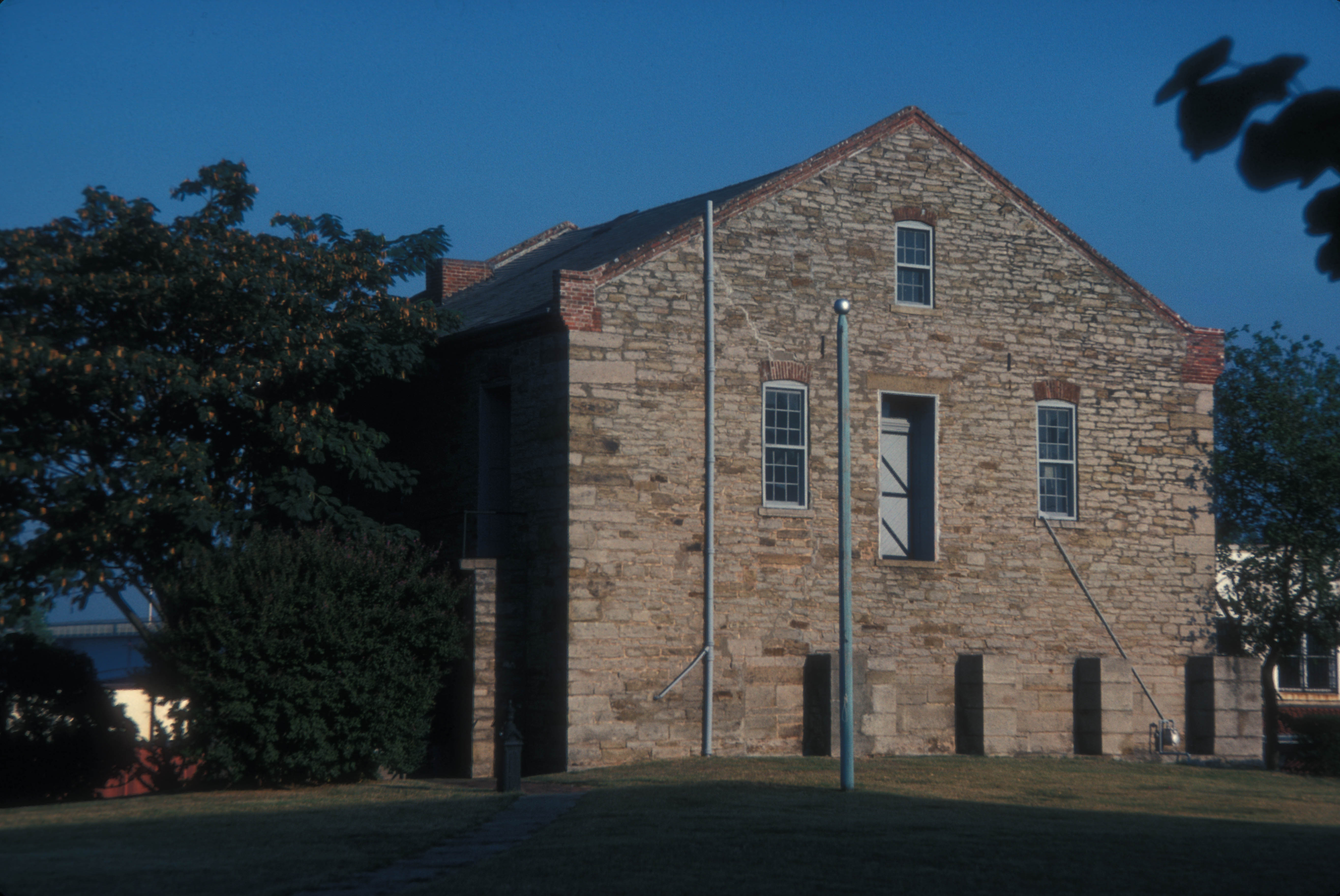
Judge Isaac C. Parker, the Hanging Judge, presided over this courthouse for 21 years, sentencing 160 people to death. The reconstructed gallows stand where 79 men were executed.
The Ghost Story
Fort Smith National Historic Site occupies the ground where the Arkansas and Poteau Rivers converge at Belle Point, the strategic location where the United States established its first military presence in what would become Arkansas. On Christmas Day 1817, sixty-four riflemen under Major William Bradford erected a simple log stockade — four sides at 132 feet each with two blockhouses at opposite angles — to maintain peace between the Osage, who had long dominated the territory, and bands of Cherokee who had been migrating westward. The first fort was abandoned in 1824, but a second, more substantial fort was completed in 1846, serving as a rallying point and supply depot for Mexican War troops. During the Civil War, Union forces abandoned the fort, and Confederate troops held it until 1863 when General James G. Blunt recaptured the installation. Beginning in 1831, the Arkansas River became part of the water route for the Trail of Tears, and the fort's log buildings held supplies for the Choctaw during the forced tribal removal.
The military garrison closed in 1871, and the following year the buildings were turned over to the Federal Court for the Western District of Arkansas, which held jurisdiction over Indian Territory — 74,000 square miles of lawless frontier stretching west into what is now Oklahoma. In 1875, President Ulysses S. Grant appointed Judge Isaac C. Parker to the bench. Parker served for twenty-one years, presiding over thousands of criminal cases involving the murderers, horse thieves, and outlaws dragged in from the territories by federal deputy marshals — at least seventy of whom died in the line of duty. Parker sentenced 160 men to death, and for the first fourteen years of his tenure, the condemned had no right of appeal. Seventy-nine men were ultimately executed on the gallows constructed in the yard of the old enlisted barracks, which had been converted into a courthouse above and a jail below. The jail earned the name "Hell on the Border" for its brutal conditions — prisoners crammed into dark, airless cells beneath the courtroom where their fate would be decided.
The site was designated a National Historic Landmark on December 19, 1960, accepted into the National Park Service by President John F. Kennedy in 1961, and dedicated by Lady Bird Johnson in 1964. It was listed on the National Register of Historic Places on March 7, 1986, and the buildings underwent complete restoration in 2000, opening the jail cells to public view.
The paranormal activity at the site concentrates in two areas: the courtroom and the reconstructed gallows. In the courtroom, visitors have heard the sharp crack of a gavel striking wood when the room is empty — a sound reported independently by multiple visitors over the years. During a paranormal investigation at the nearby Fort Smith Museum of History, which holds furniture from Parker's original courtroom, investigators placed recording equipment near the historic pieces and captured what museum director Leisa Gramlich described as unmistakable: "I heard this on what they recorded; it was like three bangs, like a gavel. It was the hammering of a gavel."
At the gallows, visitors have reported seeing the hanging ropes sway and move with no wind to account for the motion — a phenomenon noted by visitors on calm days when the air is perfectly still. The jail beneath the courtroom, with its cramped stone cells and low ceilings, generates consistent reports of a heavy presence — the feeling of being watched from the darkness of cells that once held men awaiting execution. Blue orbs have been observed around the underground entrance to the jail during nighttime visits. An eerie heaviness pervades the space, described not as cold but as a pressure, as though the suffering of the men who were confined there has become a physical property of the stone itself.
Judge Parker died on November 17, 1896, and is buried at the Fort Smith National Cemetery. His ghost has reportedly been seen at the cemetery, still presiding in death as he did in life — a figure of absolute authority whose judicial career left seventy-nine men hanging from a gallows that the National Park Service has reconstructed for visitors to stand before and contemplate.
Researched from 8 verified sources including historical records, local archives, and paranormal research organizations. Learn about our research process.