About This Location
Nicknamed the Westminster of Arkansas, this 1843 cemetery holds remains from every military conflict from the American Revolution to the Gulf War and is the final resting place of many notable Arkansans.
The Ghost Story
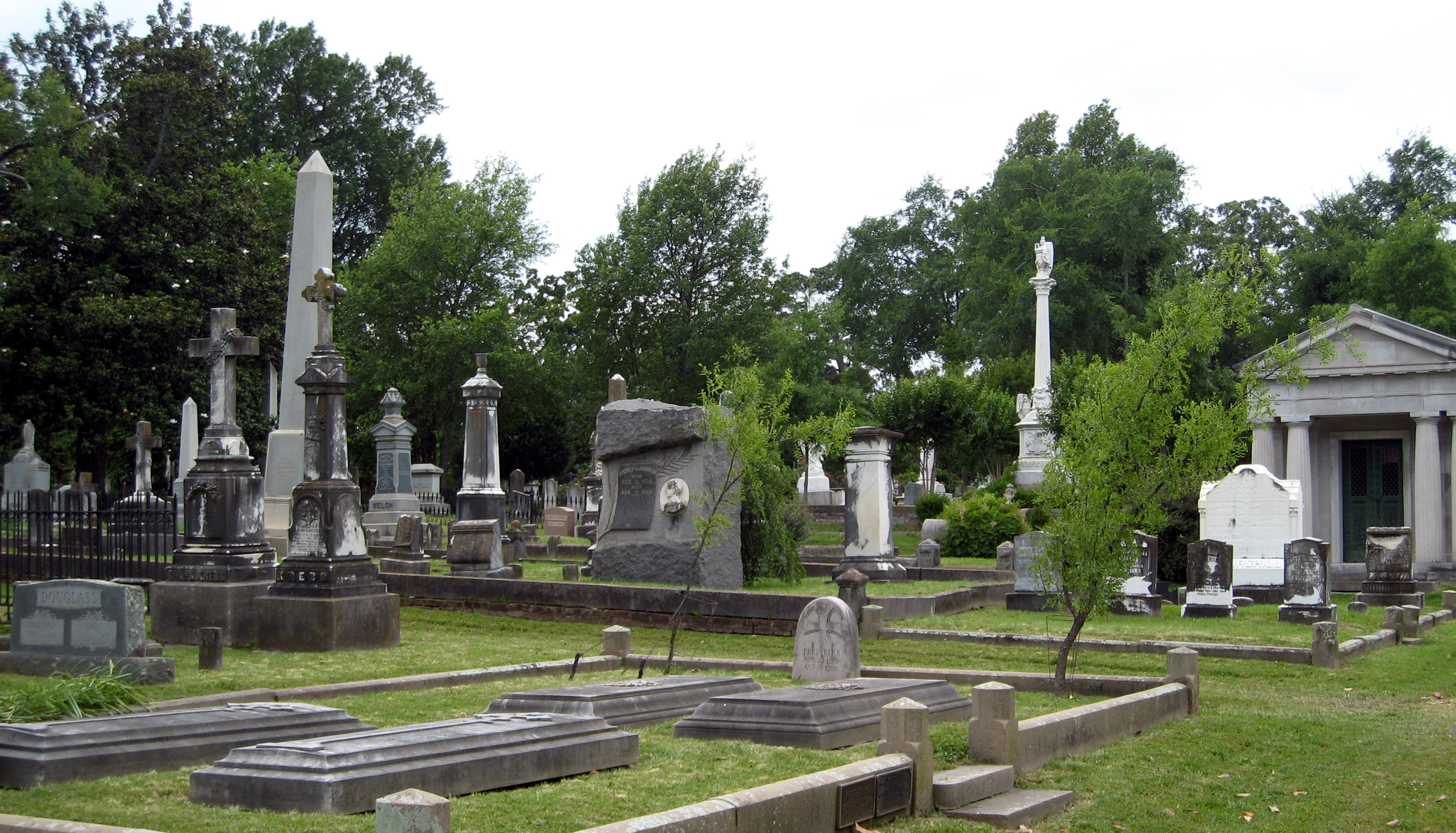
Known as the Westminster Abbey of Arkansas, Mount Holly Cemetery occupies a four-square-block site between 11th and 13th streets in the heart of Little Rock, extending from Broadway to Gaines Street. The cemetery was established on February 23, 1843, when two prominent citizens -- Chester Ashley and Roswell Beebe -- deeded the ground to the young city. In the nearly two centuries since, Mount Holly has become the final resting place for eleven Arkansas governors, four United States senators, thirteen state Supreme Court justices, four Confederate generals, twenty-one Little Rock mayors, and enough other luminaries that ten persons buried here have Arkansas counties named for them: Ashley, Conway, Faulkner, Fulton, Garland, Izard, Johnson, Newton, Sevier, and Woodruff.
Among the most notable burials is Quatie Ross, wife of Cherokee Chief John Ross, who died of pneumonia on February 1, 1839, aboard a steamship just before reaching Little Rock during the forced march known as the Trail of Tears. Her remains were later reinterred at Mount Holly. William E. Woodruff, who founded the Arkansas Gazette in 1819 -- the first newspaper west of the Mississippi -- rests here, as does Sanford Faulkner, who popularized the Arkansas Traveler in song and legend, and John Gould Fletcher, who won the Pulitzer Prize for poetry in 1939. The four Confederate generals interred at Mount Holly include Thomas J. Churchill, who later served as governor, James Fleming Fagan, Allison Nelson, and John Edward Murray, who was killed at the Battle of Atlanta on the very day his nomination was confirmed. In 1884, six hundred forty Confederate soldiers originally buried at Mount Holly were relocated to Oakland Cemetery, where a commemorative monument was erected in their honor.
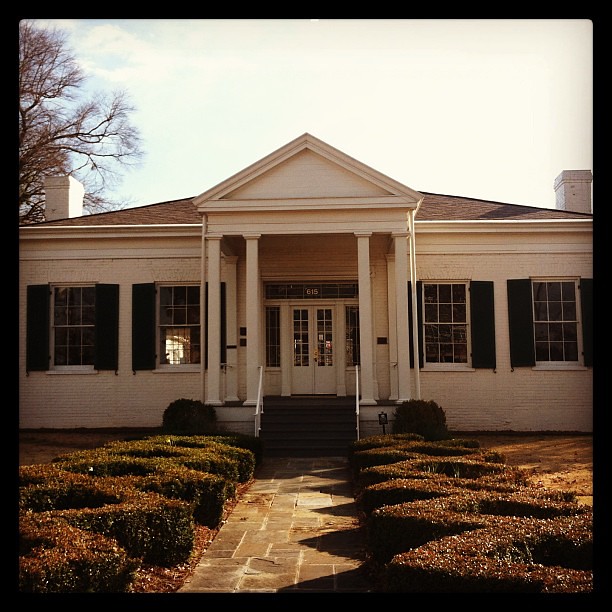
The cemetery was among the earliest in the nation to receive National Register of Historic Places designation, listed on March 5, 1970. Its Victorian landscape features white bronze markers from the 1875-1915 production era, a historic receiving house built in 1897 and restored in 1996, a cast iron fountain from the J. L. Mott Company installed in 2002, and a columbarium completed in 2003. The grounds have been managed by a women's association since July 20, 1915, when the ladies' Mount Holly Cemetery Association incorporated after concerns about maintenance under the previous all-male commission.
Perhaps the most frequently reported ghost at Mount Holly is that of David Owen Dodd, the seventeen-year-old Confederate spy executed by hanging on January 8, 1864. Witnesses have reported seeing a young boy dressed in nineteenth-century clothing wandering near his grave, reportedly carrying a notebook similar to the one that contained the Morse code intelligence which led to his arrest and death sentence. The apparition disappears when approached. Dodd's grave is frequently found with fresh tokens -- flowers, notes, even Confederate flags -- left by visitors who honor the Boy Martyr of the Confederacy, though some of these offerings appear without any living visitor having been observed placing them.
The cemetery's paranormal activity extends well beyond Dodd's ghost. Visitors have reported seeing shadowy figures moving between tombstones, darting out of sight when looked at directly. The sound of children laughing has been heard near the burial plots of young victims of past epidemics -- cholera, yellow fever, and other diseases that swept through Little Rock in the nineteenth century -- despite no children being present in the cemetery. A stone angel statue known as the Weeping Angel is rumored to change hand positions between visits, with local legend claiming the statue moves when unobserved. Skeptics attribute the perceived changes to tricks of light and the power of suggestion, but the reports persist.
Sudden temperature drops have been documented in warm weather, concentrated in specific areas of the grounds rather than caused by wind or shade. The sound of flute music has been heard drifting through the cemetery when no musician is present. Photographs taken at Mount Holly have captured anomalies invisible to the naked eye at the time of shooting -- misty forms, bright unexplained lights, and what appear to be figures in period clothing standing among the headstones. Paranormal investigation teams have recorded EVPs including whispered phrases such as "help me" and the sound of a sobbing woman. Equipment malfunctions during investigations are frequently reported, with cameras and audio devices behaving erratically or losing power near certain graves. The cemetery is a featured stop on the US Ghost Adventures Little Rock ghost tour, which winds through the city's most paranormal sites in a landscape where two centuries of Arkansas history refuse to stay buried.
Researched from 10 verified sources including historical records, local archives, and paranormal research organizations. Learn about our research process.