About This Location
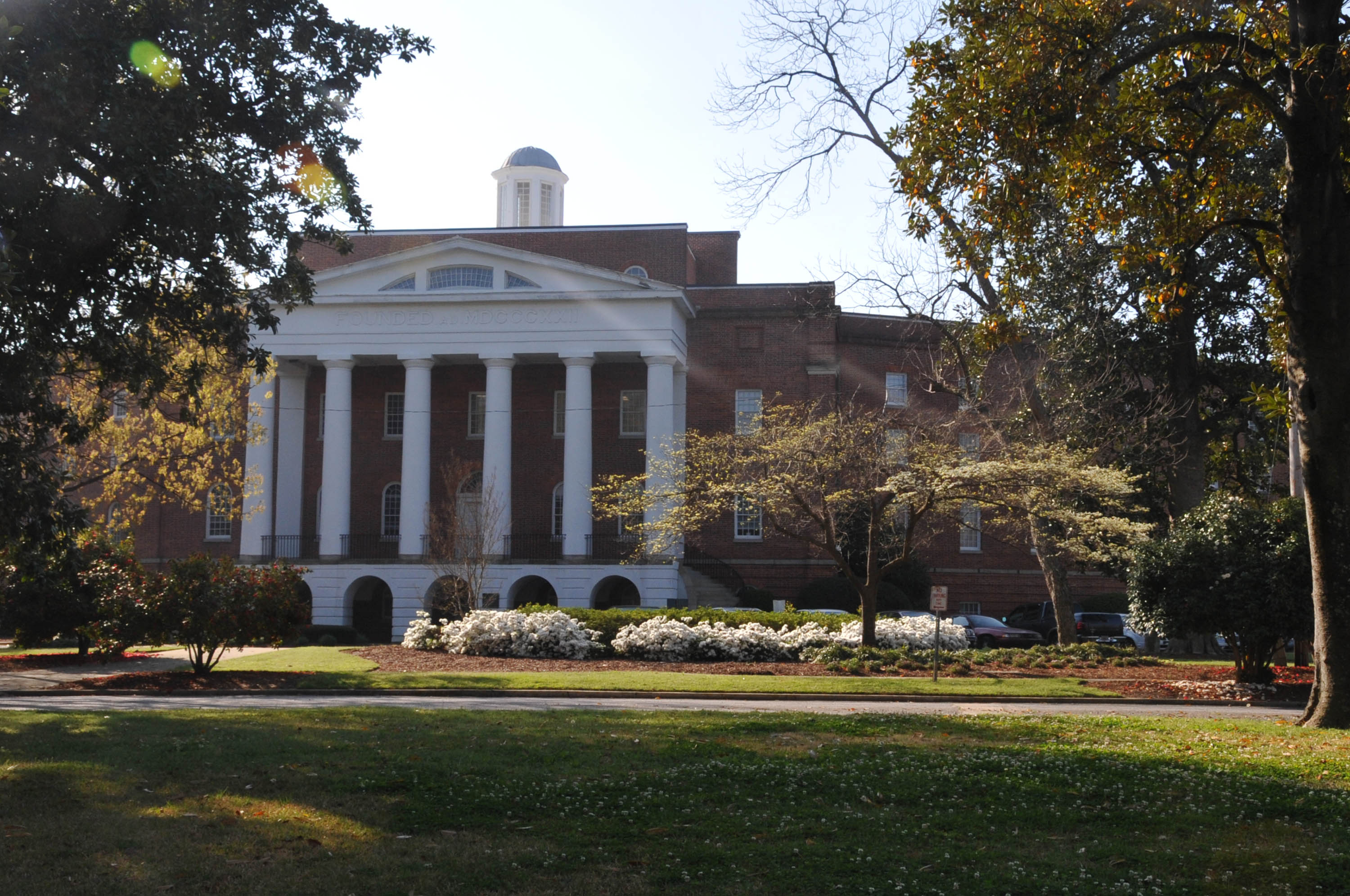
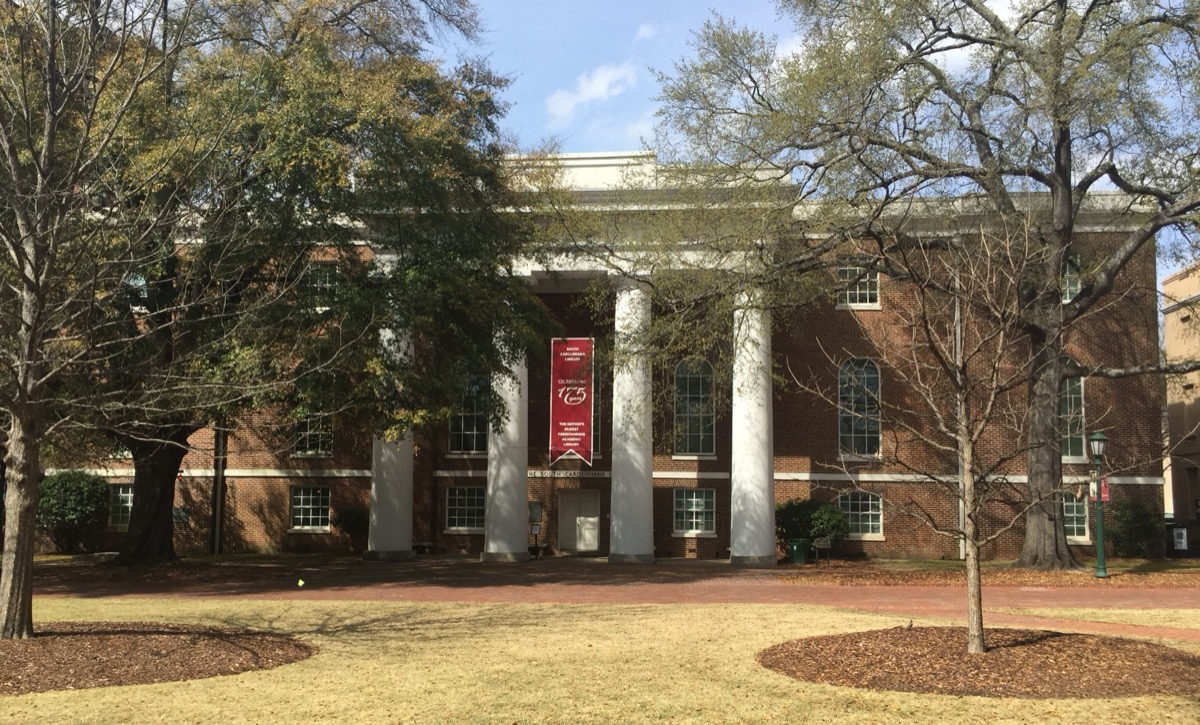
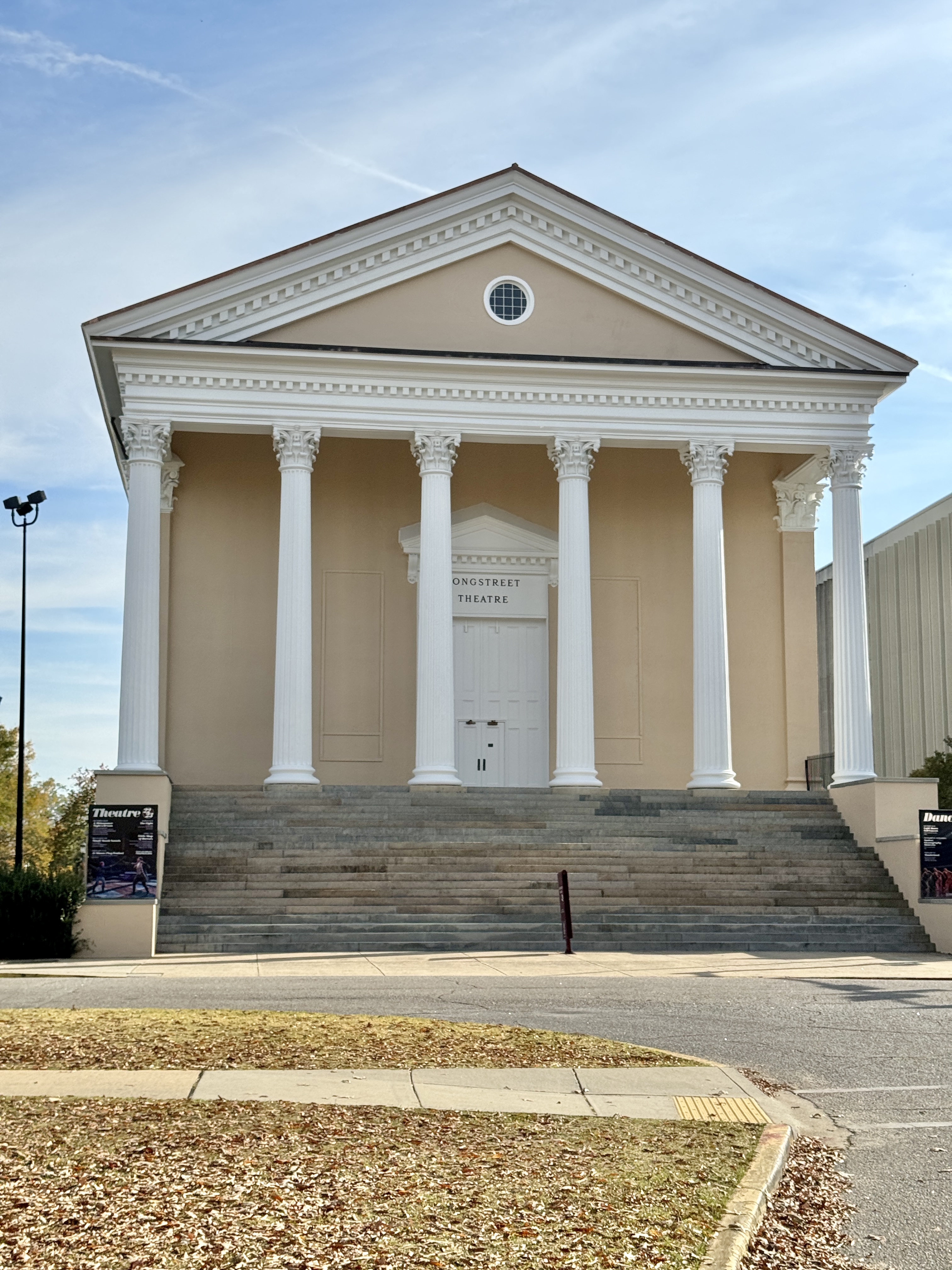
Now home to the USC Theatre department, Longstreet Theatre once served as a hospital during the Civil War era. The current green room was actually the morgue where countless soldiers drew their last breaths.
The Ghost Story
Longstreet Theatre stands as one of the most haunted buildings on the University of South Carolina campus, its paranormal reputation rooted in a dark history stretching back to the Civil War. Originally known as College Hall, the Greek Revival structure was completed in 1855 at a cost of $34,000 -- well over its original $24,000 budget -- after architect Jacob Graves designed it as a chapel and auditorium. The building was plagued from the start: 400,000 bricks were lost in a Congaree River flood during construction, and once finished, the acoustics proved so poor that it could never serve its intended purpose. When war came, most students enlisted in the Confederate Army, forcing South Carolina College to close, and the building was converted into a 300-bed military hospital serving both Confederate and Union soldiers. The brick catacombs beneath the front steps became the morgue, where the bodies of countless soldiers were stored in the cold underground chambers. According to Historic Columbia, this hospital use may have saved the building from destruction during General Sherman's burning of Columbia on February 17-18, 1865.
After the war, the building cycled through uses as a U.S. Army arsenal and armory (1870-1887), science classrooms and laboratories (1888), and a gymnasium (1893 onward). In the 1970s, renowned theatre designer George Izenhour oversaw its transformation into a 312-seat arena-style theatre, solving the century-old acoustics problem with an innovative inverted dome of plaster suspended from the ceiling. The first production, Samuel Beckett's Waiting for Godot, was staged in 1977, and the building was renamed Longstreet Theatre after Augustus Baldwin Longstreet, the college's eighth president.
The paranormal activity centers on the former morgue -- now the theatre's three-chamber green room -- where the original shutter doors that once provided air circulation for the dead are still visible on either side. Visitors and theatre students report persistent cold spots, unexplained feelings of discomfort and unease, and the sensation of being watched in this space. Throughout the building, doors slam when no one is nearby, floors creak with invisible footsteps during the late-night hours, and the elevator doors open entirely on their own. Full-body apparitions have been reported after dark, believed to be the spirits of Civil War soldiers who remain unaware that their hospital closed over 160 years ago.
Professor Ann Dreher, who taught theatre at USC for 33 years, was one of the building's most vocal witnesses. She told WIS-TV in 2008 that through the years, many people had seen and heard strange things in the theatre, and that she herself had sensed vibrations within the space. Dreher was adamant about the presence of spirits, declaring that there were ghosts aplenty from the 19th century. She reassured students with characteristic humor that the ghosts were real friendly -- unless you were a Yankee. University archivist Elizabeth West added context, noting that the building's history as a place where people were sick, injured, and dying made it the likeliest spot on campus for hauntings.
One of the most unsettling accounts comes from a department secretary who was walking out the door facing Sumter Street from the catacomb area when she was pushed out the doorway by an unseen force, tumbling all the way down the steps -- a significant fall given the platform design at the top. USCPD officer Eric Grabski confirmed to Garnet and Black Magazine in 2024 that officers on patrol would describe a cold feeling around the steps of Longstreet Theatre, and that one officer claimed to see what he thought were ghostly figures around that same area. Theatre students have become so convinced of the hauntings that many refuse to be in the building alone after dark, instituting an informal buddy system for late-night rehearsals.
Longstreet Theatre is also connected to one of USC's most enduring urban legends: the Third Eye Man. On the night of November 12, 1949, USC student Christopher Nichols reported seeing a strange man in bright silver clothing opening a manhole cover at the corner of Sumter and Greene Streets, directly opposite the theatre. Nearly six months later, on April 7, 1950, a university police officer allegedly discovered a silver-dressed figure hunched over two mutilated chickens at Longstreet's loading dock. When the officer shined his flashlight, the figure reportedly turned to reveal a third eye on his forehead before fleeing into the underground tunnels. While university archivist Elizabeth West has noted that some elements of the Third Eye Man story may have originated from a 1990s creative writing class, the legend remains deeply intertwined with the building.
Today, Longstreet Theatre continues to serve USC's Department of Theatre and Dance and hosts stops on the university's annual ghost tours, which have run since at least 2010. In 2025, USC professor Lauren Wilson premiered The Seeing Place, an original play directly inspired by the theatre's haunted reputation and its history as a Civil War hospital. The production team maintains a ghost light -- a single bulb left burning on an otherwise dark stage -- following the theatrical tradition of keeping ghosts company. The building received a preservation award from Historic Columbia in 2024 and remains listed on the National Register of Historic Places, ensuring that this 170-year-old landmark and its restless spirits will endure for generations to come.
Researched from 13 verified sources including historical records, local archives, and paranormal research organizations. Learn about our research process.