About This Location
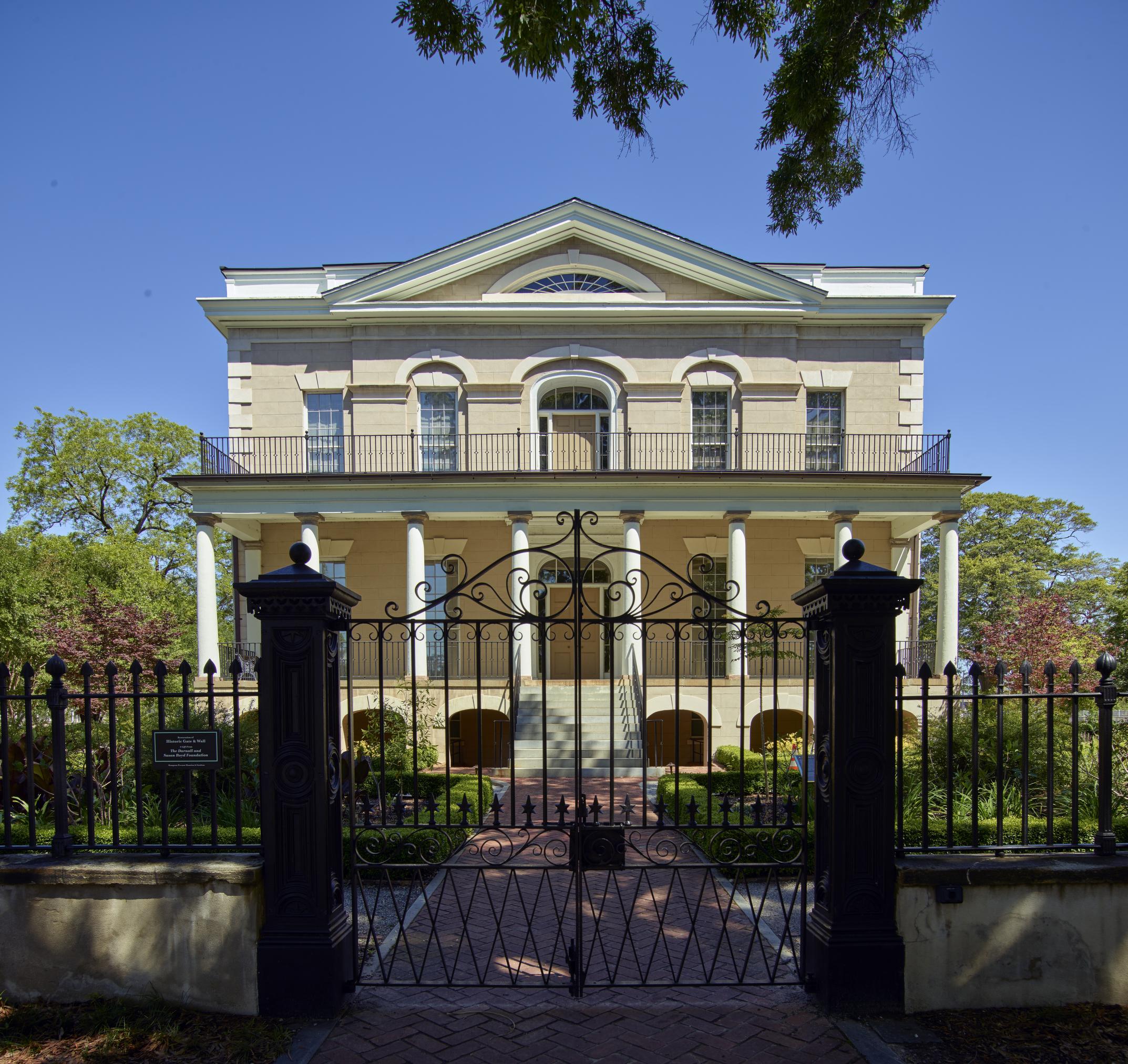
Built around 1818, this mansion was home to two of South Carolina's most prominent families. The elegant Greek Revival home witnessed the Civil War and Sherman's occupation of Columbia.
The Ghost Story
The Hampton-Preston Mansion at 1615 Blanding Street in Columbia was built in 1818 for wealthy merchant Ainsley Hall, designed by architect Zachariah Philips and constructed by Robert Yates in a Classical Revival style with a broad veranda, Doric columns, and a fanlight above the entrance. In 1823, Hall sold the property to General Wade Hampton I, a Revolutionary War veteran and War of 1812 commander whose family would transform the house into Columbia's grandest residence. Over the next fifty years, Hampton's wife Mary Cantey and their daughter Caroline Hampton Preston expanded the estate to fill an entire city block, with gardens known throughout the state. The family's vast wealth was built on the enslavement of hundreds of people across plantations in South Carolina and Louisiana. By 1860, seventy-four enslaved men, women, and children lived and worked on the four-acre Columbia estate, among them siblings Maria and William Walker.
The mansion survived the burning of Columbia in February 1865 through a combination of luck and intervention. According to the most enduring account, Sister Baptista Lynch of the Ursuline order convinced General William T. Sherman to spare the house for use as a convent. Union General John Logan established his headquarters in the mansion during the occupation, which likely ensured its preservation while much of the city burned around it.
The most famous paranormal incident at the Hampton-Preston Mansion occurred during a Christmas candlelight tour in 1982. After the evening's event had concluded, a docent confirmed that all candles in the house had been extinguished, locked every door, and activated the security system, accompanied by a firefighter who verified the procedure. As the docent walked away from the building, she turned back and was stunned to see flickering light in the windows. Through the glass, she could clearly see that all the candles in the sitting room were brightly burning. Police were called immediately and arrived to find the house still securely locked with the security system fully armed and showing no breaches. There was no explanation for how the candles had reignited in a sealed, empty house.
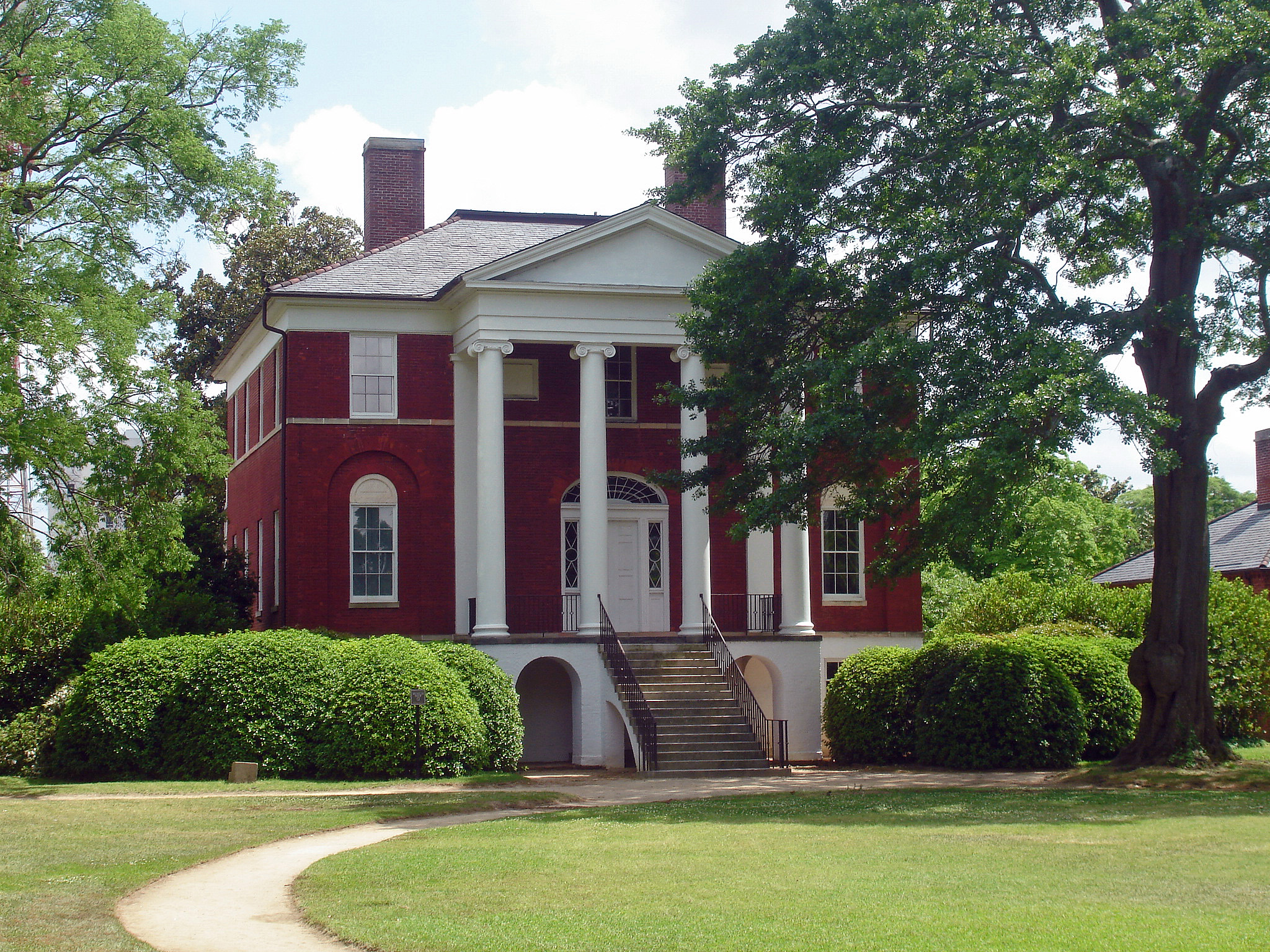
Beyond the candlelight incident, docents and visitors have reported multiple types of paranormal activity throughout the mansion. A lady in an older-style gray dress has been seen standing on the stairs in the main hallway on several occasions, then vanishing when approached. The sounds of boisterous children playing have been heard on the grounds and on the third floor when no children are present. Staff working alone after hours describe an overwhelming feeling that another presence is looming in the rooms around them -- a sensation strong enough to unnerve even those who have worked in the house for years. Across the street, the Robert Mills House (originally also built for Ainsley Hall) has its own separate haunting attributed to Hall's widow Sarah, creating a peculiar paranormal echo between the two properties that share the same original owner.
The Ursuline Convent purchased the property in 1887, and it subsequently housed various educational institutions before being restored in 1970 as part of the state's tricentennial celebrations. Garden restoration efforts began in 2012 to reconstruct Mary Cantey Hampton's famous grounds. Today Historic Columbia operates the Hampton-Preston Mansion as a house museum that tells the full story of the property, including the lives of the enslaved people who built and maintained it. The mansion's haunted reputation adds another layer to an already complex history -- a house that witnessed Revolutionary War wealth, the horrors of slavery, the devastation of the Civil War, and a mysterious evening in 1982 when candles burned in an empty, locked room with no earthly explanation.
Researched from 8 verified sources including historical records, local archives, and paranormal research organizations. Learn about our research process.