About This Location
Washington's oldest state prison, operational since 1886, with a long and grim history of notorious inmates and executions.
The Ghost Story
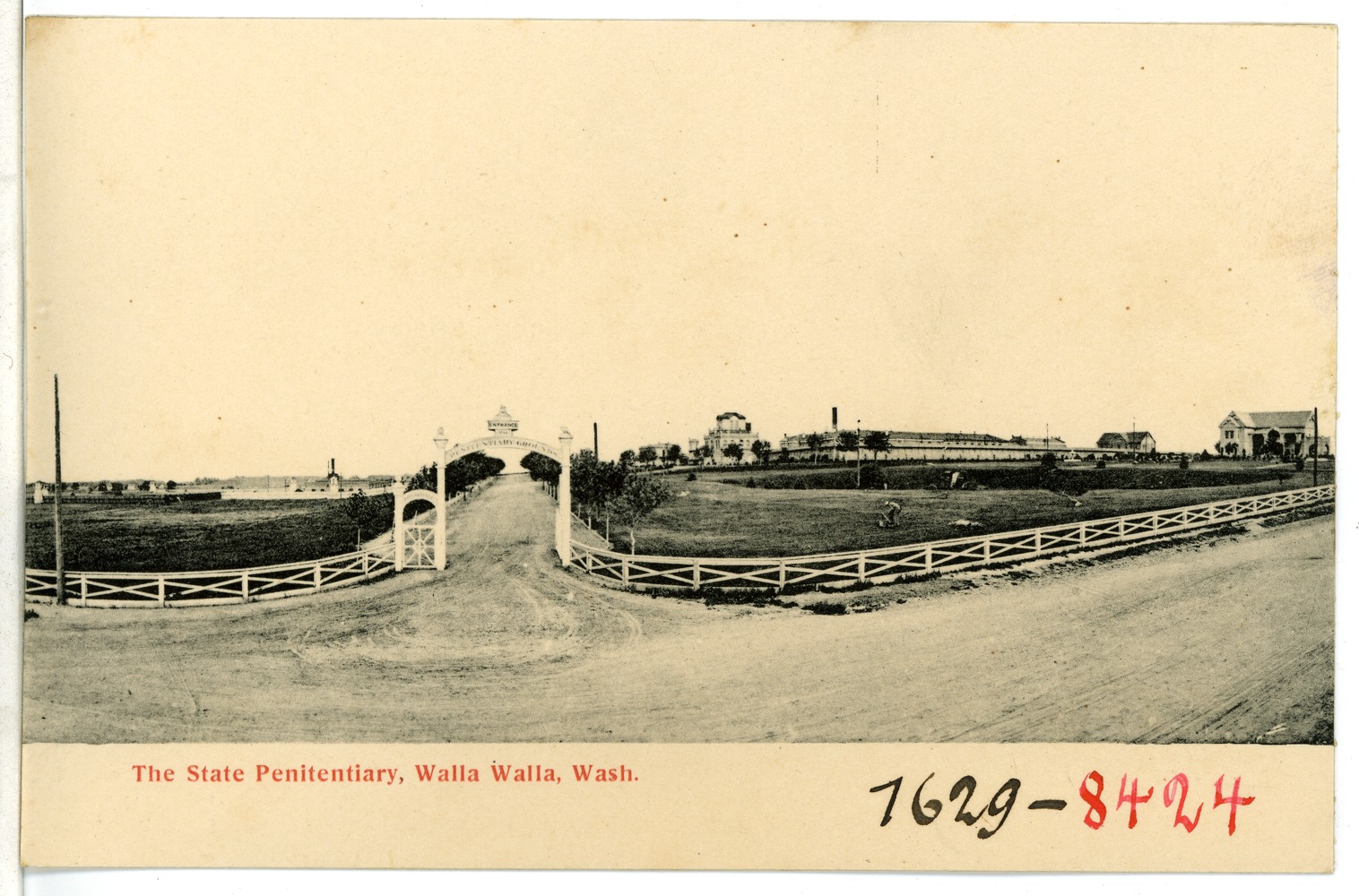
Washington's oldest state prison was built in 1886 on 160 acres donated by Walla Walla businessman Levi Ankeny, using machine-made bricks from nearby Dixie that weighed a pound heavier than anything manufactured in the country at the time. The first ten convicts arrived on May 11, 1887, transferred under armed guard from the infamous Seatco Prison in Thurston County, a privately-run facility so brutal it earned the nicknames "The Seatco Dungeon" and "Hell on Earth." When Washington achieved statehood in 1889, the territorial prison became the Washington State Penitentiary. Inmates would give it their own names over the decades: The Hill, The Joint, The Walls, The Pen, and most enduringly, Concrete Mama.
The prison's history is written in blood. On February 12, 1934, inmate James R. DeLong pulled a knife on an officer and announced, "Sorry to do this, but we're doing too much time." The spontaneous escape attempt that followed left nine dead: seven inmates cut down by wall guards' gunfire, turnkey Tom S. Hubbard stabbed multiple times, and Officer H.L. Briggs fatally knifed as inmates used bound hostages as human shields. One inmate, Phillip Wallace, briefly evaded the gunfire by donning a guard's gold-braided cap, causing the wall guards to mistake him for staff. The 1970s brought a radical experiment in prisoner self-governance through the Resident Government Council, but the reforms collapsed into chaos. The administration enlisted the Washington State Prison Motorcycle Association, a confederation of imprisoned outlaw bikers, to enforce discipline. Bikers roared prison-built choppers around the Big Yard, marijuana was everywhere, and hundreds shot heroin. On June 15, 1979, Sergeant William Cross was stabbed five times -- one cutting his aorta -- while intervening in a confrontation between Mexican American and Native American gang members near the dining hall. Cross became the first Washington corrections officer killed by inmates in living memory. His death triggered a 130-day lockdown.
The execution chamber, operational from 1904 to 2010, claimed seventy-eight lives. The first was Zenon "James" Champoux, a twenty-six-year-old French Canadian hanged on May 6, 1904, for stabbing eighteen-year-old entertainer Lottie Brace at Seattle's Arcade variety theater after she rejected his advances. Though described as dying instantly from the drop, his heart continued beating for seventeen minutes. The most notorious execution came on January 5, 1993, when child killer Westley Allan Dodd was hanged just after midnight, the first legal hanging in the United States since 1965. The last was Cal Coburn Brown on September 10, 2010. When the chamber was officially retired on September 18, 2024, three stopped clocks still marked 12:56 a.m., the moment Brown was pronounced dead. The gallows hooks remained embedded in the second floor with visible rope marks, the trap door still functional above the lethal injection gurney below. Former captain Dick Morgan recalled the trap door's sound as "hard to forget" -- so "loud and startling" it would disturb inmates in nearby wings for days.
Death row occupied the last six cells on A-Tier in the administrative segregation unit known as Big Red. Concrete slabs replaced metal bunks. The tier received no direct sunlight despite fluorescent overhead lighting, creating perpetually dim conditions. Notable inmates who passed through or remain behind the walls include Gary Ridgway, the Green River Killer convicted of forty-eight murders; Kenneth Bianchi, one of the two Hillside Stranglers serving five life terms; and Robert Lee Yates, the Spokane Serial Killer who murdered at least sixteen people and who, in a grim irony, had once been hired as a corrections officer at the very same penitentiary in 1975 before his killing spree.
Correctional officers have long reported unexplained phenomena in the cold stone cell blocks and solitary confinement areas. Staff describe unexplained noises echoing through empty tiers, apparitions glimpsed in peripheral vision along corridors where decades of violence left their mark, and an oppressive atmosphere in the oldest sections of the prison that goes beyond what brick and concrete alone can explain. The execution chamber itself, preserved intact as a historical site with its gallows and stopped clocks, carries a weight that visitors and staff alike describe as palpable. In a facility where seventy-eight men were hanged or injected, where nine died in a single afternoon of gunfire, where a sergeant was stabbed to death at dinnertime, and where some of America's most prolific serial killers serve their sentences, the boundary between history and haunting becomes difficult to define.
Researched from 13 verified sources including historical records, local archives, and paranormal research organizations. Learn about our research process.