About This Location
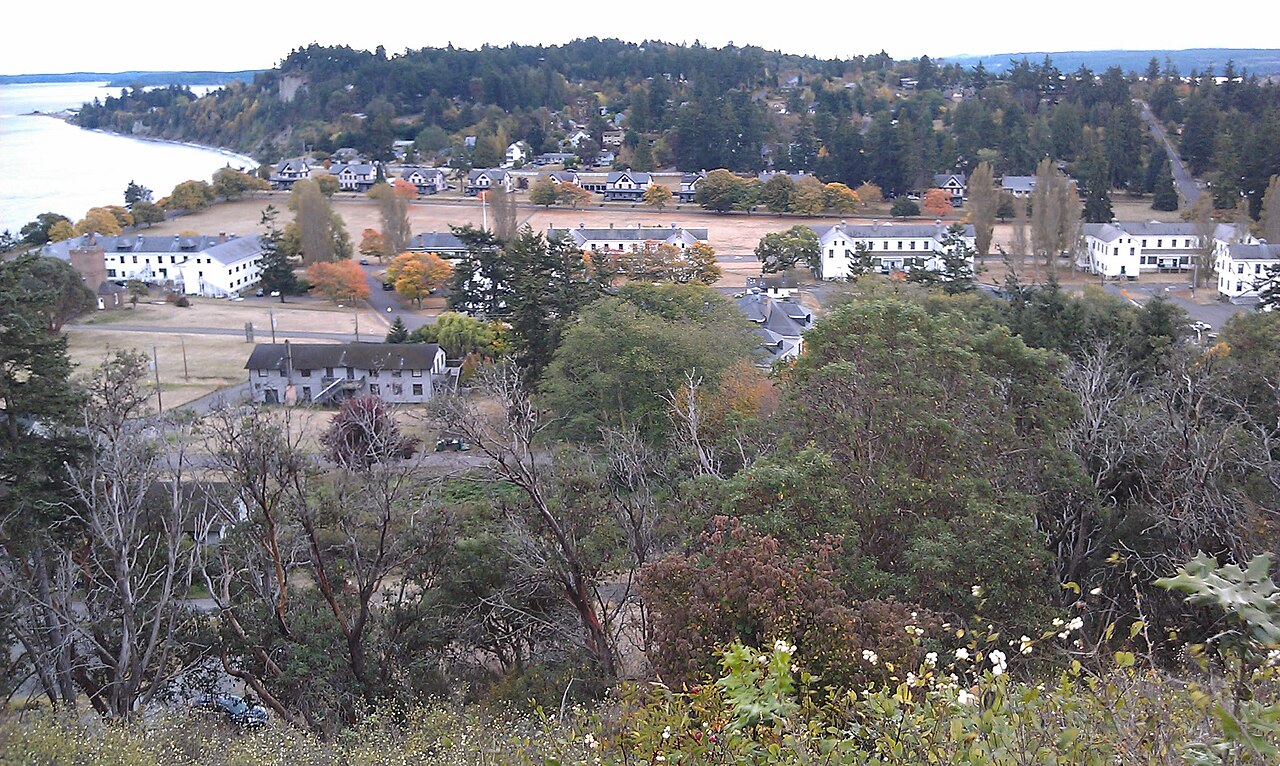
A 433-acre former U.S. Army Coast Artillery Corps base activated in 1902 as part of the Triangle of Fire defending Puget Sound. Active military post until 1953, now a state park.
The Ghost Story
Fort Worden was constructed between 1898 and 1902 on the high bluffs above Point Wilson at the extreme northeastern tip of the Olympic Peninsula, named in honor of Rear Admiral John Lorimer Worden, captain of the ironclad USS Monitor during the Civil War. Together with Fort Casey on Whidbey Island and Fort Flagler on Marrowstone Island, it formed the "Triangle of Fire," a network of coastal artillery batteries designed to prevent a hostile fleet from reaching the Puget Sound Naval Shipyard and the cities of Seattle, Tacoma, and Everett. When completed, Fort Worden bristled with forty-one artillery pieces, including two twelve-inch disappearing guns, sixteen twelve-inch mortars, and an array of ten-inch, six-inch, five-inch, and three-inch guns. On September 4, 1904, the Harbor Defense Command of Puget Sound transferred its headquarters from Fort Flagler to Fort Worden, and by fall 1905 the harbor defense system, costing approximately $7.5 million, was considered fully operational with four Coast Artillery companies stationed at the fort.
The forts never fired a hostile shot. During World War I, thirty-six of Fort Worden's forty-one artillery pieces were dismantled and shipped to European battlefields. The military presence endured through World War II, and in 1962 the fort was briefly designated as a potential atomic war command post, but the Harbor Defense Command was deactivated on June 30, 1953, ending fifty-one years of military jurisdiction. The State of Washington purchased the 433-acre property for $127,533 on July 1, 1957, initially using it as a diagnostic and treatment center for troubled youths before opening it as Fort Worden State Park on August 18, 1973.
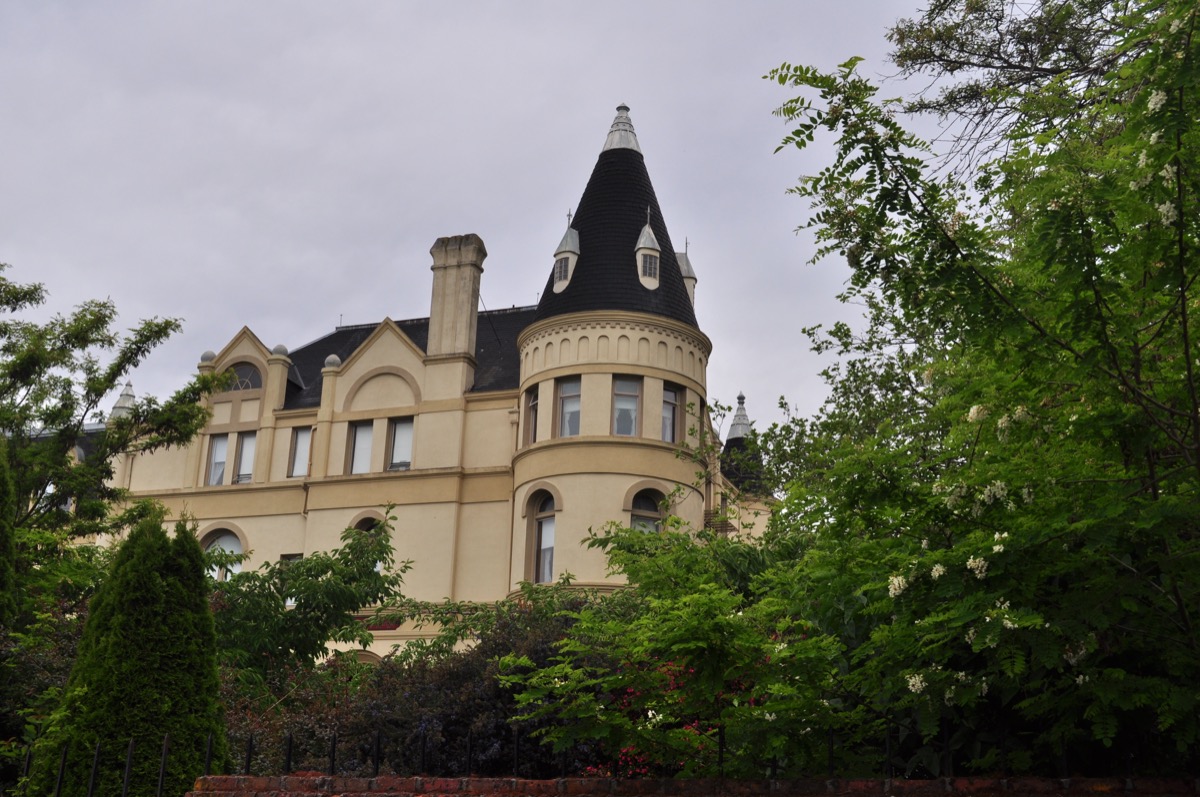
Over those five decades of military occupation, the fort accumulated a dark history of murders, suicides, and accidental deaths that now anchor its reputation as one of the most haunted former military installations in the country. The oldest building on the post, Alexander's Castle, was built in 1883 by Reverend John Barrow Alexander and predates the military presence entirely. Captain Frank Thornton took his own life in 1911 in the unmarried junior officers' quarters known as "the Bricks." William Payne, a maintenance man for Alexander, drowned under mysterious circumstances when his body was found head-first in a cistern containing only six inches of water. Corporal Henry Johnson was murdered at the fort in circumstances that remain among the post's most infamous incidents.
The first verified reports of spirits surfaced after the state park opened in August 1973, and people have since reported paranormal activity in more than twenty-five buildings across the campus. The most persistent entity haunts the Guard House, where a sergeant on duty who was discouraged and depressed accidentally shot himself with his own pistol. His shadowy, fuming presence has been felt and seen many times both inside and outside the building, described as shy and sometimes angry, a spirit who remains unable to accept what he views as a foolish accident. When paranormal investigators have invited him to manifest, he has reportedly complied, suggesting intelligent and responsive rather than residual haunting. Paranormal researcher Fiona Broome, author of over twenty books on ghost hunting, investigated in April 2003 during a conference in Port Townsend and documented vivid, crayon-colored "sparkles" ranging from baseball to beach-ball size near the Guard House, along with photographs showing large orbs and what she described as "a clear, brilliant blue ghostly figure" standing outside the building that was invisible to the naked eye.
The stately officers' houses along Pershing Avenue are equally active. The Commanding Officer's Quarters, built in 1904 and now a museum, appears to be occupied by a spectral military couple who remain attached to the historical decor. Visitors entering the front door have reported the distinct smell of burning coal, burning rubber, or hot sulfur. During a multi-night Halloween investigation, paranormal investigator Tomasina Doran captured a photograph showing an apparition in purple clothing with a face visible in a mirror, describing the entity as male and seemingly engaged in conversation near a desk. Her team concluded the fort was "extremely haunted."
Building 298, which served as the fort's military hospital and morgue, contains an old bloodletting table still visible inside. A mysterious woman is said to appear in a second-story window at approximately 10:30 each night, always accompanied by a light. Red Ball Paranormal Investigations conducted an examination in 2016 using electromagnetic field sensors and electronic voice phenomena recorders, capturing multiple orb images and unexplained EVP audio. One investigator was so frightened by a spirit encounter that she refused to enter the structure again. In January 2024, a documentary team from Ghostly Activities led by investigator Mike of The Paranormal Road Trippers filmed at the Bricks and Alexander's Castle, examining the deaths of Thornton, Payne, and Johnson.
Fort Worden now operates as a conference center and state park managed by the Fort Worden Hospitality nonprofit, with the Coast Artillery Museum established in 1976 and the Commanding Officers' Quarters Museum opened in 1982. The fort hosts regular paranormal investigations and conferences, and its Haunted Histories and Mysteries events draw visitors from across the Pacific Northwest. The 433-acre campus, with its deteriorating batteries, underground magazines, and miles of tunnels, remains one of Washington's most active paranormal destinations.
Researched from 11 verified sources including historical records, local archives, and paranormal research organizations. Learn about our research process.