
About This Location
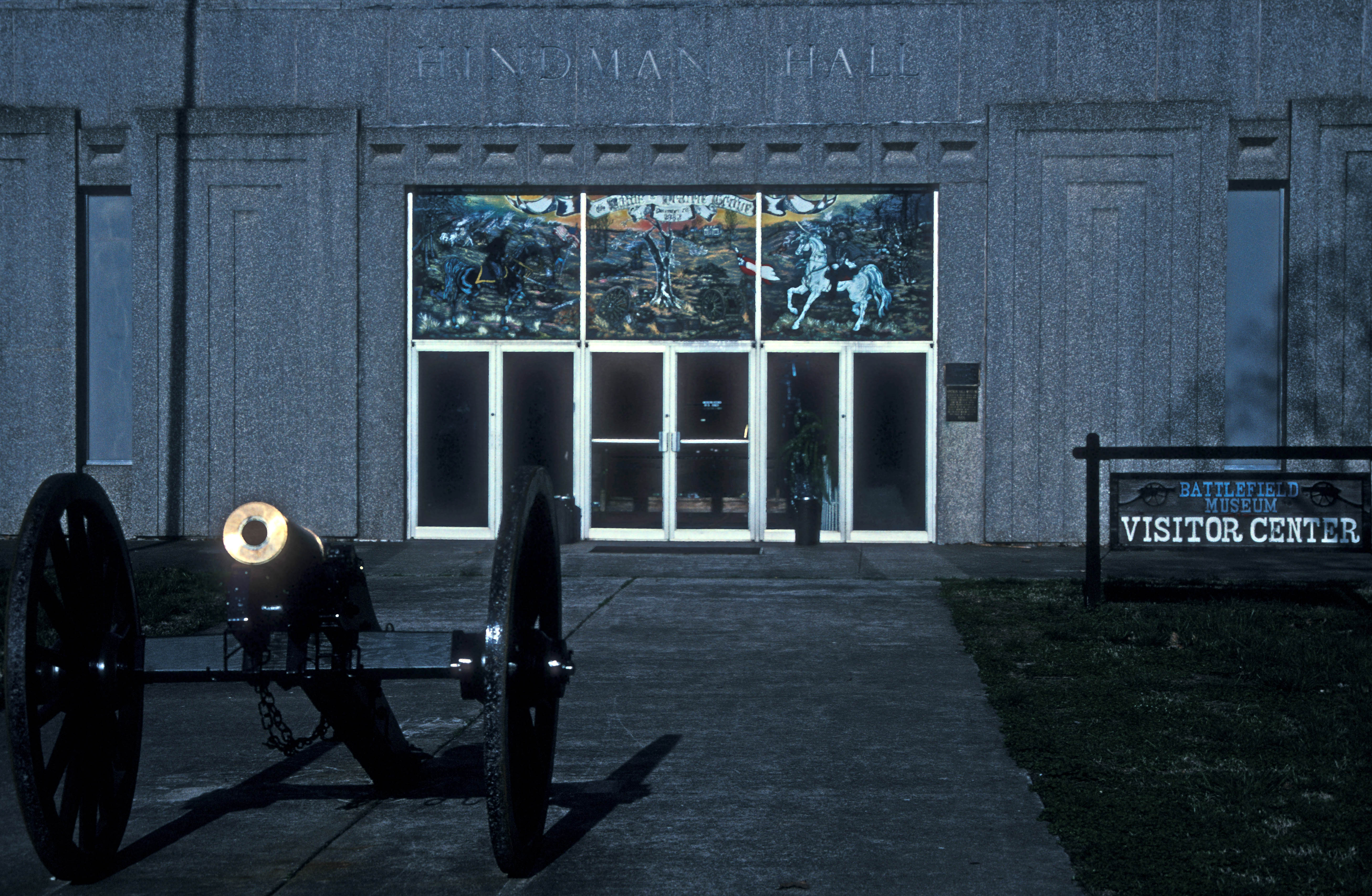
Approximately 2,700 Confederate and Union soldiers died here on December 7, 1862. The battlefield and Borden House are preserved as a state park.
The Ghost Story
On December 7, 1862, approximately 12,000 Confederate troops under Major General Thomas C. Hindman clashed with roughly 10,000 Union soldiers commanded by Brigadier Generals James G. Blunt and Francis J. Herron along a series of low ridges near Prairie Grove, Arkansas. The fighting began at dawn and raged through the afternoon, with Herron's divisions twice assaulting the Confederate ridge position only to be beaten back with heavy casualties. At about 2:30 p.m., two cannon shots from the northwest signaled the arrival of Blunt's command, turning the tide as Herron's forces faced collapse. By nightfall, approximately 2,700 soldiers lay dead, wounded, or missing across both armies -- Confederate losses of 204 killed, 872 wounded, and 407 missing, Union losses of 175 killed, 808 wounded, and 250 missing. Hindman withdrew overnight due to ammunition and food shortages. A full-scale Confederate army would never return to northwest Arkansas, and Missouri remained firmly under Union control.
The Borden House stood at the center of the fiercest combat. Nine-year-old Caldonia Ann Borden later recalled how her father told the family to evacuate because there was to be a battle on their hill. They crowded into a neighbor's cellar with four men, seven women, and eight children. When the family returned after dark, they found their two-story yellow house with green trim had been burned to the ground after Union troops plundered the inside, consumed their livestock, and destroyed sixty bushels of stored wheat. The house was rebuilt in 1868 to closely resemble the original and still stands today within the park. The Morrow House, built around 1855 by John Morrow, served as Confederate headquarters the night before the battle and later housed General Sterling Price in February 1862.
The battlefield's paranormal reputation centers on the sounds of a battle that never ended. Visitors consistently report hearing cannon fire booming across the fields, rifle volleys crackling through the air, the thundering hooves of cavalry charges, soldier commands, wounded men screaming, and military drums. These phantom battle sounds typically manifest near dawn, dusk, or during foggy conditions with such volume and realism that visitors unfamiliar with the haunting sometimes believe a Civil War reenactment is occurring. The activity appears primarily residual in character, as though the extreme violence of the engagement imprinted itself onto the landscape.
The Borden House generates the most concentrated paranormal activity. The most frequently reported phenomenon is a young girl seen peering out the windows, her face framed by the glass even when the house is unoccupied and without power. Multiple witnesses including park staff have reported this apparition. Some believe she may be a spirit connected to the Borden family, while others consider her a manifestation of the civilian suffering that surrounded the battle. Inside the house, visitors have heard disembodied voices, and during a documented investigation, a paranormal investigator standing alone near the entrance heard a clear voice commanding him to go away.
Arkansas Paranormal Investigations, a group based in Benton County, has conducted multiple investigations at the battlefield, recording EVPs particularly in the area around the Borden House. Visitors frequently capture photographic anomalies around the Borden House, Morrow House, and the Confederate Cemetery. However, results remain inconsistent -- one paranormal research team found no evidence of soldiers or war-related phenomena, suggesting the activity may be intermittent.
The United Daughters of the Confederacy purchased nine acres in 1908 to create the commemorative park. Veterans held annual reunions there through the Great Depression, with the final Confederate veteran reunion occurring in August 1938. Citizens established the Prairie Grove Battlefield Memorial Foundation in 1957, and Governor Dale Bumpers signed legislation creating the state park in 1971. The park has expanded from 130 to approximately 840 acres through federal and private funding. A biennial reenactment held every December draws participants and spectators from across the country, and twenty-first-century archaeology has uncovered six additional historic structures from the battle period.
Researched from 10 verified sources including historical records, local archives, and paranormal research organizations. Learn about our research process.