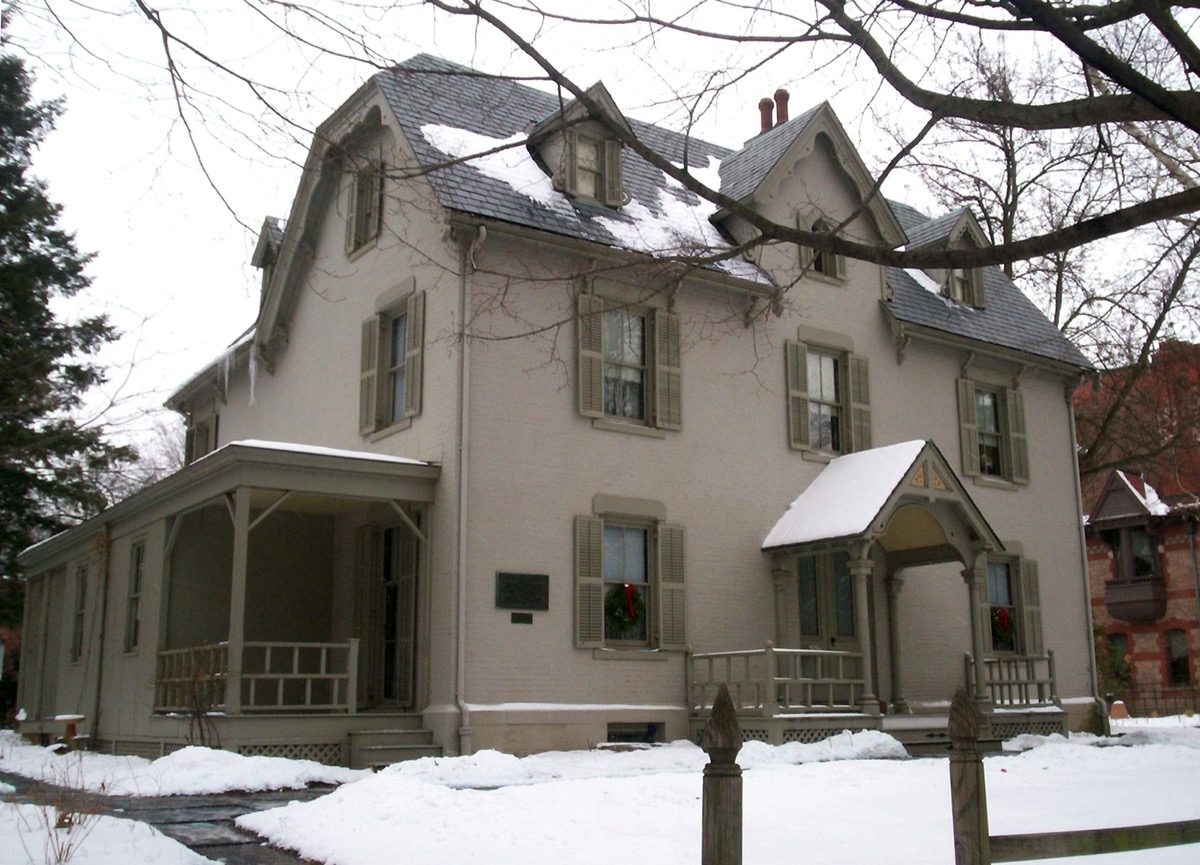
About This Location
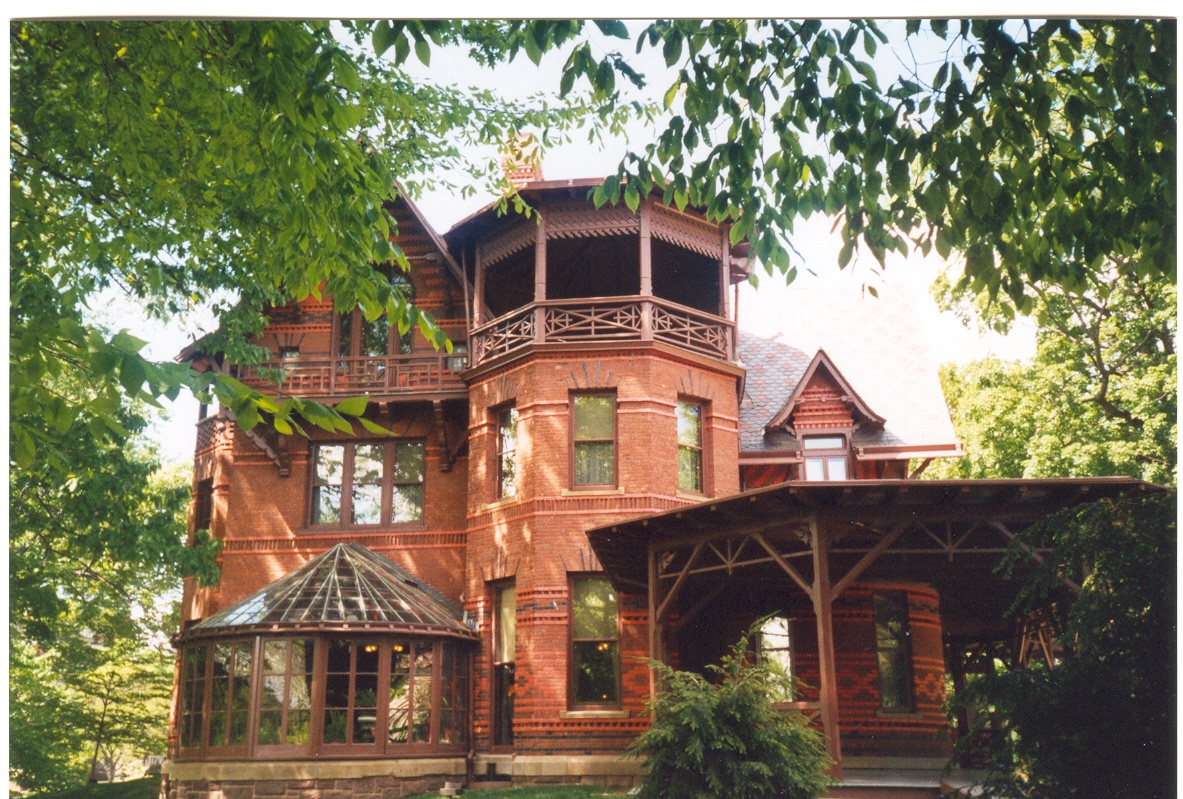
The historic home where abolitionist author Harriet Beecher Stowe lived from 1873 until her death in 1896. She wrote Uncle Tom's Cabin, one of the most influential books in American history.
The Ghost Story
The Harriet Beecher Stowe Center stands as one of Hartford's most spiritually charged historic sites, its haunted reputation rooted not merely in tragedy but in the author's own documented pursuit of contact with the dead. Harriet Beecher Stowe lived in this 1871 Gothic Revival home for the final twenty-three years of her life, and during that time, the house witnessed profound loss—five deaths occurred within its walls, including Stowe herself in 1896.
Stowe's involvement with spiritualism was no casual curiosity. She lost four of her seven children during her lifetime: eighteen-month-old Samuel Charles ("Charley") to cholera in 1849, Henry Ellis to drowning in the Connecticut River at age nineteen, Frederick who disappeared at thirty after suffering severe head trauma at Gettysburg, and Georgianna May to morphine addiction at forty-seven. This crushing succession of losses drove Stowe to seek communication with those who had passed. She attended séances, consulted mediums, and experimented with the planchette—a heart-shaped wooden device on castors with a pencil that preceded the Ouija board.
Her spiritual investigations yielded remarkable results. In a letter to fellow author George Eliot dated May 11, 1872, Stowe confessed to "spectral flirtations" that had begun with a "toy planchette" but grown quite serious. She described watching a "cool headed clear minded woman" contact the spirit of Charlotte Brontë, who had been dead for seventeen years. Stowe reported that Brontë's ghost remained sensitive about critics who had called her work "coarse." She told Eliot with conviction: "That spirits unseen have communicated with me I cannot doubt."
Her husband Calvin Stowe possessed his own supernatural sensitivities. The biblical scholar had experienced visions since childhood, decades before spiritualism swept the nation. He wrote of frequent visitations from supernatural creatures including tiny fairies that danced on his windowsill. Calvin mused to a friend that "some peculiarity in the nervous system, in the connecting link between soul and body... may bring some, more than others, into an almost abnormal contact with the spirit world." He found personal solace in spiritualism following family losses, believing his first wife's spirit would care for their young son in the afterlife.
The Stowes lived in Hartford's Nook Farm neighborhood, an intellectual community that served as a hotbed for spiritual investigation. Their half-sister Isabella Beecher Hooker was among the neighborhood's most devoted spiritualists. At one New Year's Eve gathering at the Hooker home, she entertained both the Clemenses (Mark Twain and his wife Olivia) and three different mediums, whom she moved between upstairs bedrooms. The evening ended after one medium, a small-built woman, ran downstairs and beat on John Hooker while channeling the energy of an Indian warrior—not an unusual night on Forest Street.
Today the Stowe house exhibits persistent paranormal activity. Staff and visitors report window shades in the parlor opening on their own accord. Disembodied footsteps echo through hallways and rooms throughout the building. Flashes of unexplained light appear in the bedrooms. An apparition has been sighted in the visitor's center.
Most poignant are the reports of children. Many visitors have heard the pattering of small feet scurrying through the house, attributed to some of the Stowe children who remained behind to stay close to their mother. Tour guides describe mischievous specters, believed to be the young Stowes, who taunt them during tours. Visitors to the twins' bedroom report feeling unsettled, sensing anger from an unseen presence. A young English visitor who died unexpectedly in his sleep in the guest room may account for some activity—a K-2 electromagnetic field detector consistently reacts near that room during paranormal tours.
The SyFy Channel's Ghost Hunters (TAPS) investigated the house during Season 6, Episode 3, titled "Shamrock Spirits." Investigators reported recording spirit voices during their overnight investigation. "Definitely haunted," one team member concluded. Interpreters now share these findings during the "Spirits at Stowe" tours, where visitors explore the darkened house by flashlight, using K-2 meters and digital voice recorders to detect potential activity.
Stowe incorporated supernatural elements throughout her fiction. Chapter XLII of Uncle Tom's Cabin is titled "An Authentic Ghost Story," depicting footsteps in the dead of night, a tall figure in a white sheet, and a ghost with "immemorial privilege of coming through the keyhole." She also penned eight supernatural short stories including "The Ghost in the Mill," "How to Fight the Devil," and "The Visit to the Haunted House."
In her final years, Stowe suffered severe dementia, possibly Alzheimer's disease. By 1888, she had begun rewriting Uncle Tom's Cabin from memory, believing she was composing it for the first time. Mark Twain, her neighbor, later wrote that "her mind was decayed, and she was a pathetic figure." She died in her upstairs bedroom on July 1, 1896, seventeen days after her eighty-fifth birthday.
The connection between Stowe's lifelong pursuit of spirit communication and the phenomena reported in her home seems almost inevitable. A woman who spent decades trying to pierce the veil between worlds, who believed without doubt that the dead could speak to the living, may have succeeded in leaving evidence of that very belief—the sound of her footsteps still walking the halls, the presence of children who never truly left, and a maternal spirit still watching over visitors who come to honor her legacy.
Researched from 12 verified sources including historical records, local archives, and paranormal research organizations. Learn about our research process.