About This Location
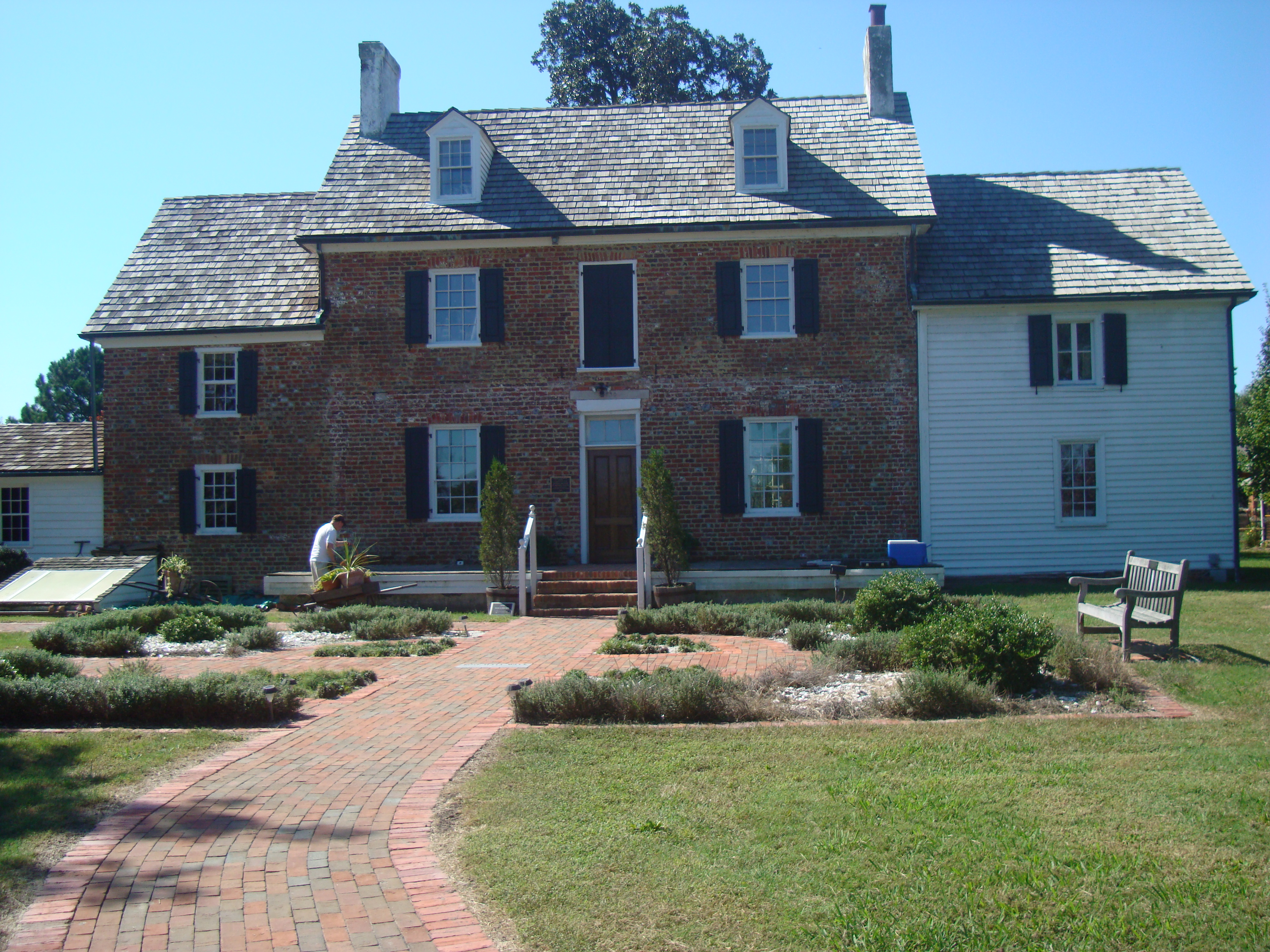
A 1830 manor house built on land once inhabited by Native American tribes and later the site of colonial ferry operations. Eleven documented ghosts make it one of Virginia's most haunted locations.
The Ghost Story
Ferry Plantation House stands on land with nearly four centuries of recorded history, making it one of Virginia's most haunted locations. The site dates to 1642 when Savill Gaskin established the second ferry service in Hampton Roads, carrying passengers across the Lynnhaven River to the nearby courthouse and neighboring plantations. A cannon would signal the ferry's arrival at its eleven stops along the waterway.
The oldest surviving structure, built in 1735, originally served as the third Princess Anne County Courthouse and was the county's first brick courthouse. This very building witnessed one of Virginia's darkest chapters: the 1706 trial of Grace Sherwood, the "Witch of Pungo." A farmer, healer, and midwife, Grace was accused by jealous neighbors of transforming into a cat, destroying crops, and killing livestock. She became the only person in Virginia tried by water—on July 10, 1706, she was bound and thrown into the Lynnhaven River. When she floated instead of sinking, she was found guilty and imprisoned for nearly eight years. Grace's ghost is said to roam these grounds still, and the museum reenacts her trial annually. It took 300 years for Governor Tim Kaine to formally exonerate her on July 10, 2006—a ceremony held at this very house.
The current structure was built in 1830 using salvaged bricks from the Walke family's Manor house, which burned in 1828. Today, volunteers identify eleven distinct spirits who inhabit the property.
**Henry** is the most active and beloved spirit. An enslaved man likely born on the plantation, Henry demonstrated remarkable courage during the 1828 house fire. Though the Walke family felt indebted to him, they kept him in bondage for years. When the Civil War ended, Henry had nowhere to go, so the family offered him the upstairs room where he eventually died. For many years in the 1980s, caretakers would witness a particular scene on Saturday evenings: the spirit of an elderly African-American man would emerge from the basement, cross the room, and kneel before the west wall, intent on some long-ago task. After several minutes, he would rise and return through the same door. Years later, restoration work revealed a hidden fireplace behind that wall. Through EVP sessions, investigators discovered his name and learned he was content with his life, had "nowhere better to go," and that his favorite pastime was "goin' fishin'!" Near his quarters, volunteers discovered an "H" etched beneath layers of paint—possibly the only letter he knew how to write.
**Sally Rebecca Walke** still mourns her fiance John, a Confederate officer killed in the Civil War. In the backyard stands a large Southern Magnolia she planted on April 6, 1863, in his memory.
**The Lady in White** reportedly died in 1826 when she fell down the stairs and broke her neck. Visitors have witnessed her tumbling down the staircase repeatedly.
**General Thomas H. Williamson**, son of former owners Thomas and Anne Walke Williamson, has been seen painting at the top of the stairs. A toddler named Kathlene would periodically mention "the man with a beard wearing a dirty shirt painting a picture on the second floor landing." Staff later found a photograph of the General that matched her description exactly.
**The McIntosh Family Tragedy**: Captain Charles F. McIntosh died on May 13, 1862, when his Confederate ironclad Louisiana was destroyed in a naval battle. His wife **Isabella** was eight months pregnant when he was killed; their son was born the following June. A photograph in the Best Parlor allegedly shows a sad woman in blue reflected in the window—believed to be Isabella. Their daughter **Bessie** died one day after her fifth birthday in 1860. She fits the description of multiple sightings: a little girl with ringlets wearing Mary Jane shoes, described as a "trickster spirit." During one tour, a Navy visitor suddenly felt himself being pulled through the house by an invisible force—this happened near where Bessie was apparently watching his son play a game.
**Eric** is a young boy who fell from a low window in what is now the Conference Room. Children's voices have been captured there both as EVPs and audible sounds. Toys move on their own.
**Stella Barnett** died after eating poisoned mushrooms. She's known for mischief—paranormal investigator Cody Green once felt himself being raised and lowered while trying to sleep at 4 a.m., followed by a giggle that was heard by investigators in the next room as well.
**The 1810 Shipwreck Victims** perished when their vessel wrecked at the ferry landing. Their spirits are among those counted at the house.
Two unidentified **child apparitions**—a boy and a girl—have been seen on the second-floor landing, pressed against the wall at the top of the stairs, before vanishing.
Roughly 600 paranormal investigators have visited Ferry Plantation House, with some capturing ghostly figures on camera. Port City Paranormal from Wilmington, NC has investigated multiple times, once photographing an unexplained anomaly in the Green Room window. Lights regularly turn on in unoccupied rooms, particularly on the third floor, despite staff ensuring everything is shut off. Before the area was developed, neighbors reported seeing "strange balls of light dancing around the roof."
Cody Green, a former paranormal investigator who fell in love with the place while investigating it, now serves as vice president of the Friends of the Ferry Plantation House. "It's super active, but it's also super positive," he says. "There's nothing negative here that's going to harm anybody." He describes himself as hypersensitive: "I see, hear, feel and smell every day."
The house was saved from demolition by concerned citizens in 1990. The City of Virginia Beach and the Friends of the Ferry Plantation House began renovations in 1996. It was listed as a Virginia Historic Landmark in 2004 and added to the National Register of Historic Places in 2005. Today, spirit tours are available, including the Halloween "Stroll of Lost Souls." Paranormal nights are fully booked through 2026.
Researched from 10 verified sources including historical records, local archives, and paranormal research organizations. Learn about our research process.