About This Location
This former Salvation Army hospital on East Second Street served the Covington community from 1914 to 1979, originally housed in industrialist Amos Shinkle's Gothic Revival mansion. Now the Governors Point condominiums, residents report encounters with a ghostly 1930s-era nurse who checks their temperature while they sleep.
The Ghost Story
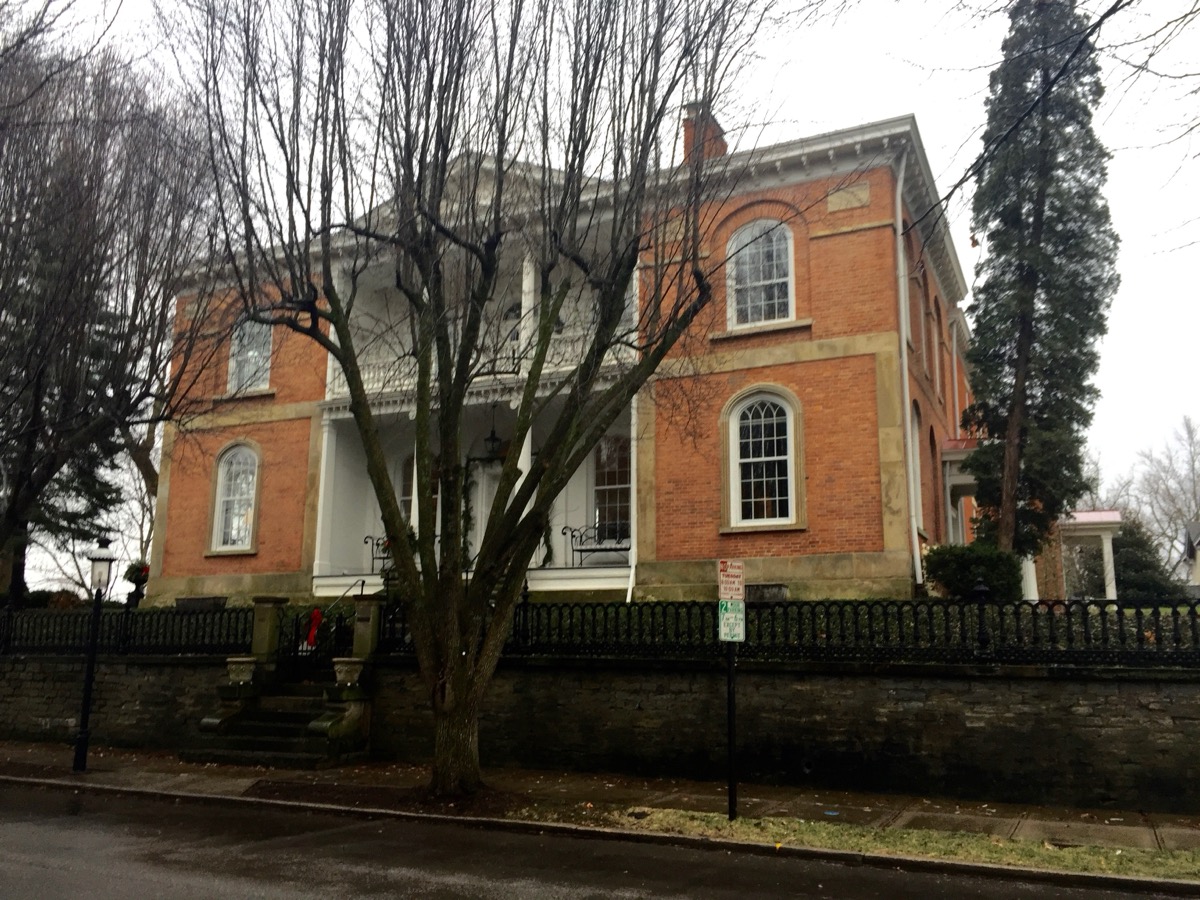
The William Booth Memorial Hospital traces its origins to one of Covington's grandest residences. In 1869, industrialist Amos Shinkle -- who made his fortune in the Ohio River barge trade and helped finance the Roebling Suspension Bridge connecting Covington to Cincinnati -- built a Gothic Revival mansion on East Second Street. The castle-like structure of brick masonry, with large windows, turrets, marble statuary, inlaid floors, and high ceilings, was the largest home in Covington and dominated the landscape overlooking the Ohio and Licking Rivers. After Shinkle's death in 1892, his son Bradford continued to live in the mansion until 1914, when the family donated it to the Salvation Army.
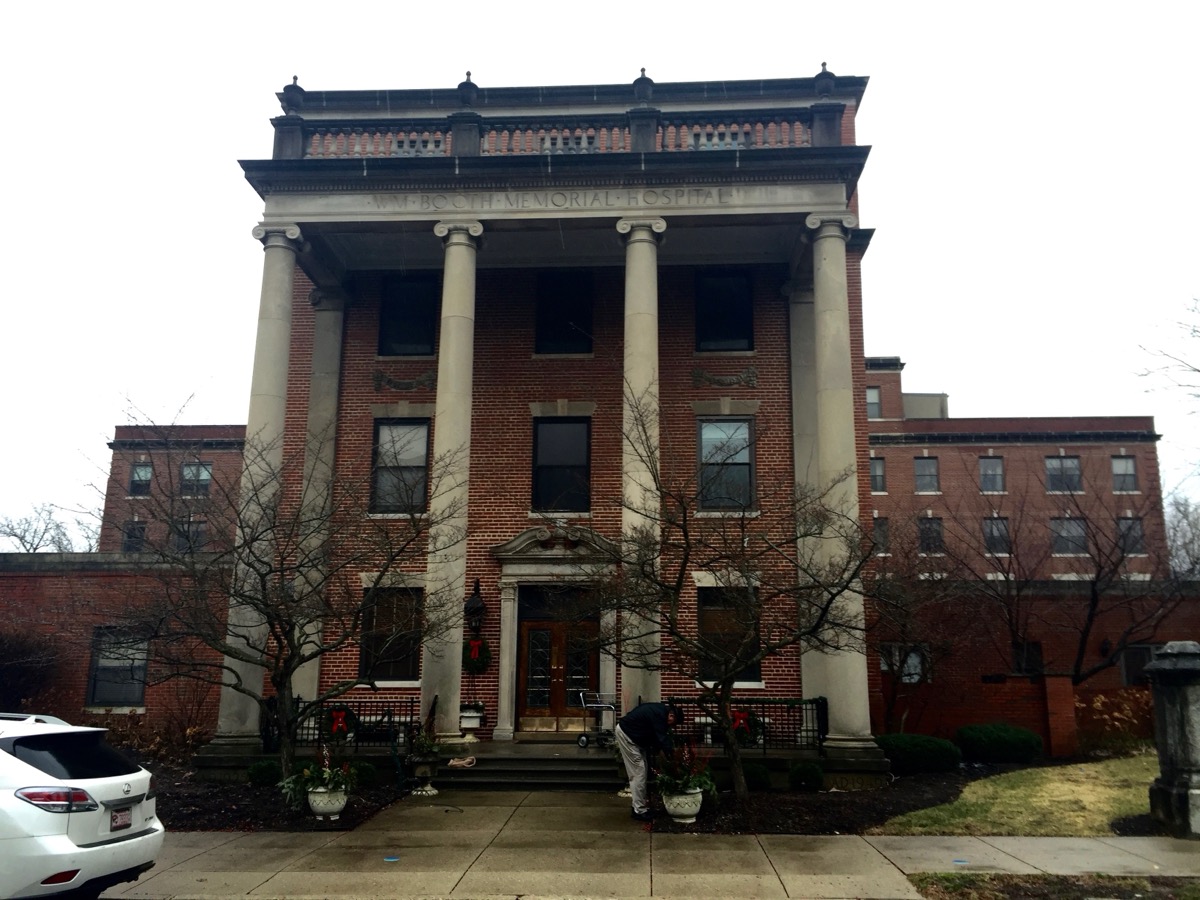
The Salvation Army initially used the Shinkle mansion as a home for single mothers and homeless women. In 1913, renovations began to transform the estate into a hospital, and the William Booth Memorial Hospital -- named for the founder of the Salvation Army -- admitted its first patients in 1914. By the early 1920s, a fund drive raised $500,000 to replace the aging mansion with a modern colonial-style hospital building, which was completed in 1925 and expanded the facility to 125 beds. The old Shinkle castle was demolished to make way for the new structure. The hospital specialized in maternity care and operated a nurses' training school and residence hall, handling a high volume of births and adoptions -- particularly for unwed mothers during the post-World War II era. Additions in 1950, funded through the Hill-Burton Act, increased capacity to 130 beds, and a further expansion in 1958 added 20 more beds, a cafeteria, and upgraded laboratories, bringing the total to 150 beds with 17 bassinets.
The hospital weathered serious hardship. During the Great Depression, funding shortages forced a temporary closure from 1932 to 1937. When the facility finally reopened after renovations in January 1937, the devastating Ohio River flood struck almost immediately, inundating the basement and destroying the boiler system. Despite the damage, the hospital stayed open and provided shelter for 100 homeless flood refugees. Urban flight in the 1960s and the construction of the new St. Elizabeth Hospital in nearby Edgewood took their toll on the institution. On April 4, 1973, hospital officials announced they would build a replacement facility in Florence, Kentucky. Ground was broken on November 18, 1977, on a 50-acre lot on Turfway Road, and the new hospital opened in July 1979. The original Second Street building sat vacant.
After the hospital closed around 1981, the building was fully decommissioned and slated for conversion into condominiums. During the vacant period, developers hired Wackenhut security guards to protect the building from vandals. Almost immediately, the guards began calling police to report the sound of children running through the building late at night -- though the children were never seen, only heard. According to a Covington police officer who documented the events, this became a recurring complaint.
The most dramatic incident occurred one winter night around 2 a.m. when a neighbor called the police department to report that a security guard at Booth Hospital was crying and had fled to his car. The responding officer found the guard locked inside his vehicle, window cracked barely an inch, saying he refused to go back inside. The guard had clearly suffered an anxiety attack. Dispatch sent a replacement guard, but within an hour the second guard also called police, asking the officer to come sit with him to see if he too could hear the running upstairs.
While the officer and his sergeant investigated the basement, they realized they were standing outside the old morgue door. When they opened a chest-type freezer, a shelf collapsed with a loud noise, revealing a body that had been accidentally left behind when the hospital was vacated. The second security guard saw the body and promptly passed out, striking his head on the concrete floor. He had to be transported to St. Elizabeth Hospital for treatment. When the coroner arrived to collect the forgotten remains, he made a chilling observation: the main electrical feed to the building had been severed -- chopped clean in half. There was no power running to the building. Yet the freezer had remained cold, and the elevator had been operating when the guards used it earlier that night. The coroner reportedly laughed at the officers because they refused to re-enter the building to help him retrieve the body; squad personnel had to assist instead. According to the police officer who wrote it up, this is believed to be the only ghost story with its own official report in the Covington Police Department files.
Today the building stands as the Governors Point condominium complex at 323 East Second Street, a sought-after address in the heart of the Licking Riverside Historic District. But residents report that the hospital's past has not entirely departed. According to Chris Code, who leads River City Tours' Ghosts of Covington Haunted History Tour, two or three residents have independently reported the same encounter: waking in the middle of the night to feel a hand pressing against their forehead, as though someone is checking their temperature. When they open their eyes, they see a woman in a 1930s-era nursing uniform standing beside the bed. The ghostly nurse looks at them and says, "Everything is going to be okay, honey. Just go back to sleep." The apparition then vanishes. The building is also said to be haunted by other former patients whose spirits remain in the halls where they were once cared for.
Researched from 8 verified sources including historical records, local archives, and paranormal research organizations. Learn about our research process.