About This Location
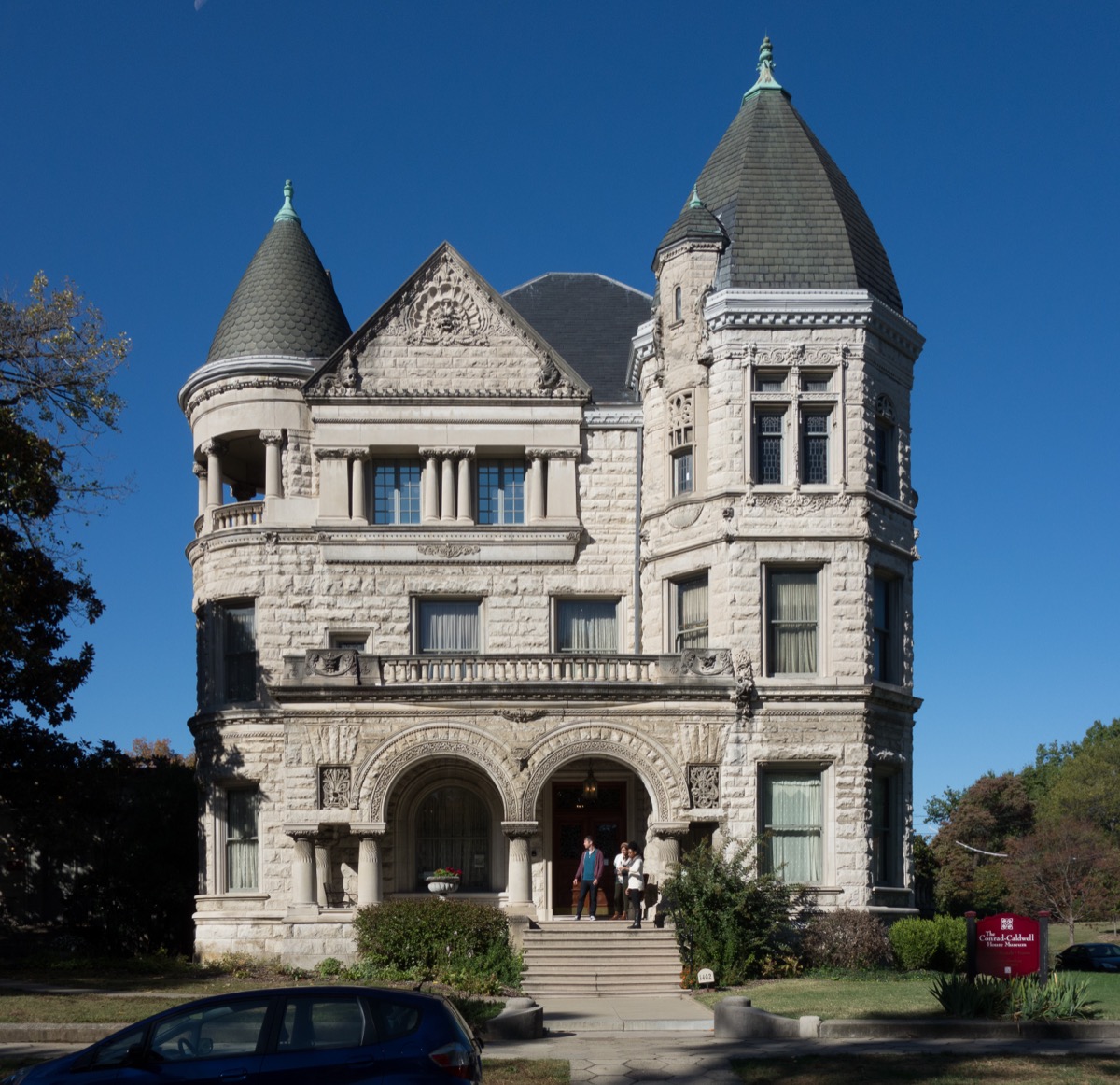
Built in the 1890s in the heart of Old Louisville, this stunning Richardsonian Romanesque mansion is one of the finest examples of Victorian architecture in America. The ornate home features gargoyles, elaborate stonework, and multiple stories of paranormal activity.
The Ghost Story
The Conrad-Caldwell House, known locally as "Louisville's Castle," may be the most thoroughly documented haunted location in what paranormal author David Dominé calls "the most haunted neighborhood in America." This magnificent limestone mansion in Old Louisville, now a house museum, has at least six documented entities that continue to make their presence known to staff and visitors more than a century after their deaths.
Built in 1893 for Theophile Conrad, the house was perhaps the grandest residence in Louisville's most fashionable neighborhood. The limestone construction is significant—stone associated with high paranormal activity according to investigators. The interior showcases seven different types of hardwood, soaring ceilings, and intricate details that made it a showpiece of Gilded Age architecture.
Theophile Conrad enjoyed his magnificent home for barely a decade. In 1905, at age 73, he suffered a fatal heart attack on the main staircase. His spirit apparently never left. According to Dominé, Conrad "appears as a misty apparition and it takes the shape of a man with a goatee and a bowler hat. He never says anything to anyone. He just shows up and sternly looks at them and does this—" wagging his finger disapprovingly "—as if to say, you shouldn't be doing this, and then he disappears." Visitors describe feeling watched throughout the house, though the sensation feels parental rather than threatening.
The Caldwell family purchased the mansion after Conrad's death. Elaine Caldwell died in the home in 1925, and her husband William passed in 1938 after remarrying. Their spirits also remain. Employees regularly detect the smell of flowers drifting through different parts of the house with no apparent source—attributed to Elaine. Mr. Caldwell manifests more distinctly: his image has been seen in the library, often accompanied by the unmistakable scent of cigar smoke.
When the Presbyterian Church acquired the property in 1948, they established the Rose Anna Hughes Home for Widows. Three of those elderly women apparently liked their accommodations so much they never left. Their spirits gather in the sitting room on the second floor, and they've proven to be particular about their space. When furniture is rearranged, doors begin opening and closing on their own, and items mysteriously relocate. Staff have learned to greet the three women each morning as acknowledgment of their continued presence.
Beth Caldwell, a great-granddaughter of the original Caldwell family, witnessed something extraordinary during a recent tour: "a ball of light" flew past her, followed moments later by a second one.
Perhaps the most dramatic incident involved a housekeeper working alone in the house. She suddenly heard a voice urgently calling: "Hurry, hurry, close the window. It's raining outside." When she went upstairs to investigate, she found a window standing open with rain pouring in—but she had been completely alone in the building. Someone, or something, had been watching out for the house.
Museum executive director Allison Wroblewski says the staff has developed a simple habit: "All of us have gotten into the habit of saying hello when we come in the morning because we know we're not alone." But employees emphasize there's no reason to fear these spirits. "Anything that is here, it's all wonderful, happy spirits that have wonderful memories that have just come back to the house because they enjoyed their time here."
Ghost tours begin and end at the Conrad-Caldwell House, where visitors learn of mourning traditions from Louisville's Gilded Age, the many deaths that occurred throughout the home's history, and the lingering spirits who refuse to leave Louisville's Castle.
Researched from 8 verified sources including historical records, local archives, and paranormal research organizations. Learn about our research process.