About This Location
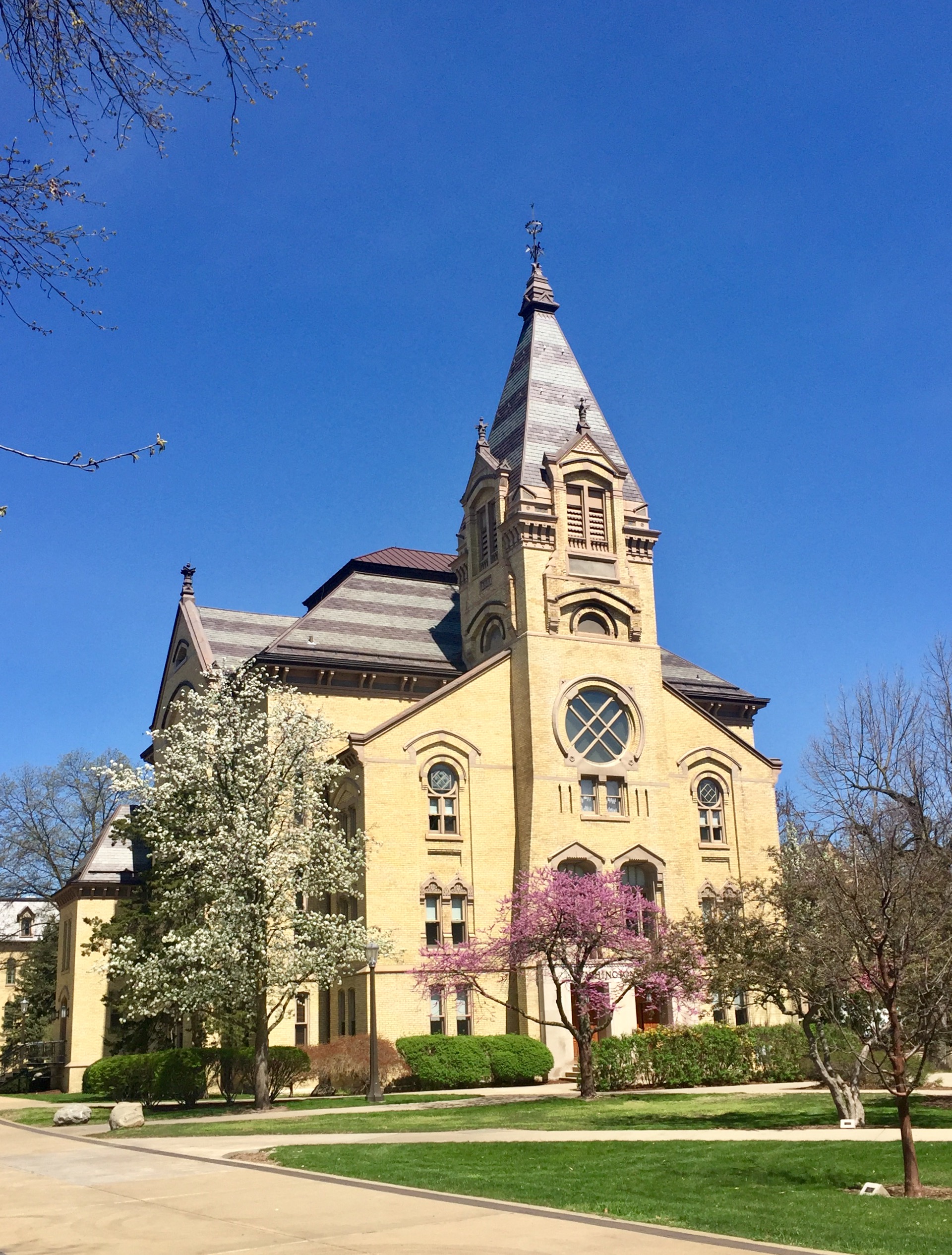
A historic performance hall at the University of Notre Dame, built in 1881. The Italianate brick building has hosted theatrical performances, concerts, and lectures for over 140 years.
The Ghost Story
Washington Hall on the campus of the University of Notre Dame has been the center of the university's most enduring ghost legend for over a century. Built in 1881, the multipurpose hall has served as Notre Dame's primary performance venue, hosting theater productions, concerts, and lectures. But since 1921, the building has been associated with one of college football's most famous figures -- George Gipp, "The Gipper," whose ghost is said to haunt the corridors and stage of Washington Hall.
George Gipp was Notre Dame's first All-American football player, a versatile athlete recruited by coach Knute Rockne who became one of the most dominant players of his era. According to the legend, after celebrating his final game against Northwestern University, Gipp returned to campus after curfew and found the doors to Washington Hall locked. Rather than risk being caught sneaking in, he slept outside on the building's steps in the December cold. This exposure allegedly led to the pneumonia that killed him on December 14, 1920, at 3:23 a.m. in St. Joseph Hospital in South Bend. He was twenty-five years old.
However, Notre Dame Magazine has investigated the legend and found no evidence that Gipp was locked out of Washington Hall. During his college years, Gipp actually lived primarily at the Oliver Hotel in downtown South Bend rather than in campus housing, supporting himself partly through gambling winnings. His illness was initially reported as tonsillitis before progressing to pneumonia and strep throat in an era before antibiotics existed. The legend, it appears, is more mythic than historical.
Regardless of its accuracy, the ghost story took root almost immediately after Gipp's death. According to a book by Film, Television and Theatre emeritus professor Mark C. Pilkinton, the legend began and solidified in 1921 when Scholastic magazine and the university's Dome yearbook reported unexplained phenomena in Washington Hall: footsteps echoing through empty corridors, the sound of brass instruments playing late at night with no musicians present, and papers rustling as they slid under doors with no one in the hallway. A 1921 publication mentioned hearing "an eerie horn blow almost every night at midnight" with no apparent source, and Brother Maurilius, disturbed by the persistent disturbances, reportedly demanded an exorcism of the entire building.
The ghost was first explicitly connected to Gipp in 1926, when an international student named Pio Montenegro reported seeing the Gipper's apparition charging into the hall on a white horse -- a dramatic and theatrical manifestation that cemented the football legend's association with the building. The sighting was published in school publications and became part of Notre Dame folklore.
Over the decades, reports have continued to accumulate. Students and performers in Washington Hall have reported phantom footsteps on the stage and in the balcony, horns sounding without warning in the middle of the night, lights flickering during performances, and the feeling of being watched from the empty seats. The building's age, its acoustics, and its position in campus lore make it fertile ground for supernatural interpretation. Notre Dame was ranked the nineteenth most haunted college campus in the nation, with Washington Hall as its primary haunted landmark.
Whether George Gipp truly haunts Washington Hall or the legend has simply been too compelling to let die, the Gipper's ghost remains as much a part of Notre Dame tradition as his famous deathbed words to Rockne: "Win just one for the Gipper." The building continues to host performances and events, and generations of students have passed through its doors carrying with them the knowledge that they share the space with college football's most famous ghost.
Researched from 7 verified sources including historical records, local archives, and paranormal research organizations. Learn about our research process.