About This Location
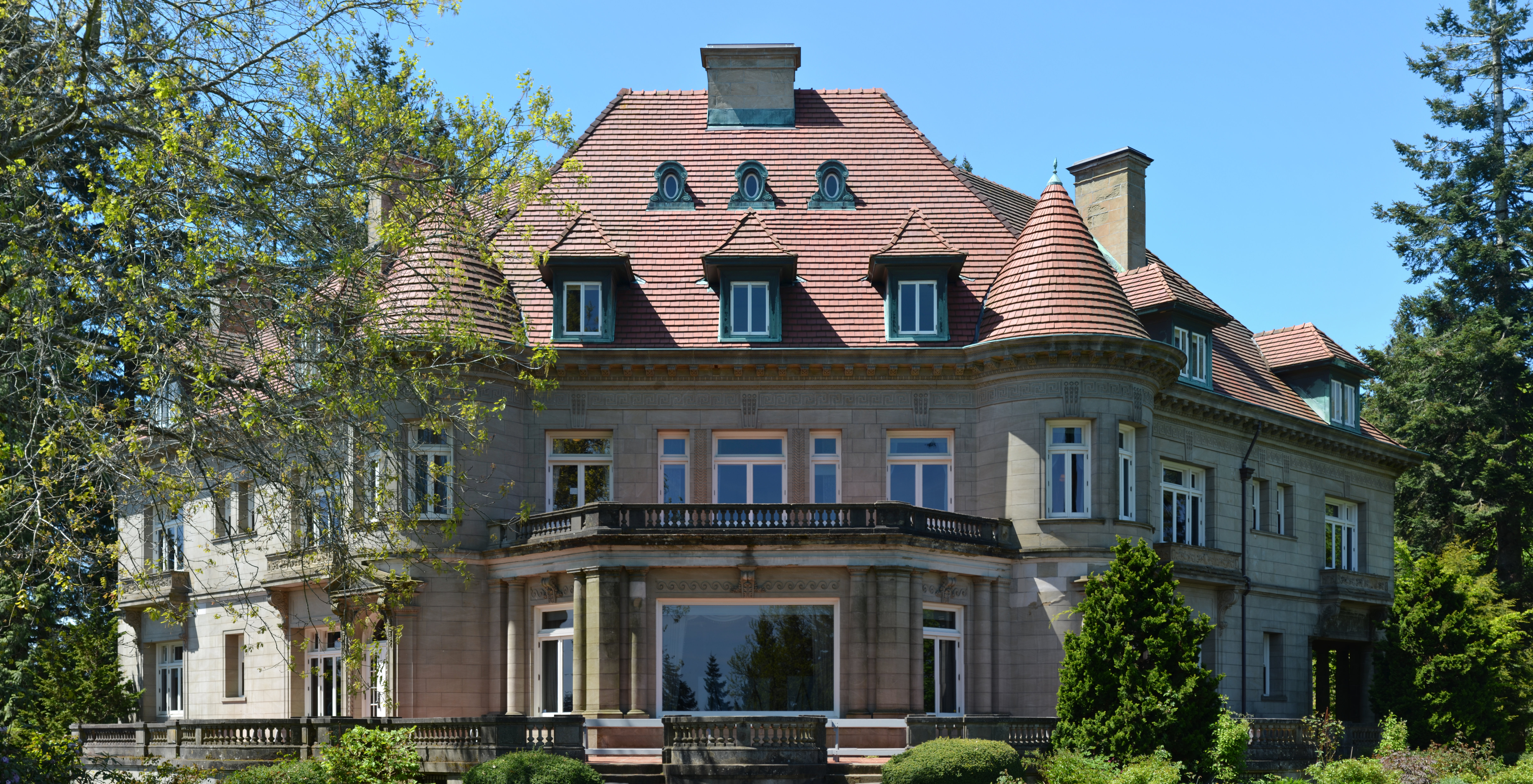
A French Renaissance-style chateau built in 1914 for Oregonian publisher Henry Pittock and his wife Georgiana. The 46-room estate sits on 46 acres in Portland's West Hills, 1,000 feet above sea level.
The Ghost Story
Pittock Mansion is a 16,000-square-foot French Renaissance Revival chateau completed in 1914 for Henry Pittock, the London-born newspaper magnate who became owner and publisher of The Oregonian, and his wife Georgiana Burton Pittock. Henry had arrived in Oregon as a young typesetter and built an empire spanning publishing, railroads, banking, silver mining, and sheep ranching. Georgiana was a cultural force in her own right, founding the Martha Washington Home for working women and helping establish the Portland Rose Society and the Portland Rose Festival that would become one of the city's most beloved traditions. The couple commissioned architect Edward T. Foulkes to design their dream home in 1909, and when it was completed five years later, Henry was eighty years old and Georgiana sixty-eight. Tragically, they enjoyed their home for only a few years: Georgiana died in 1918 at age seventy-two, and Henry followed in 1919, unable to last without her. The mansion sat vacant for decades until the Columbus Day Storm of 1962 caused severe damage. Portland residents rallied and donated $75,000 to help the city purchase the estate in 1964, and after restoration it reopened as a museum in 1965.
Paranormal activity at the mansion reportedly increased after the restoration and public opening, as though the spirits of the Pittocks were pleased to see their home filled with visitors once again. Georgiana's presence is most commonly signaled by the unmistakable scent of roses drifting through rooms where no flowers are present, a phenomenon linked to her lifelong devotion to rose cultivation. She has been seen as an apparition in the master bedroom, described as an elderly woman in period dress standing at the window or sitting in a chair. Henry's spirit is most frequently reported in his study, where witnesses describe an elderly man sitting at the desk or standing at the window gazing out over the city. The study occasionally carries the scent of pipe tobacco despite smoking being prohibited in the mansion for decades. A paranormal investigator captured an EVP of a male voice saying "I'm heading back," and in a smaller room recorded a friendly female voice saying "Hello."
The mansion's most active spirit, however, may be the prankster boy, an unidentified child estimated between eight and twelve years old, seen in early twentieth-century clothing. His identity remains a mystery, with theories suggesting he may have been the child of a servant. His pranks are mischievous rather than malicious: museum guides have placed books on tables only to find them moved to different tables minutes later. The distinct sound of a child's laughter has rung out from the floor above during tour discussions about the ghost. Visitors report feeling gentle tugs on their clothing, taps on their shoulders, and the touch of a small hand.
The mansion's servants' stairs and upper-floor corridors are among the most active areas. Running footsteps are heard on the stairs, along with heavy, measured adult footsteps and distinctive heel sounds suggesting footwear from an earlier era. Windows have been found standing open despite being closed and locked. A portrait of Henry Pittock has been reported moving from room to room on its own. Doors open behind volunteers when no one is there. The mansion's modern elevator operates independently, with doors opening and closing automatically. Entire tour groups have experienced simultaneous cold spots unrelated to the building's ventilation. The head groundskeeper's spirit has been sensed in the gardens, with heavy footsteps sometimes tracking from the garden through a side door into the house, as though he is still maintaining Georgiana's prized grounds. All reports indicate benevolent spirits content to share their lovingly restored home with the living.
Researched from 8 verified sources including historical records, local archives, and paranormal research organizations. Learn about our research process.