About This Location
The site of the devastating 1903 Iroquois Theatre fire, one of the deadliest single-building fires in U.S. history. Around 600 people perished during the theater's inaugural performance when a fire broke out and many exit doors were found locked. The alley behind the theatre served as a temporary morgue.
The Ghost Story
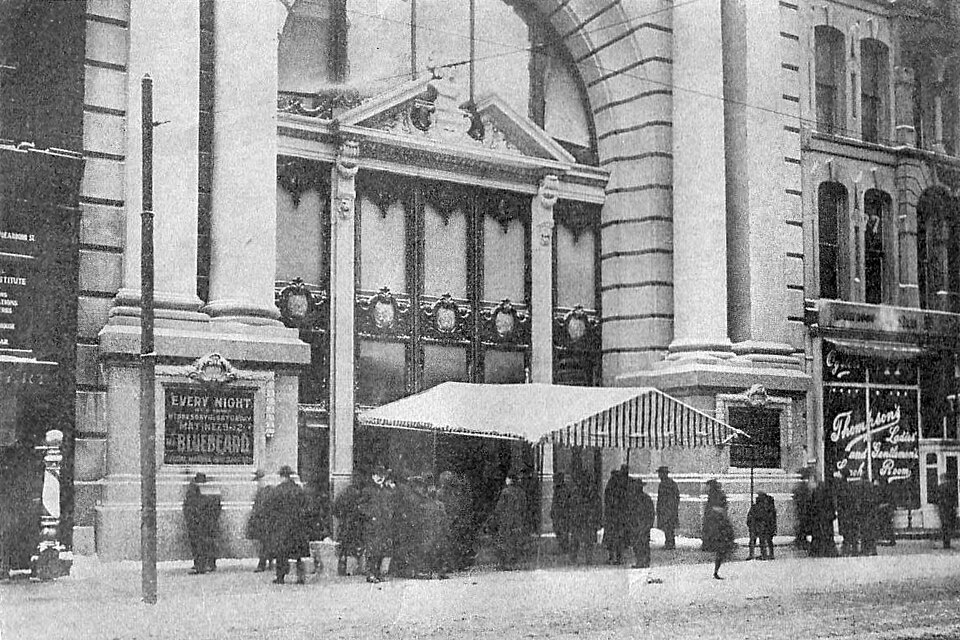
On December 30, 1903, Chicago witnessed the deadliest theater fire in United States history when the Iroquois Theatre erupted in flames during a matinee performance of "Mr. Bluebeard," killing nearly 600 people. The ornate theater on West Randolph Street had opened just five weeks earlier, with advertisements boldly claiming it was "absolutely fireproof."
Around 3:15 p.m. during the second act, a spark from a stage light ignited the curtains and scenery. The orchestra kept playing as stagehands attempted to control the blaze, but panic soon erupted among the 2,000 patrons—many of them children out of school for the holidays. Exit doors were locked or opened inward, trapping the desperate crowd. The asbestos safety curtain failed to fully descend.
Behind the theater, in a narrow passage now known as Death Alley (or Couch Place), bodies were laid in neat rows. The tragedy led to sweeping fire safety reforms including exit doors that open outward, fireproof curtains, and emergency lighting standards still used today.
The spirits of victims appear to have never left. Condé Nast Traveler has recognized Death Alley as one of the "42 Most Haunted Places in the World." Visitors report cold spots, whispers, and ghostly apparitions near the pavement where so many died. Many feel a strange presence following them through the alley, while others hear voices whispering their names or feel cold hands landing on their shoulders, only to turn and find no one there.
The original building was razed in the 1920s and rebuilt as the Oriental Theatre, which retained the facade. Today it operates as the James M. Nederlander Theatre at 24 West Randolph Street. But the alley remains a haunted reminder of that terrible afternoon when Chicago's "fireproof" theater became a death trap.
The narrow passage serves as both a loading dock for the theater and a shortcut for pedestrians—though many who walk through sense they are not alone.
Researched from 6 verified sources including historical records, local archives, and paranormal research organizations. Learn about our research process.