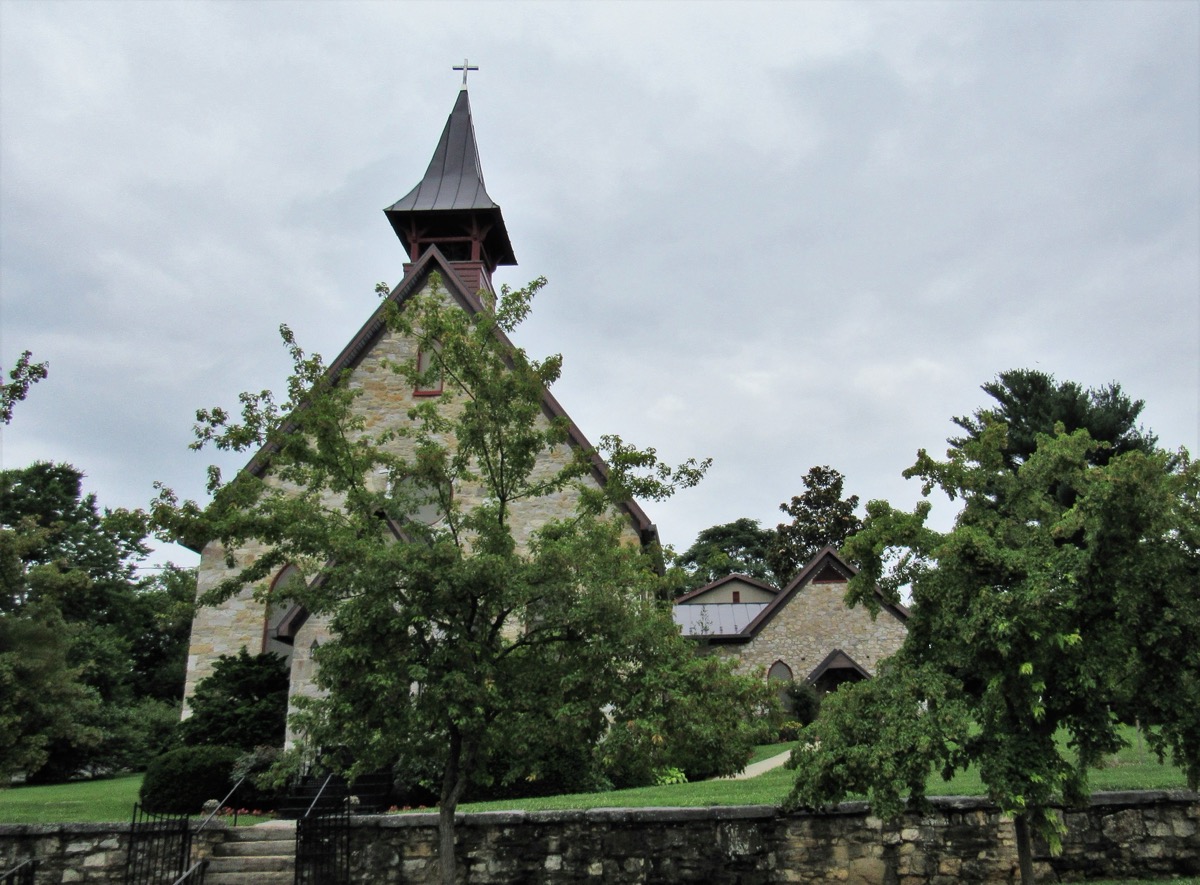
About This Location
This small church served as a Confederate hospital after the Battle of Antietam. The building still bears scars from the bloody day when wounded and dying soldiers filled its pews.
The Ghost Story
St. Paul Episcopal Church stands at 209 West Main Street in Sharpsburg, Maryland, a silent witness to the bloodiest single day in American history. Organized in 1818 with its cornerstone laid on May 31, 1819, this two-story stone and stuccoed building served the community peacefully for over four decades before the Civil War transformed it into a place of unimaginable suffering.
On September 17, 1862, the Battle of Antietam erupted around Sharpsburg. In just twelve hours, 22,717 men were killed, wounded, or missing—a casualty every two seconds. As the battle raged, the fighting spilled into Sharpsburg streets, and Confederate forces commandeered St. Pauls as a field hospital. Most furnishings were hastily removed to make room for the wounded. By the following day, pews that once held worshippers were soaked in blood.
The conditions inside were horrific. An 1863 inspection by Assistant Medical Inspector W.R. Mosely found the church dilapidated and filthy, with no windows and inadequate ventilation. Surgeons performed amputations without anesthesia, hacking off shattered limbs while conscious soldiers screamed in agony. The soft lead Minie balls used in combat flattened on impact, mangling tissue beyond repair. Dr. Theodore Dimon documented performing eleven amputations at nearby facilities—legs, thighs, forearms, and arms at the shoulder joint. St. Pauls saw similar horrors.
Some soldiers who died were buried in the churchs cemetery, though their remains were later removed to Washington Cemetery in Hagerstown. After Confederate forces retreated, Union troops took over the hospital. Cannon fire during the battle further weakened the already dilapidated structure. For years afterward, the congregation could not afford to rebuild. A letter from 1864 lamented that the war had destroyed much of their property and left them almost powerless to restore the church. By 1865, it remained in ruins.
The bloodstains from that terrible day reportedly never left. The floorboards are said to still bear the marks of so much death and suffering, stains that cannot be removed even with sanding.
Today, neighbors and visitors report hearing the anguished screams of injured and dying soldiers echoing from inside the building. The sounds of surgery without anesthesia—cries of agony, the scrape of bone saws—still seem to resonate through the sanctuary. People living nearby claim the wailing begins without warning, sometimes in the dead of night, as if the wounded are forever reliving their painful final hours.
The churchs tower draws particular attention. Unexplained flickering lights have been observed in the tower windows, appearing and disappearing with no apparent source. Sharpsburg Civil War Ghost Tours, operated by Mark and Julia Brugh who have collected stories for over 35 years, includes the church on their routes. They report that St. Pauls is known to harbor lost spirits—soldiers who never left the makeshift hospital where they drew their last breaths.
Visitors report an overwhelming sense of sadness upon approaching the building. Some see shadowy figures in Confederate uniforms, still seeking aid that never came. The spirits of Antietam seem especially active on September 17th, the battles anniversary, when paranormal phenomena intensify across the entire battlefield area.
Photographer Alexander Gardners famous 1862 image captured Hall Street with St. Pauls in the distance and his photographic wagon in the foreground—documenting a town that had become, as the Hagerstown Herald-Mail reported on September 24, 1862, one vast hospital where houses, barns, and churches were filled with the wounded and dying.
Researched from 8 verified sources including historical records, local archives, and paranormal research organizations. Learn about our research process.