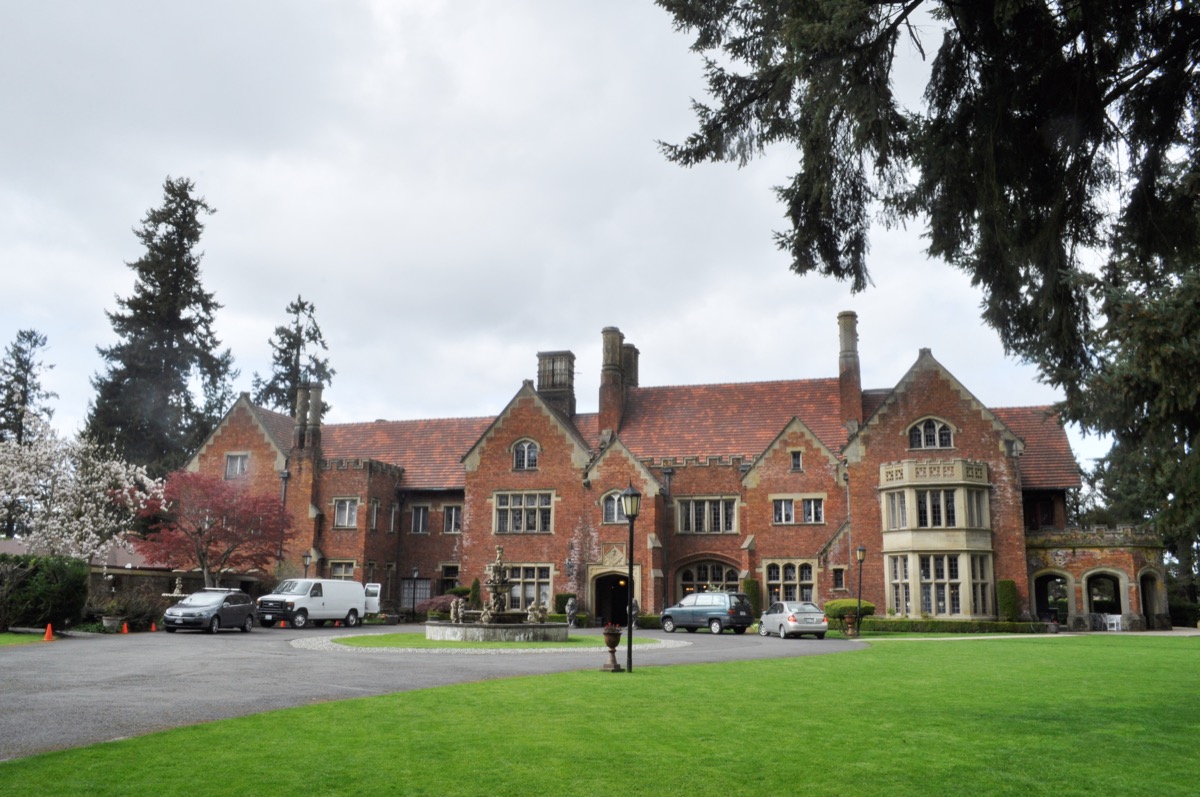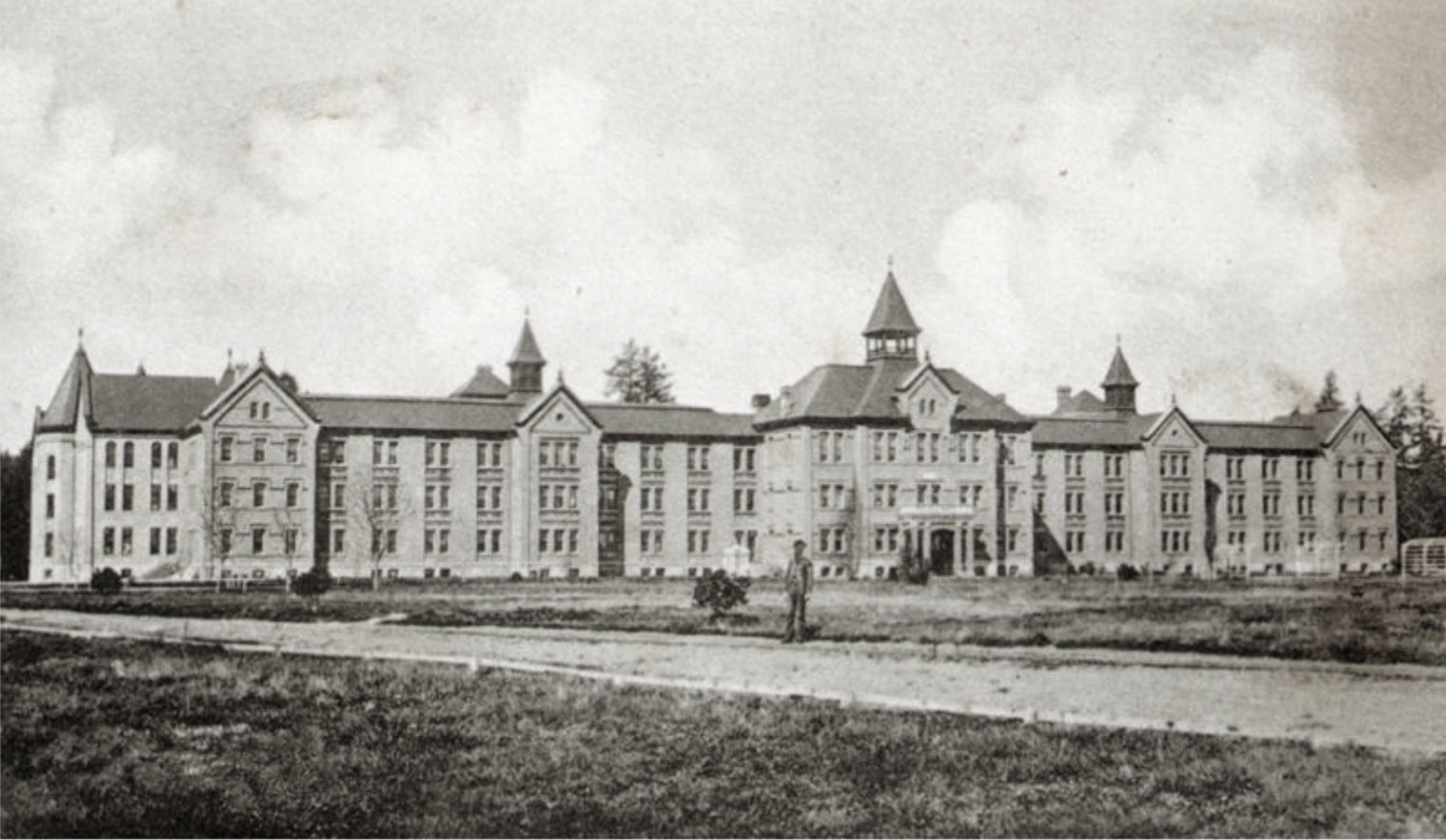
About This Location
Site of Washington's oldest psychiatric hospital, established in 1871 in former U.S. Army fort buildings. Over 3,200 patients were buried onsite between 1876 and 1953.
The Ghost Story
Fort Steilacoom began as one of the first U.S. Army posts north of the Columbia River, established on August 22, 1849, by Captain Bennett H. Hill on 640 acres leased from the Hudson's Bay Company near Lake Steilacoom. For nearly two decades it served as the military hub for Puget Sound operations, including the Indian Wars of 1855-1856, during which Lieutenant William A. Slaughter was killed in combat near the Green River. The fort's darkest early chapter came on February 19, 1858, when Nisqually Chief Leschi was hanged on a gallows erected a mile east of the post -- the Army had refused to allow the execution on fort grounds -- for the alleged murder of Colonel A. Benton Moses during wartime. About 300 people watched. In 2004, a special Washington State historical court formally exonerated Leschi, 146 years after his death.
When the Army decommissioned the fort on April 22, 1868, Washington Territory purchased the 625-acre property and 25 buildings for just $850. In 1871 it reopened as the Insane Asylum of Washington Territory with 15 male and 6 female patients -- eighteen years before Washington even achieved statehood. The early years were marked by horrific conditions. An 1875 investigation by physicians Dr. Hemenway and Dr. Willison documented abuse, neglect, and cost-cutting by private contractor Hill Harmon, who co-managed the facility. Patients slept in cells and makeshift bunks in buildings "barely superior to barns." Wrongful commitments were common, with assets seized by court-appointed guardians. One patient, Alice Vinsot, was confined to her room for six years without contact or entertainment after being falsely committed, until letters she dropped from her window reached the media and she was eventually vindicated and released.
Renamed the Western Washington Hospital for the Insane in 1889 and Western State Hospital in 1915, the institution grew to house nearly 3,000 patients by the 1940s with only 12 doctors and 40 nurses on staff. Treatments included hydrotherapy that lasted nearly fifty years, followed by insulin shock therapy, electroshock that caused PTSD and cardiac arrest, and lobotomies. On July 11, 1949, Dr. Walter Freeman -- the notorious "Ice Pick Lobotomist" -- personally performed transorbital lobotomies at the facility while staff psychiatrist Dr. James G. Shanklin administered electroshock sedation, a procedure documented in a now-famous photograph. The hospital's most well-known patient was 1940s Hollywood actress Frances Farmer, committed in 1942 for drunk driving and held for five years. She later reported experiencing sexual abuse, rat bites, straitjacket restraint, and ice bath immersion. Her ordeal inspired Nirvana's song "Frances Farmer Will Have Her Revenge on Seattle."
Between 1876 and 1953, over 3,218 patients were buried in the hospital cemetery, their graves marked only with small concrete blocks bearing patient numbers -- never names. A Washington State law actually prohibited hospitals from placing names on the graves. In 2004, after a campaign by the Grave Concerns Association led by volunteer chairwoman Laurel Lemke, the Legislature lifted the ban. Lemke, who had worked at Western State for years before she even knew the cemetery existed, organized volunteers who sold dahlia bulbs and held bake sales to fund headstones. Among the newly identified dead were Mary Beran Hart, committed in 1884 after postpartum depression and who died in 1914; John Moore, founder of Des Moines, Washington, who died despondent in 1899 after his wife passed; and Charles Wesley Cooley, a Civil War veteran whose headstone was funded by the U.S. Army.
The Hill Ward dormitory for male patients, built in 1932 and closed in 1965, became the focal point for paranormal activity. The three-story structure deteriorated for decades, and in the late 1980s military troops conducting urban combat simulations demolished much of it. The ruins -- particularly the underground boiler room -- drew ghost hunters and teenagers who reported rattling sounds, disembodied voices, and a pervasive heaviness or oppressiveness. Visitors described dark figures chasing them from the building and electronics malfunctioning during photography attempts. By 2006, the ruins had attracted gang activity and crime, and more than $600,000 was donated to demolish what remained and create a memorial in its place. The 2009 memorial, designed by Larson Casteel, retained the original crumbling stairs and walls, added a stone labyrinth symbolizing healing, and bears a plaque reading: "Dedicated to all the people who lived and worked here."
Today the 340-acre park is open to the public, but the paranormal reports continue. Early morning visitors describe figures and whispers materializing in the fog that blankets the grounds. Shadow people have been seen walking through the cemetery, and some have heard muffled screaming coming from beneath specific graves. A guide named Jeff, who conducts midnight tours through the park, documented hearing what sounded like a group of people simultaneously whistling marching music beyond a line of laurel bushes -- when he investigated, the whistling stopped and the field was empty. On another occasion, Jeff and two companions spotted a two-story wooden building with weathered exterior and small windowless openings; when they walked to investigate, they found only a concrete foundation where the building had appeared to be. Paranormal investigators have captured EVPs of voices pleading for help, and an entity known as "The Doctor" -- believed to be a former physician tied to the electroshock treatment room -- manifests as an overwhelming sense of anger and oppression, with furniture reportedly moving on its own. Pretty Gritty Tours now offers lantern-lit night tours of the fort grounds, walking visitors through the same landscape where over 3,200 souls were buried without even the dignity of their names.
Researched from 12 verified sources including historical records, local archives, and paranormal research organizations. Learn about our research process.