
About This Location
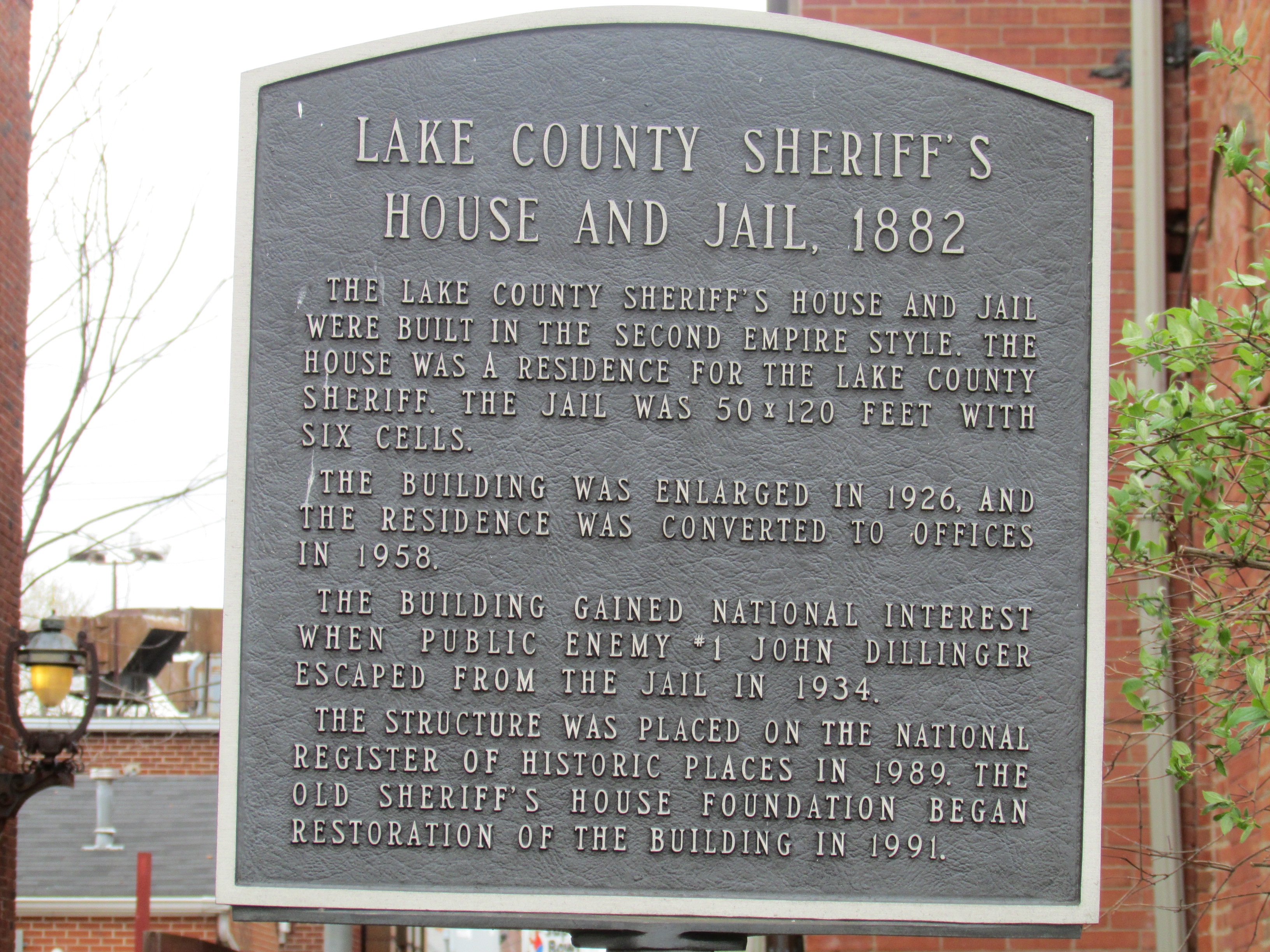
The historic Lake County jail and sheriff's residence built in 1882. Famously, John Dillinger escaped from this jail on March 3, 1934 using a fake wooden gun he carved. The building is now a museum.
The Ghost Story
The Old Lake County Sheriff's House and Jail at 226 South Main Street in Crown Point, Indiana, is a striking complex combining an ornate red brick Victorian mansion -- the sheriff's residence -- with a utilitarian jail block that once housed some of the state's most dangerous criminals. The first permanent structure was built in 1882 at a cost of $24,000, featuring ten cells for male and female inmates. As Crown Point's population grew, a larger jail replaced the original around 1908, and a 1928 addition extended the facility the full length of the block to East Street, expanding capacity to 150 cells with maximum security accommodations, an institutional kitchen, barber shop, and garage. The Crown Point jail was considered one of the finest in Indiana and was thought to be escape-proof.
On March 3, 1934, gangster John Dillinger proved otherwise. Extradited to Indiana on January 28 after his arrest in Arizona, Dillinger was held in what authorities believed was the state's most secure facility. According to the famous account, he carved a fake gun from a piece of wooden washboard and darkened it with shoe polish, using the convincing replica to force a trustee and others to lock up fourteen jailers including the warden and a fingerprint expert. Dillinger and fellow prisoner Herbert Youngblood fled in Sheriff Lillian Holley's own Ford V-8, taking two submachine guns and hostages -- who were later released unharmed -- across the state line into Illinois. The embarrassment was catastrophic for Lake County law enforcement. Youngblood was killed on March 16; Dillinger himself was shot dead by FBI agents outside Chicago's Biograph Theater on July 22, 1934.
The jail operated until 1974, when a new Government Center was completed. Since 1987, the Old Sheriff's House Foundation has maintained the building for tours and preservation, and it was during the restoration efforts in the late 1980s that volunteers first began reporting paranormal activity. Cell doors developed the habit of opening and closing by themselves, their heavy iron mechanisms engaging and disengaging without human intervention. An unseen entity seems to test the bars of cells, looking for a loose one, because the living have heard the bars rattling in cells with no person visible inside. Disembodied voices are frequently heard in the cells and walkways, sometimes as whispers, sometimes as distinct conversations. Shadow figures have been observed drifting through the hallways and through the cell blocks, and full apparitions have been seen -- figures that could be former inmates or guards, their identities never confirmed.
The jail's paranormal reputation received national attention in 2016 when it was featured on Season 11 of Syfy's Ghost Hunters. The TAPS team documented activity consistent with volunteer reports, and the episode cemented the jail's status as one of Indiana's premier haunted locations. The building also served as a filming location for the 2009 film Public Enemies, starring Johnny Depp as Dillinger, bringing the jail's dramatic history to a wider audience. Whether the restless spirits are those of Dillinger himself, other inmates like the speculated James Sammons, or the guards who spent their careers in these claustrophobic corridors, the Old Lake County Jail continues to buzz with unexplained activity.
Today the facility hosts year-round paranormal investigations, overnight ghost hunts, and an annual haunted house attraction. Volunteers and visitors alike continue to report phenomena -- unexplained photographs, lights flickering on and off, footsteps echoing through empty cellblocks -- making the Old Sheriff's House one of the most actively investigated haunted locations in the Midwest.
Researched from 7 verified sources including historical records, local archives, and paranormal research organizations. Learn about our research process.