About This Location
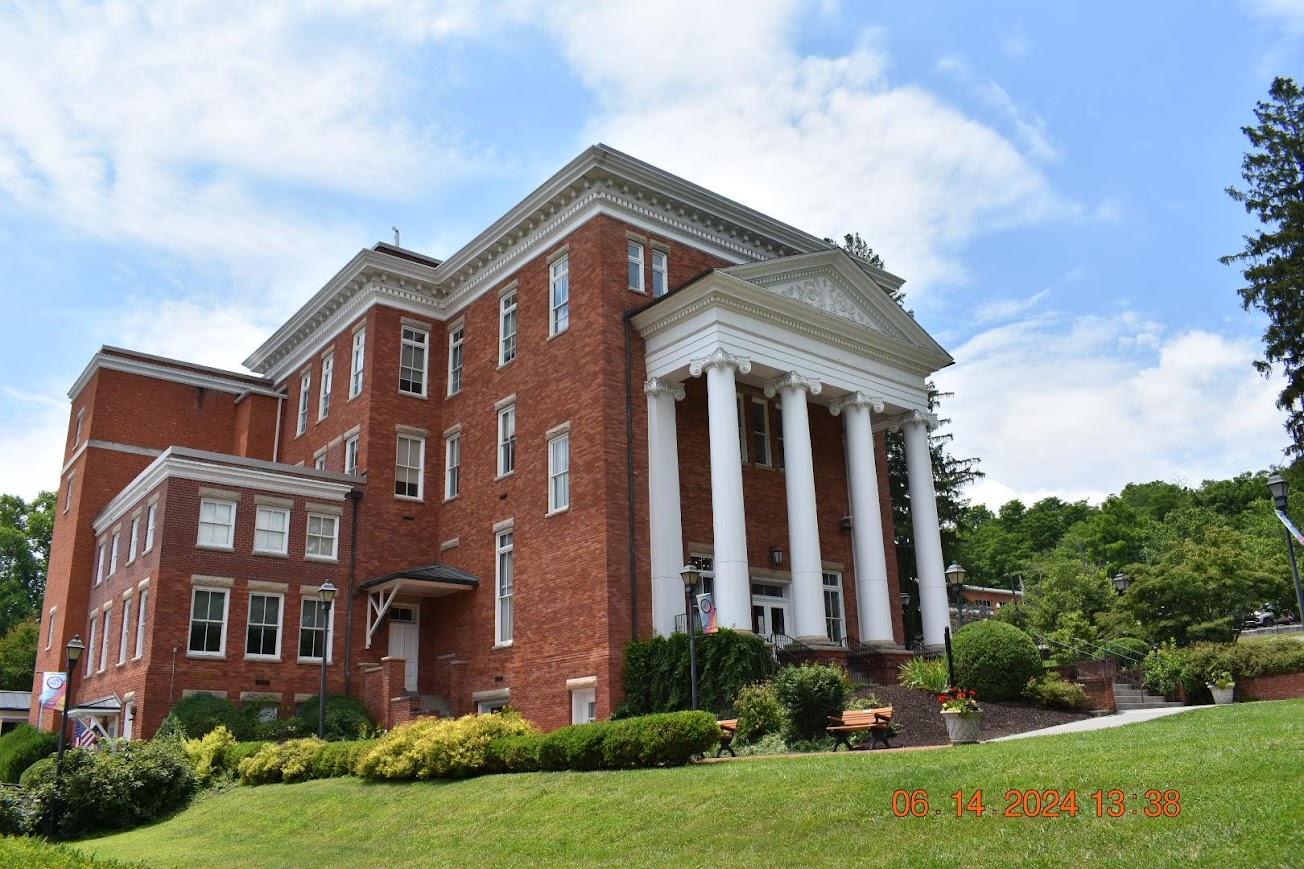
One of only four remaining Carnegie Halls in the world still in use, built in 1902 with funding from Andrew Carnegie as the Lewisburg Female Institute. The building now serves as a performing arts center and is a stop on the West Virginia Paranormal Trail.
The Ghost Story
Carnegie Hall in Lewisburg is one of only four Carnegie Halls still in active use anywhere in the world, and the only one that comes with its own ghost. The building was constructed in 1902, rising from the ashes of the Lewisburg Female Institute, which had been destroyed by fire. Andrew Carnegie himself contributed to the construction fund, and the local community raised the balance to build an auditorium and performance space worthy of its famous name. The hall served Greenbrier College for Women for decades before transitioning into a community arts center that continues to operate today.
The building's most famous resident was never enrolled as a student and never purchased a ticket to a performance. She is known as the Lady in the Red Dress, a spectral figure who has been seen inside Carnegie Hall for generations. She appears in the auditorium during performances, seated as though she were any other patron -- a woman in a distinctive red dress, watching the stage with apparent attention and enjoyment. But she is never there when the house lights come up, and no one can identify who she is or when she lived.
The Lady in Red has been described by multiple witnesses with remarkable consistency. She favors the same section of the auditorium, appears most frequently during musical performances, and seems to bring a noticeable drop in temperature to her immediate vicinity. Staff members who have worked at Carnegie Hall for years speak of her as a familiar presence -- not frightening but unmistakably other. She is there, and then she is not, and the seat she occupied shows no sign of recent use.
Beyond the Lady in Red, Carnegie Hall harbors a broader range of unexplained activity. Staff and visitors have reported hearing footsteps in the building after it has been locked and cleared for the night -- deliberate, unhurried footsteps that travel the corridors and stairways as though someone is making a final inspection of the premises. Lights flicker in rooms where the electrical system has been recently inspected and found sound. Whispers carry through the halls at night, audible but never quite intelligible, as though a conversation is happening just beyond the range of comprehension.
The building's history provides ample material for a haunting. The Lewisburg Female Institute, which preceded Carnegie Hall on the site, was founded in 1812 and educated generations of young women through the antebellum period and Civil War. The fire that destroyed the original building in 1901 was a traumatic event for the community, and the decision to rebuild as Carnegie Hall was an act of defiance against loss. Whatever attached itself to this hilltop site may predate the current structure entirely.
Carnegie Hall is now part of West Virginia's official Paranormal Trail, a state-sponsored program that guides visitors to the most haunted locations across the Mountain State. The trail's inclusion of Carnegie Hall alongside sites like the Trans-Allegheny Lunatic Asylum and the West Virginia Penitentiary speaks to the seriousness with which the building's paranormal reputation is regarded. Visitors can experience the hall by attending a scheduled performance or simply walking the grounds and admiring the architecture from outside.
The Lady in the Red Dress, whoever she was, chose well. Carnegie Hall's mission is to foster creativity, connection, and lifelong learning through the arts, and she appears to have taken that mission to heart -- attending performances faithfully, silently, and eternally.