About This Location
Salem's oldest cemetery, established in 1637, and the second oldest in America. The final resting place of Judge John Hathorne, one of the most hated witch trial judges and Nathaniel Hawthorne's ancestor. Despite popular belief, the executed witches were denied burial here.
The Ghost Story
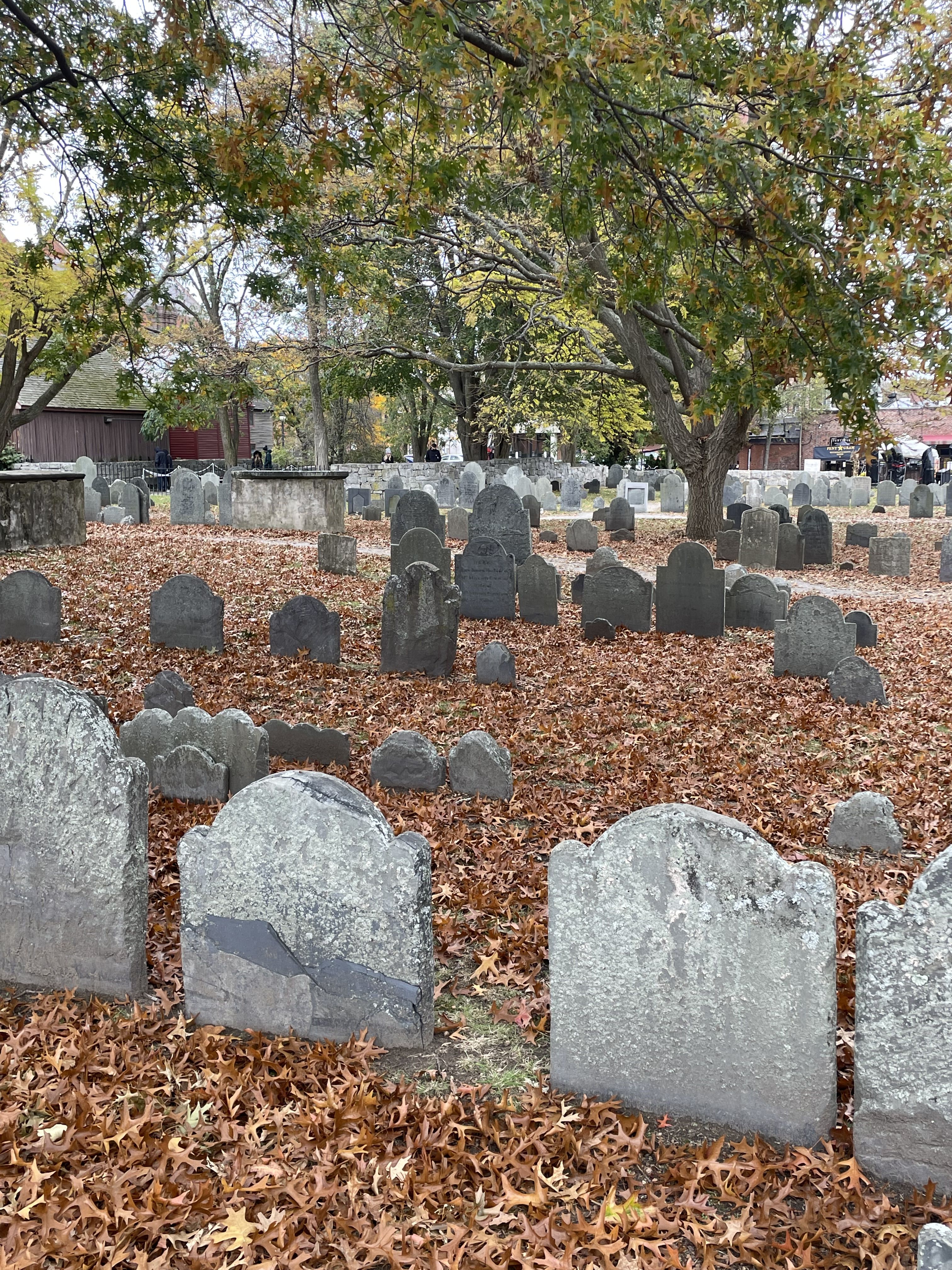
The Old Burying Point Cemetery is the second oldest cemetery in the country, established in 1637 on Charter Street in Salem, Massachusetts. With 485 headstones marking around six hundred known burials, it is Salem's oldest graveyard—and most believe it is the most haunted site in Massachusetts, if not all of New England. Nearly four hundred years of ghostly accounts have accumulated within these iron gates, where the judges who condemned innocent people to death lie buried just behind the memorial honoring their victims.
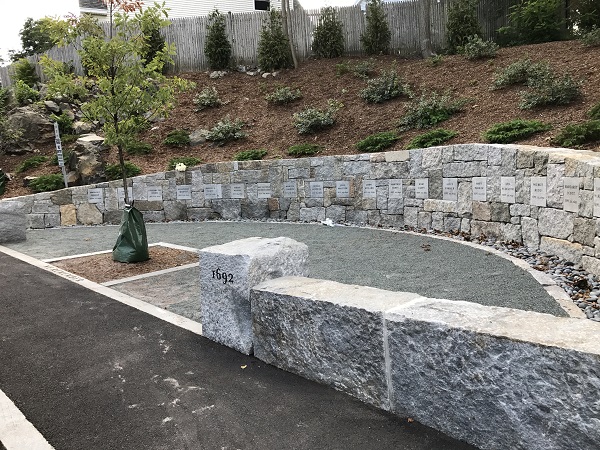
The Salem Witch Trials of 1692 resulted in nineteen unnecessary hangings, one man pressed to death under stones, and four who died in prison. The memorial to these victims stands at the edge of the cemetery, but the real horror lies in who rests just beyond it.
Judge John Hathorne is arguably the most infamous person buried here. As one of the leading judges during the trials, he played a major role in prosecuting those accused of witchcraft and never showed any remorse for his actions. His descendant, writer Nathaniel Hawthorne, was so ashamed of this legacy that he added a "w" to his surname to conceal the connection. Given Hathorne's cruelty toward those he sent to the gallows, many visitors claim to have captured his ghost in photographs taken near his grave. He is said to haunt the grounds at night, appearing as a dark apparition near his headstone.
Reverend Nicholas Noyes also rests here, a minister who provided religious justification for the harsh sentences. He died from a "strangling" illness, which some interpreted as divine retribution for his role in the trials. Judge Bartholomew Gedney, another witch trial judge and physician, lies nearby.
More than fifty enslaved people are buried in the cemetery, denied headstones during an era when such markers were commonly withheld from the enslaved.
The ghost of Giles Corey—pressed to death under stones for refusing to enter a plea—haunts the Old Burying Point and is known to appear when disaster is about to strike Salem. His apparition has been spotted before fires, storms, and other calamities, a spectral warning from a man who chose death over participation in the court's injustice.
The cemetery is currently closed for restoration work, but its reputation endures. In a town defined by injustice, hysteria, and innocent death, the Old Burying Point stands as sacred ground where victims and perpetrators alike were laid to rest—and where none of them, it seems, have found peace.
Researched from 8 verified sources including historical records, local archives, and paranormal research organizations. Learn about our research process.