About This Location
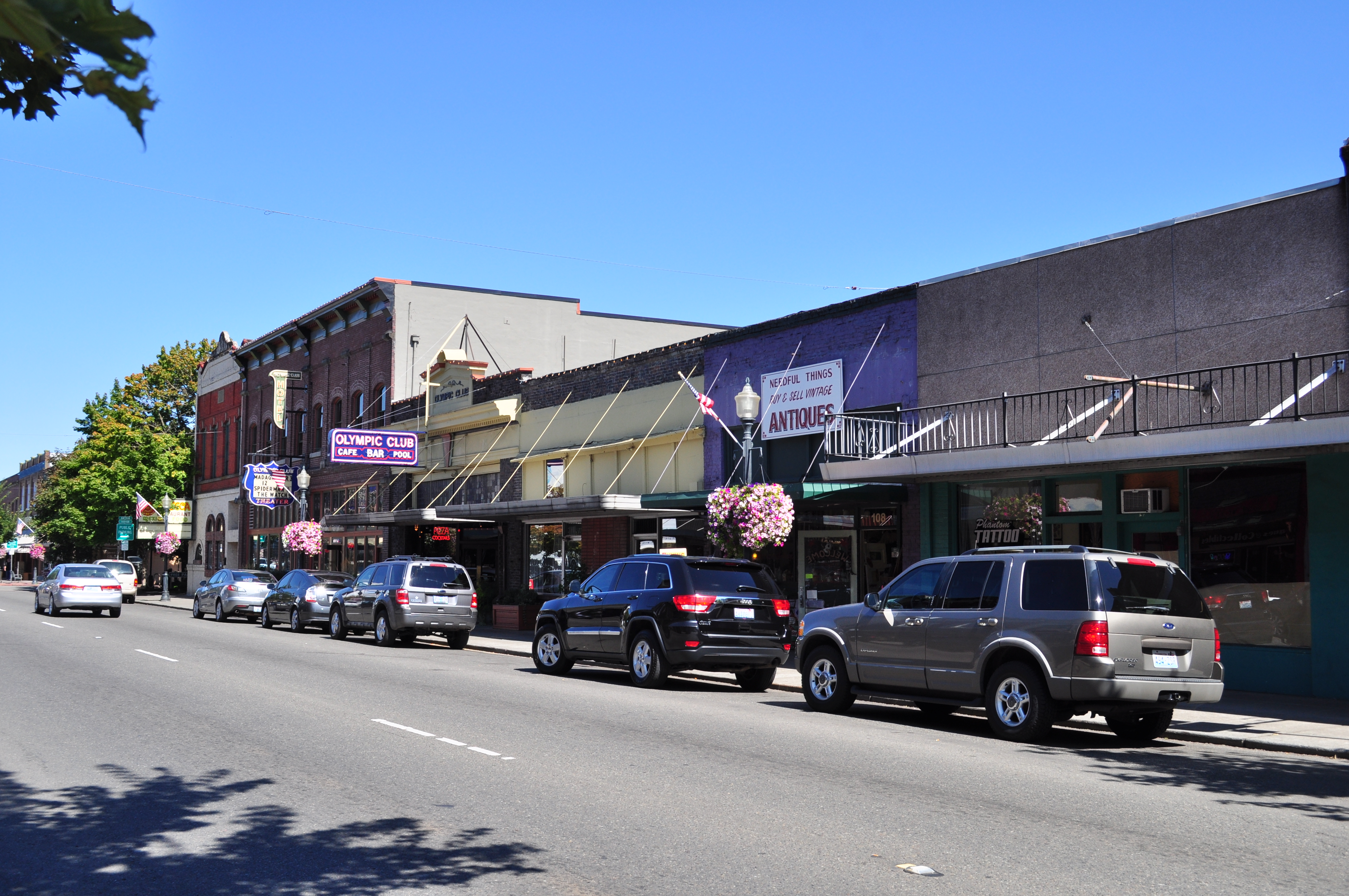
Opened in 1908 as a gentleman's resort for loggers and miners, with a bar, card room, pool hall, and hotel rooms. Now a McMenamins brewpub, hotel, and theater.
The Ghost Story
The Olympic Club opened in 1908 as a lavish gentleman's resort on Tower Avenue in Centralia, Washington, its elegant trappings of Belgian crystal, Tiffany lamps, and rich mahogany woodwork designed to coax loggers and miners into leaving their week's salary behind. A devastating fire on June 26, 1908, had decimated a downtown block after an arson blaze began at the nearby Star Saloon, destroying twelve buildings. The club was rebuilt and extensively remodeled in 1913 with Art Nouveau flourishes that survive today: beveled lead glass windows, three eight-by-twelve-foot French glass mirrors framed in cherry veneer, parquet tile flooring, chandeliers, stained glass, and an elaborate tulip motif adorning the light fixtures, stenciled plaster walls, and ceiling panels. The adjacent Oxford Hotel, originally the Hotel Crawford, was constructed the same year to accommodate railroad travelers.
Canadian business owner Jack Sciutto partnered with Ernest Rector in 1911 and soon earned the title "King of Bootleggers," keeping the club profitable through Prohibition while legitimate businesses failed around him. Evidence of the operation remains: a pickle barrel with a false bottom concealing a trap door for hiding liquor, and an ivory button in the manager's booth that could alert staff to federal agents through a system of mirrors and Tiffany glass sightlines covering every entrance. When Mayor George Barner shut down the club in 1923 over bootlegging accusations, Sciutto flashed enough clout to have the doors reopened within days under a new license. The second floor housed approximately thirteen working women, and a painting of a nude woman still hangs in the main hallway as a reminder of the hotel's brothel history. A sign above the entrance once declared "Ladies Patronage Not Solicited."
The building witnessed some of Centralia's most turbulent history. Attorney Elmer Smith, who advised Industrial Workers of the World members that they had the legal right to defend their union hall with arms, conducted business from the building. On November 11, 1919, the Centralia Massacre erupted when American Legion members attacked the IWW hall during an Armistice Day parade, resulting in six deaths, including the lynching of IWW member Wesley Everest from the Chehalis River bridge. Two years later, the internationally notorious train robber Roy Gardner was captured at the Oxford Hotel on June 16, 1921, after escaping federal custody at McNeil Island. Gardner disguised himself by wrapping his face in bandages and claiming to be an industrial burn victim, but after five days, chambermaid suspicions reached proprietor Gertrude Howell, the hotel's first female operator. She noticed an exposed eyebrow through the bandages and alerted Centralia policeman Louis Sonney, who found a firearm in Gardner's room and arrested him after a brief struggle. Sonney collected the $5,000 reward and parlayed his fame into a career producing exploitation films, eventually reuniting with Gardner on screen.
McMenamins purchased the Olympic Club, Oxford Hotel, and adjacent New Tourist Bar in 1996. The pool hall and club reopened in January 1997, with the hotel's 27 European-style guest rooms and a brewpub movie theater following on October 31, 1997. The rooms, intentionally spartan with no televisions, telephones, or closets, are named for colorful local characters including Sciutto, Gardner, Howell, Sonney, and sawmill worker Lester Webster.
Throughout the building's history, multiple murders occurred on the premises, and both employees and guests report encounters with whatever lingers from that violent past. The most recognized spirit is nicknamed "Elmer," a figure seen standing beside the cast iron stove in the bar area. Some investigators believe Elmer may be Louis Galba, a hotel guest who jumped from his second-story window during the 1908 fire and died of his injuries months later. Elmer rarely lingers long enough for a clear look, but he is more often heard than seen: blown-out candles mysteriously relight themselves, eerie laughter echoes through corridors after closing, and an unexplained tune has drowned out the bar's own music. Staff have found chairs rearranged in the basement overnight, and an ax once fell from a wall mount with no one nearby. One bartender watched an ashtray fly across the room. In the hotel rooms upstairs, clocks change their set times in rooms where no guest has stayed, and alarms trigger for no reason. Guests report doorknobs jiggling and briefly locking with no one on the other side, and one visitor documented a paper cup on their nightstand tipping over on its own at 3:10 AM, only to tip again after being repositioned. A long-term employee has reported seeing figures in the back rooms and hearing footsteps, talking, and laughter echoing down empty hallways over many encounters. Paranormal Investigations of Historic America conducted an investigation and documented the phenomena, and McMenamins now hosts ghost tours at the Olympic Club as one of the company's most notoriously haunted properties.
Researched from 12 verified sources including historical records, local archives, and paranormal research organizations. Learn about our research process.