About This Location
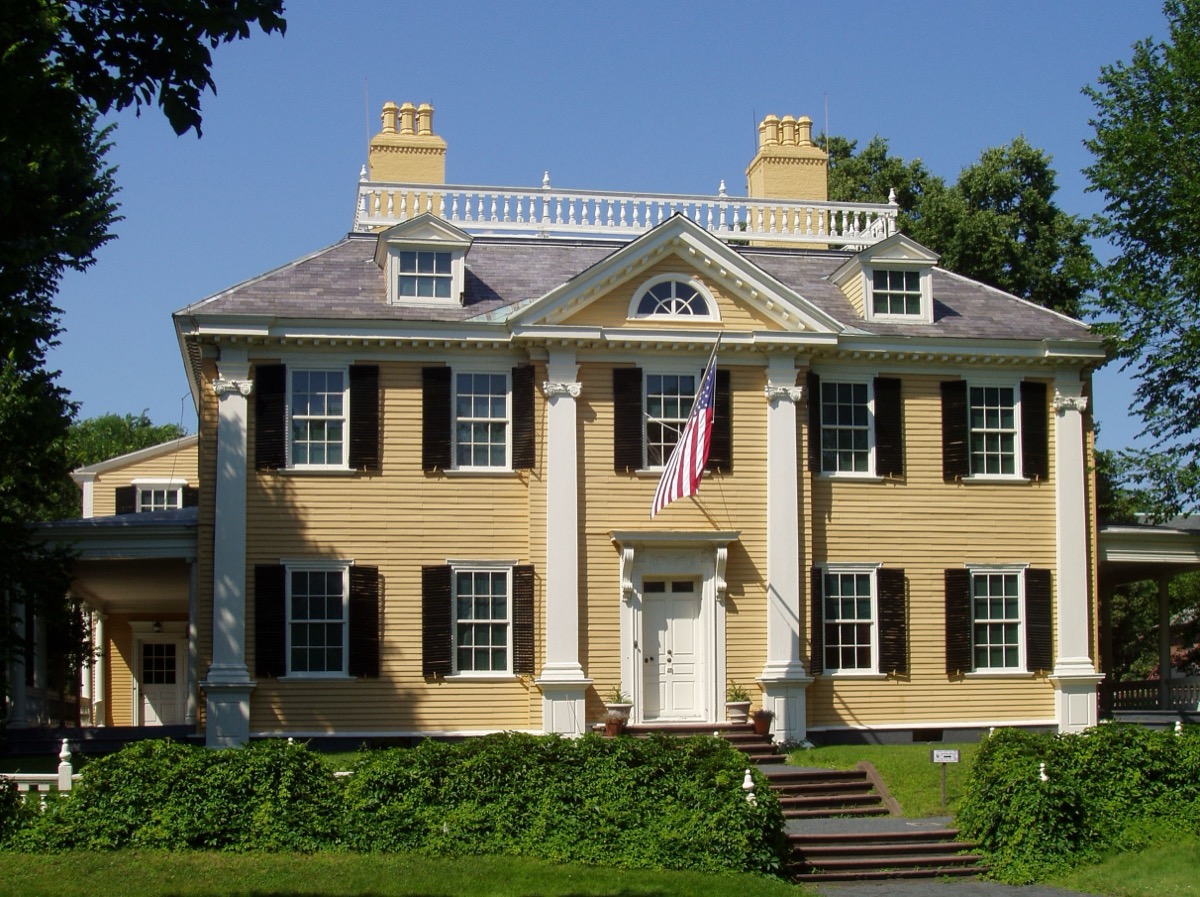
This Georgian mansion served as George Washington's headquarters during the Siege of Boston in 1775-1776, and was later the home of poet Henry Wadsworth Longfellow for nearly 50 years. Now a National Historic Site.
The Ghost Story
"All houses wherein men have lived and died are haunted houses." Henry Wadsworth Longfellow wrote those words in 1858, three years before tragedy would transform his own home into the most haunted house in Cambridge. The poet didn't just believe in ghosts—he tried to contact them. And if any house deserves to be haunted, it is this Georgian mansion on Brattle Street, where nearly three centuries of American history have left their mark on every room.
The house was built in 1759 by John Vassall Jr., a wealthy Jamaican plantation owner who kept enslaved people on the property. When the American Revolution approached, Vassall's loyalty to the British crown made him a target. In September 1774, he fled with his family to England, never to return. Patriots confiscated his grand estate.
Then came George Washington.
On July 16, 1775, the newly appointed Commander-in-Chief of the Continental Army made Vassall's abandoned mansion his headquarters. For nearly nine months, the house buzzed with the activity of revolution. Washington directed the Siege of Boston from these rooms, ultimately forcing British troops to evacuate the city in March 1776. Officers reported to him in the same spaces where Vassall had once entertained. Strategies that would birth a nation were drawn up within these walls. Washington left in April 1776, and the house passed through several owners before a young Harvard professor arrived in 1837.
Henry Wadsworth Longfellow rented rooms on the second floor and marveled that he was sleeping in "rooms that were once George Washington's chambers." He would live here for the next 45 years, becoming America's most beloved poet. "Paul Revere's Ride," "The Song of Hiawatha," "Evangeline," "The Village Blacksmith"—Longfellow wrote them all within these walls. The house became a gathering place for American literary royalty: Nathaniel Hawthorne, Ralph Waldo Emerson, and Charles Dickens all walked these halls.
In 1843, Longfellow married Fanny Appleton, whose wealthy father gave them the house as a wedding gift. They raised six children here. It was the happiest chapter of Longfellow's life.
Then came July 9, 1861.
Fanny sat in the library that summer day, sealing packages of her children's hair as keepsakes. She worked with wax and flame at a table near an open window. A breeze caught her light summer dress. In an instant, she was engulfed in fire.
She ran from the room to her husband. Longfellow grabbed a small rug and frantically tried to extinguish the flames, burning himself severely in the attempt. His efforts failed. Fanny died the following morning at age 44, in the bedroom she had shared with her husband. Longfellow's burns were so severe he could not attend her funeral. He grew the beard he would wear for the rest of his life to hide the scars.
For twenty more years, Longfellow lived in the house where his wife had died. He never fully recovered from her loss. And he continued to believe that the dead remained among the living.
Three years before Fanny's death, Longfellow had written "Haunted Houses," a poem that now reads like prophecy: "The spirit-world around this world of sense / Floats like an atmosphere, and everywhere / Wafts through these earthly mists and vapours dense / A vital breath of more ethereal air." He didn't merely write about ghosts—he attempted to contact them.
Today, the National Park Service maintains the Longfellow House–Washington's Headquarters National Historic Site and offers special tours exploring "19th century America's fascination with death and mourning." Rangers share what they describe as Henry's "spectral encounters" and examine how the poet believed spirits inhabited every home where people had lived and died.
If Longfellow was right, then his house is haunted many times over. The spirits of the enslaved people Vassall brought here. The Revolutionary officers who planned the siege of Boston. The literary giants who gathered in these parlors. And Fanny, who died in flames just steps from where her husband tried to save her—in the bedroom visitors can still see today.
Longfellow died on March 24, 1882, in the same house where he had spent 45 years writing, mourning, and searching for proof that the dead never truly leave. "All houses wherein men have lived and died are haunted houses." He should know. He lived and died in one.
Researched from 8 verified sources including historical records, local archives, and paranormal research organizations. Learn about our research process.