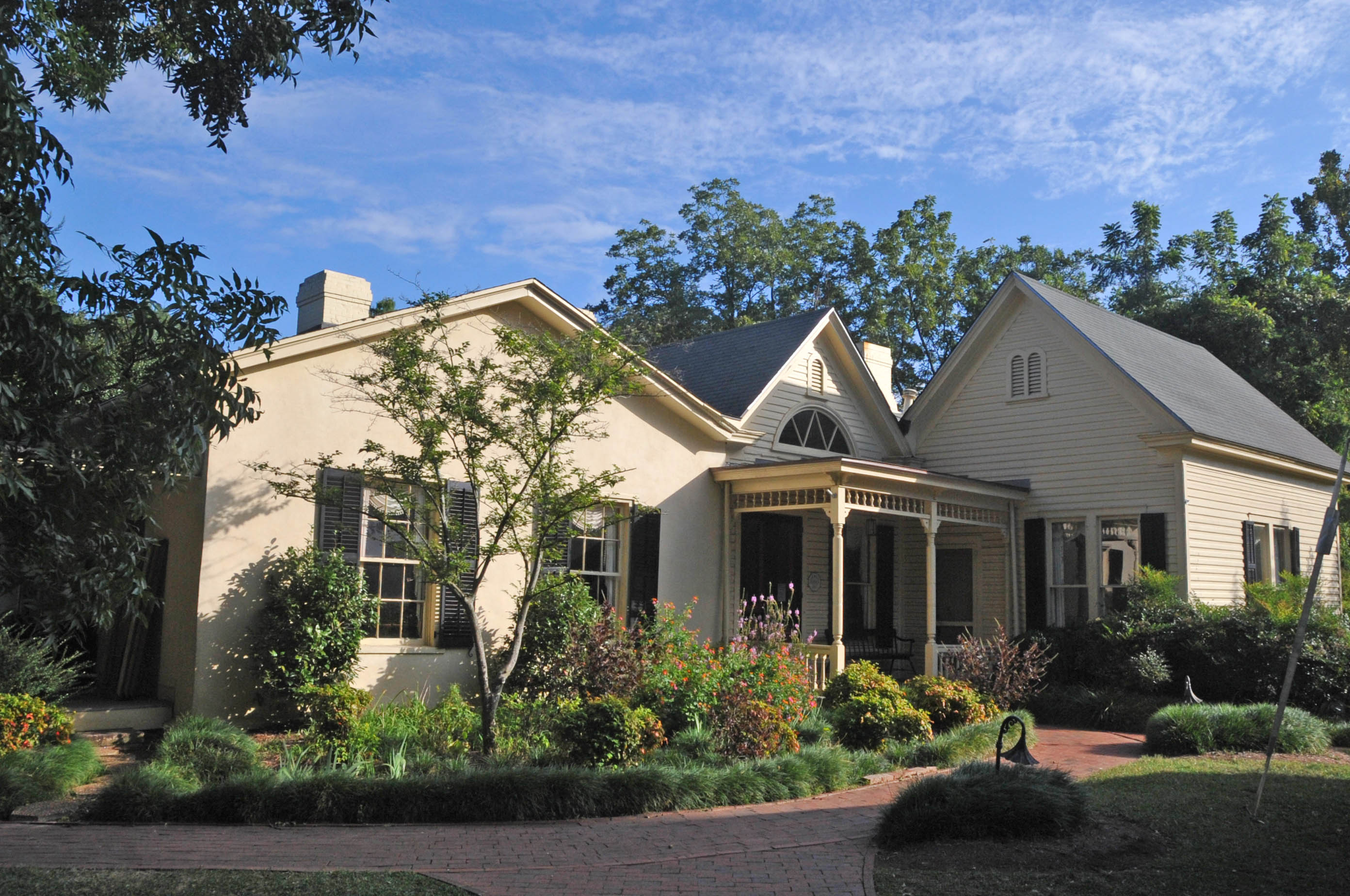
About This Location
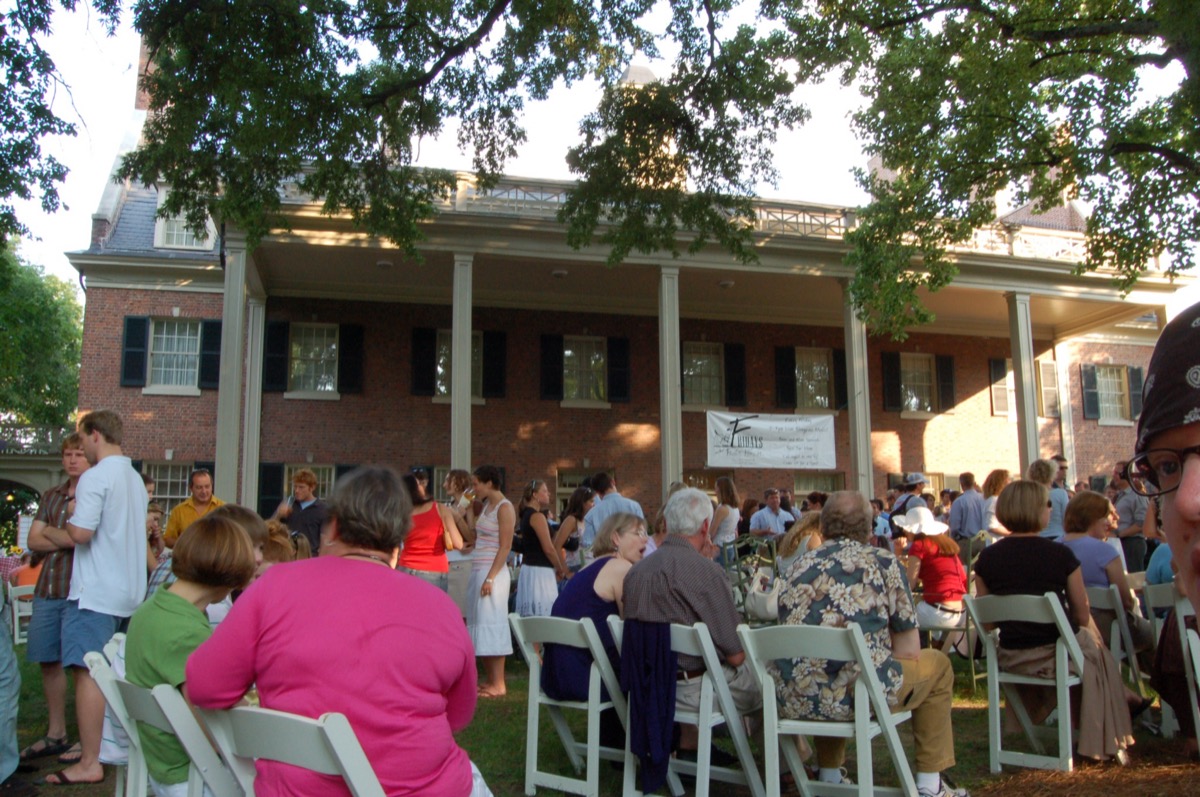
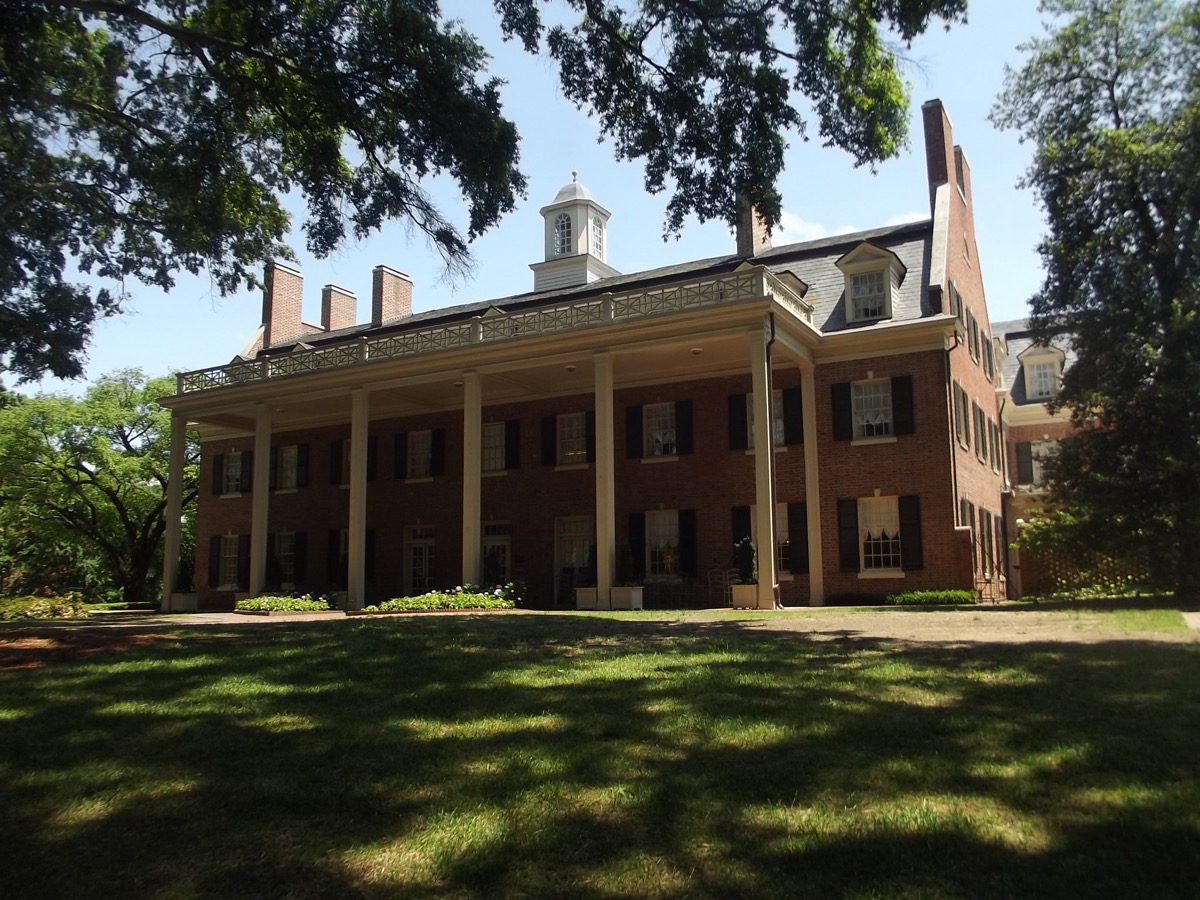
Named for UNC professor Horace Williams (who taught author Thomas Wolfe), this house was home to Williams from 1897 until his death in the 1940s. The historic home is now open for public visitation.
The Ghost Story
The house at 610 East Rosemary Street was built in 1854 by Benjamin Sherwood Hedrick, a UNC chemistry professor who purchased the land from the University for three hundred dollars and added a distinctive eight-sided room with a central fireplace. Hedrick's tenure was cut short in 1856 when he publicly expressed support for Republican presidential candidate John C. Fremont, whose Free Soil platform opposed the expansion of slavery. The University dismissed him that November -- the only known termination of a UNC faculty member for political reasons -- and Hedrick was forced to leave North Carolina entirely. The house changed hands several times before Latin professor George T. Winston purchased it in 1879 and added the front parlor, porch, and distinctive windows, including one marked with a letter W.
In 1897, philosophy professor Horace Williams bought the house for fourteen hundred and fifty dollars, and it would become inseparable from his identity for the next four decades. Williams had graduated from UNC in 1883 -- the first person awarded a Master of Arts degree at Carolina -- and returned to teach philosophy and psychology in 1891, eventually founding and chairing the University's philosophy department. He was known as an eccentric and formidable intellect who reportedly refused to connect his home to the town sewer system when it was installed in 1913, leading to his arrest by Mayor L.P. McClendon. The front room of the house became his study, where generations of students gathered for philosophical debate. Among his most notable students was Thomas Wolfe, who would go on to write Look Homeward, Angel and You Can't Go Home Again.
When Williams died in 1940, he bequeathed the house to the University with the stipulation that no significant alterations be made to the structure. The property was rented to professors and their families as it gradually deteriorated, and it was during this period that the first reports of paranormal activity emerged. According to author Terrance Zepke, Catherine Berryhill Williams, who lived in the house as a child for four years, reported finding fire utensils out of place with no one having moved them. Catherine's sister went further, claiming she had spoken with Williams's ghost on multiple occasions during their time in the house. A caretaker described witnessing an empty rocking chair move so forcefully that it could not be attributed to wind or fans.
Over the decades, the reports accumulated. Visitors and staff have reported toilets flushing on their own, footsteps crossing empty rooms, and objects being rearranged overnight. Some have described seeing an elderly man in the house who matches Williams's description, only for the figure to vanish when approached. According to local accounts, paranormal investigators recorded audio at the property that seemingly captured a little girl singing in the backyard -- a spirit unconnected to Williams whose identity remains unknown. The phenomena suggest that the professor may not be the only presence lingering at 610 East Rosemary Street.
Today the Horace Williams House is maintained by Preservation Chapel Hill and serves as the only historic house open to the public in Chapel Hill, hosting art exhibitions, community events, and administrative functions. Much of the original architecture remains intact, including Hedrick's octagonal room. Whether Williams's spirit continues to hold court in his beloved study is a question the living have debated for over eighty years -- though those who have felt the rocking chair move on its own tend to have fewer doubts.
Researched from 7 verified sources including historical records, local archives, and paranormal research organizations. Learn about our research process.