
About This Location
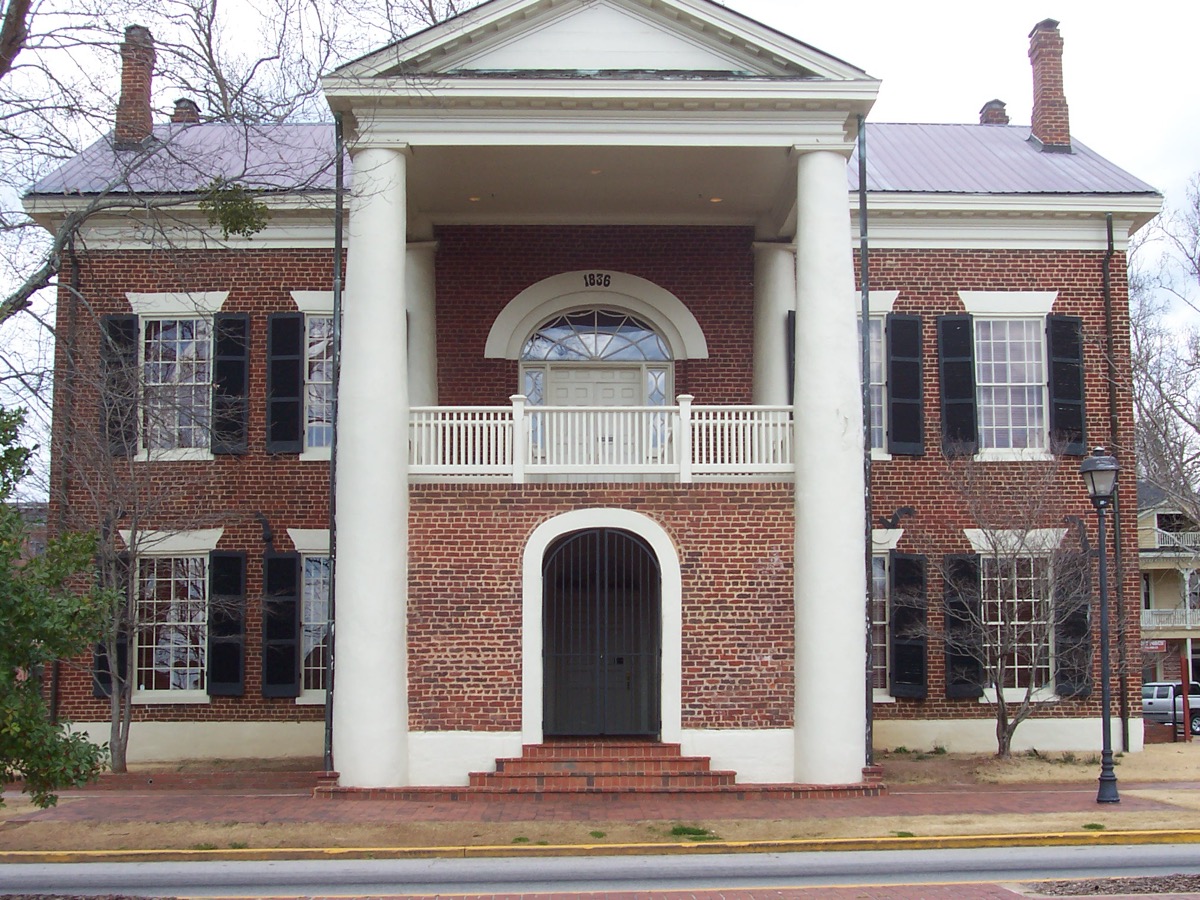
Housed in the 1836 Lumpkin County Courthouse, the oldest surviving courthouse in Georgia. Built with bricks containing trace amounts of gold during America's first gold rush. A U.S. Branch Mint operated here from 1838-1861.
The Ghost Story
The Dahlonega Gold Museum is housed in Georgia's oldest surviving courthouse, built with locally made brick that contains trace amounts of gold. The building served as the seat of Lumpkin County government from 1836 to 1965 and stands as a sentinel reminder of America's first major gold rush, which brought thousands of prospectors to North Georgia in 1829.
Dahlonega thrived on the gold rush, and a U.S. Branch Mint opened in 1838, coining more than $6 million in gold before the Civil War closed it in 1861. But beneath the gleaming displays and gilded history of this former courthouse, dark memories of those who lost everything are etched into its walls.
Staff have given the museum's ghost a name: Tommy. A tall figure in a hooded robe, Tommy has been seen in the courthouse windows and on the balcony, watching visitors with unknown intent. He causes knocking within the walls and has a particular fondness for the small model of the stamp press - turning it on by himself to create a startling pounding noise.
The courthouse witnessed trials, convictions, and executions during its years as the center of county government. The echoes of desperate miners who lost their fortunes and their lives during the gold rush still cry out in the dark corners. The museum offers special "Night at the Museum" events where guides take visitors through by candlelight, reliving the building's 180-year history.
Nearby, Price Memorial Hall at the University of North Georgia stands on the foundation of the original U.S. Branch Mint. Its steeple bears 13 ounces of Dahlonega gold - one of only three gold-topped buildings in Georgia, alongside the State Capitol dome and Savannah's City Hall.
Researched from 5 verified sources including historical records, local archives, and paranormal research organizations. Learn about our research process.